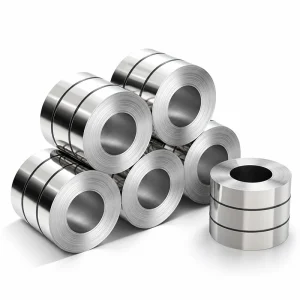
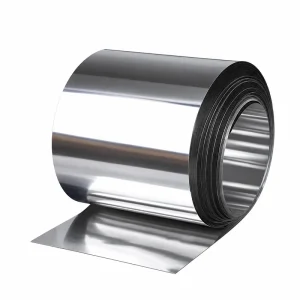
420 Stainless Steel Coil
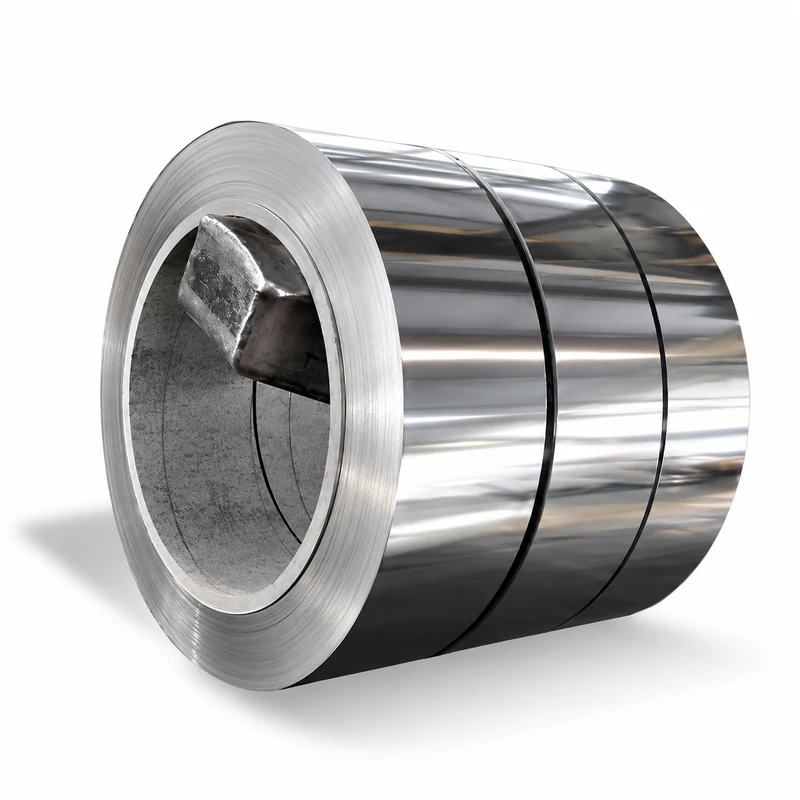
420 Stainless Steel Coil
420 Stainless Steel Coil (UNS S42000) is a heat-treatable martensitic stainless steel containing 12.0–14.0% chromium and a minimum of 0.15% carbon. It can develop increased hardness and wear resistance through appropriate heat treatment, making it suitable for industrial blades, cutting tools, and mechanical components requiring strength and moderate corrosion resistance.
- Mill Test Certificate Provided
- Strict Quality Inspection
- Custom Sizes Available
- On-Time Global Delivery
416 Stainless Steel Coil (UNS S41600) is a free-machining martensitic stainless steel containing 12.0–14.0% chromium and a minimum of 0.15% sulfur. The sulfur addition improves chip breaking and machinability compared with conventional martensitic grades such as 410, although it reduces corrosion resistance, weldability, and forming performance.
Grade 416 can be hardened and tempered to achieve specified mechanical properties. Where available in coil or strip form, the material may be slit or cut into blanks for subsequent machining and component production. Its delivery condition, dimensional tolerances, and processing suitability should be confirmed before ordering.
Typical applications include machined shafts, threaded components, valve parts, and precision industrial hardware. These products are more commonly manufactured from 416 stainless steel bars. Coil availability should therefore be verified with the supplier, particularly for custom thicknesses, widths, and surface finishes.
Product Features
- Free-Machining Martensitic Stainless Steel – Added sulfur improves chip breaking and machinability compared with conventional martensitic stainless steels such as Grade 410.
- 12.0–14.0% Chromium Composition – Provides moderate corrosion resistance in mild environments, although sulfur additions can reduce resistance to localized corrosion.
- Heat-Treatable Mechanical Properties – Can be hardened and tempered to achieve specified hardness and mechanical strength for precision-machined industrial components.
- Improved Cutting Performance – Suitable for turning, drilling, and threading operations, helping improve chip control and machining efficiency.
- Precision Component Manufacturing – Commonly used for machined shafts, threaded parts, valve components, and industrial hardware, primarily in bar form.
- Custom Coil and Strip Requirements – Coil or strip supply, where available, requires confirmation of thickness, width, surface finish, delivery condition, and dimensional tolerances.
Technical Specifications
| Parameter | Specification |
|---|---|
| Product Name | 420 Stainless Steel Coil |
| Material Grade | AISI 420 / ASTM Type 420 |
| UNS Designation | S42000 |
| Material Standard | ASTM A240/A240M |
| Stainless Steel Type | Martensitic Stainless Steel |
| Chromium (Cr) | 12.00–14.00% |
| Carbon (C) | ≥ 0.15% |
| Manganese (Mn) | ≤ 1.00% |
| Silicon (Si) | ≤ 1.00% |
| Phosphorus (P) | ≤ 0.040% |
| Sulfur (S) | ≤ 0.030% |
| Nickel (Ni) | Not separately specified for Type 420 |
| Rolling Process | Cold Rolled / Hot Rolled, subject to availability |
| Delivery Condition | Annealed; other conditions subject to agreement |
| Surface Finish | 2B, BA, No. 1 or other available finishes |
| Thickness | Subject to manufacturing availability |
| Coil Width | Standard or custom slit widths |
| Edge Condition | Mill Edge / Slit Edge |
| Heat Treatment | Hardenable by quenching and tempering |
| Applications | Industrial Blades, Cutting Tools, Wear-Resistant Parts, Mechanical Components |
Applications
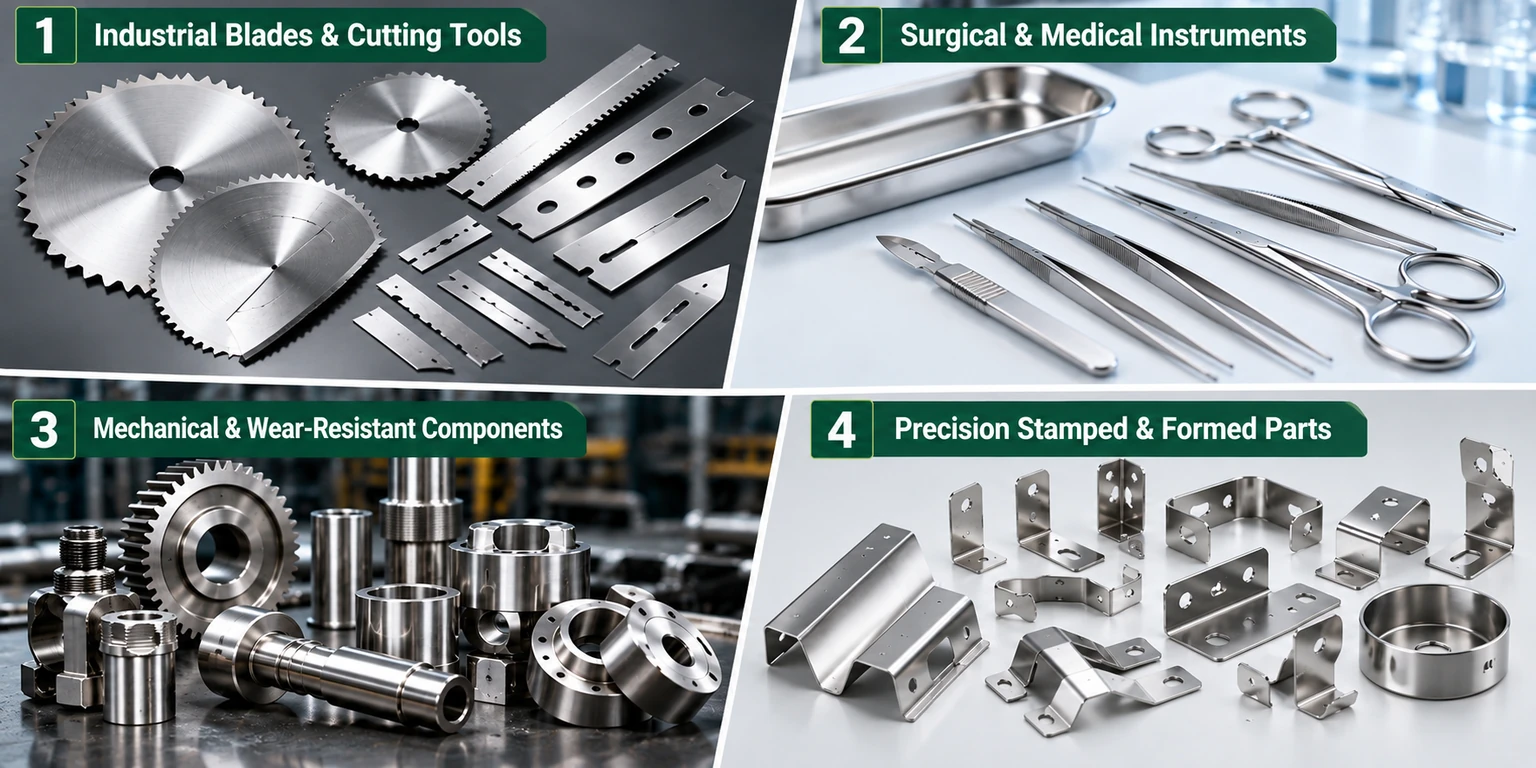
1. Industrial Blades & Cutting Tools
420 stainless steel coils are used for industrial blades, trimming knives, and cutting components. Annealed strips can be blanked and ground before heat treatment to achieve the required hardness. Cutting performance depends on blade geometry, heat treatment, and operating conditions.
2. Surgical & Medical Instruments
420 stainless steel is used for selected surgical scissors, forceps, and medical instrument components. Suitable strip material can be machined, polished, and heat-treated to meet specific performance requirements. Medical applications require verification of material specifications, corrosion resistance, and sterilization compatibility.
3. Mechanical & Wear-Resistant Components
420 stainless steel coils can be processed into selected machine parts, wear-resistant components, and industrial hardware. Slitting, machining, and heat treatment are used according to component requirements. Final hardness, dimensional stability, and operating conditions should be considered during material selection.
4. Precision Stamped & Formed Parts
Annealed 420 stainless steel coils are used for stamped brackets, retaining clips, and formed metal components. Blanking and bending are typically performed before hardening. Material thickness, bend radius, and delivery condition must be considered to prevent cracking during fabrication.
Frequently Asked Questions
1. What is the difference between 420 and 410 stainless steel coil?
Grade 420 generally contains more carbon than Grade 410, allowing it to achieve higher hardness after appropriate heat treatment. Both are martensitic stainless steels, but 420 is commonly selected for cutting blades, wear-resistant components, and hardened mechanical parts. Actual hardness and performance depend on chemical composition and heat treatment conditions.
2. Can 420 stainless steel coil be hardened by heat treatment?
Yes. Grade 420 can be hardened through austenitizing, quenching, and tempering. The resulting hardness, strength, and toughness depend on carbon content, heat treatment temperatures, cooling conditions, and material thickness. Annealed coils are generally preferred for cutting and forming before hardening. Buyers should specify the required final hardness and mechanical properties.
3. What hardness can 420 stainless steel achieve?
The achievable hardness of Grade 420 depends on its carbon content, initial material condition, and heat treatment process. Higher-carbon variants can generally achieve greater hardness than lower-carbon variants. A single hardness value should not be applied to all 420 stainless steel coils. Buyers requiring specific hardness levels should confirm the exact grade and heat treatment requirements.
4. Is 420 stainless steel coil suitable for stamping and bending?
Annealed 420 stainless steel coils can be used for blanking, bending, and selected stamping operations. However, formability depends on thickness, material hardness, bend radius, and tooling design. Hardened material is less suitable for complex forming. For precision stamped components, manufacturers should confirm the delivery condition and perform forming trials when necessary.
5. Is 420 stainless steel coil corrosion resistant?
Grade 420 provides moderate corrosion resistance in mild atmospheric and selected industrial environments. However, its corrosion resistance is generally lower than that of Grade 304, particularly in chloride-rich conditions. Surface finish, heat treatment, cleaning procedures, and operating conditions influence performance. It is not generally recommended for continuous seawater exposure.
6. What information is required when ordering 420 stainless steel coil?
Buyers should specify the material grade (ASTM Type 420 / UNS S42000), thickness, width, surface finish, edge condition, and order quantity. Delivery condition, dimensional tolerances, coil weight, and processing requirements should also be provided. For cutting tools or hardened components, include the required hardness and intended heat treatment process.