Low Carbon Galvanized Steel Wire
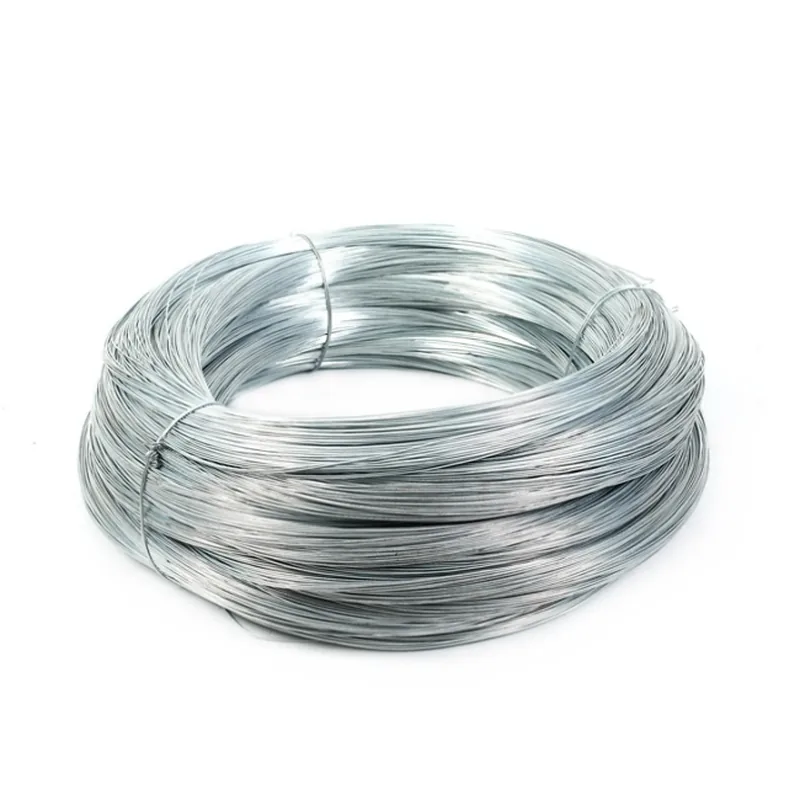
Low Carbon Galvanized Steel Wire
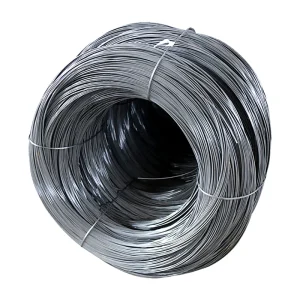
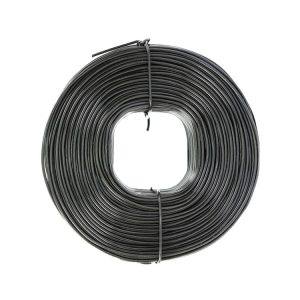
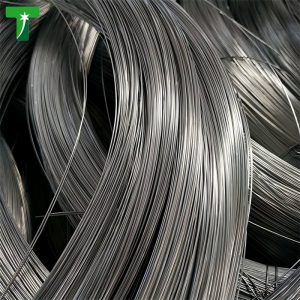
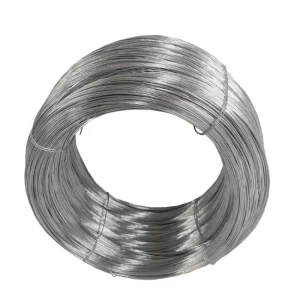
Low Carbon Galvanized Steel Wire serves as a raw material for manufacturing welded mesh, wire products, and formed metal components. The combination of formability and zinc-coated surface makes it suitable for downstream processing where both fabrication performance and corrosion resistance are important.
- Mill Test Certificate Provided
- Strict Quality Inspection
- Custom Sizes Available
- On-Time Global Delivery
In outdoor wire applications, moisture exposure can gradually cause unprotected steel to corrode. Low Carbon Galvanized Steel Wire addresses this problem through a zinc-coated surface that helps protect the underlying steel during service.
The required coating specification depends on the operating environment. Wire intended for sheltered installations may have different protection requirements from material exposed to rain, humidity, or agricultural conditions.
For industrial buyers, material selection involves balancing wire strength, flexibility, and coating performance. These factors should be evaluated together with the intended forming method and expected service conditions.
Product Features
- Uniform Coil Winding:
Properly wound coils help maintain orderly wire layers during storage, transportation, and unwinding, reducing the likelihood of tangling or uncontrolled wire movement during handling. - Controlled Ovality:
Wire roundness can be monitored during production to limit excessive differences between maximum and minimum diameters, supporting dimensional consistency in applications requiring accurate wire feeding. - Customizable Packaging Units:
Coils can be prepared in different unit weights and bundled configurations to accommodate container loading, warehouse handling, and production-line material management. - Traceable Production Batches:
Batch identification and corresponding inspection records can be arranged to support material tracking, shipment verification, and documentation requirements for industrial procurement.
Low Carbon Galvanized Steel Wire – Technical Specifications
| Item | Available Range / Specification |
|---|---|
| Product Name | Low Carbon Galvanized Steel Wire |
| Base Material | Low Carbon Steel |
| Steel Grades | Q195, Q235, SAE 1006, SAE 1008 (subject to availability) |
| Wire Diameter | 0.8–6.0 mm (typical range) |
| Galvanizing Process | Hot-Dip Galvanized / Electro-Galvanized |
| Surface Finish | Zinc-Coated, Smooth Surface |
| Tensile Strength | 350–600 MPa (depending on grade and processing condition) |
| Elongation | Subject to wire grade, diameter, and test method |
| Zinc Coating Mass | Specified according to wire diameter and applicable standard |
| Zinc Coating Adhesion | Subject to wrapping or other agreed test methods |
| Diameter Tolerance | According to the agreed specification |
| Wire Cross-Section | Round |
| Coil Weight | 1–500 kg per coil (typical options) |
| Coil Inner Diameter | According to coil weight and packaging requirements |
| Packaging | Coils, Bundles, or Palletized Packaging |
| Applicable Standards | ASTM A641/A641M, EN 10244-2 (as applicable) |
| Inspection Items | Diameter, Tensile Strength, Coating Mass, Surface Condition |
| Documentation | Inspection Reports or Material Certificates Upon Agreement |
| Supply Condition | As agreed in the purchase specification |
Applications
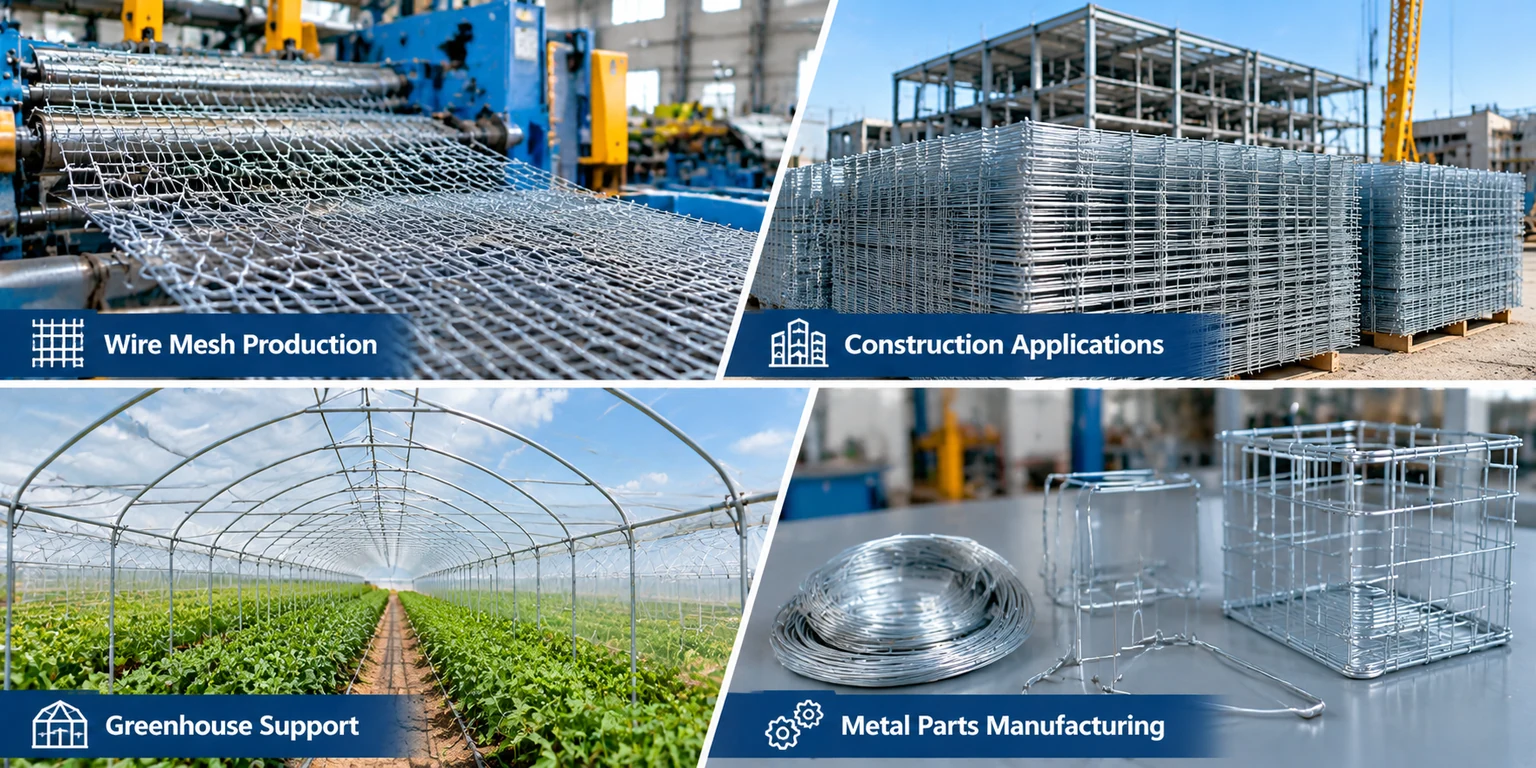
Low Carbon Galvanized Steel Wire is used as a raw material in various industrial manufacturing and construction processes. Its suitability depends on wire diameter, mechanical properties, coating specifications, and the requirements of downstream production equipment. Common applications include wire mesh fabrication, reinforcement products, agricultural structures, and formed metal components.</p>
- Wire Mesh Production:
Low carbon galvanized steel wire is used to manufacture welded wire mesh and other industrial mesh products. Wire diameter, tensile strength, and coating condition are selected according to mesh opening dimensions, welding requirements, and the intended application. Consistent wire dimensions help maintain uniform mesh structures during production. - Construction Applications:
Galvanized steel wire can be processed into mesh panels and reinforcement products used in building and infrastructure projects. Product selection depends on structural design requirements, wire specifications, and applicable construction standards. Coating requirements should be considered according to the installation environment. - Greenhouse Support:
The wire can be incorporated into greenhouse support systems, plant training structures, and agricultural installations. It is used for supporting growing plants and securing selected structural components. Wire diameter, tension requirements, and zinc coating specifications should be considered for outdoor service conditions. - Metal Parts Manufacturing:
Low carbon galvanized steel wire can be used in the production of formed wire components, metal baskets, brackets, and other fabricated products. Wire diameter and mechanical properties influence bending, forming, and dimensional accuracy during manufacturing. Processing methods should be selected to avoid excessive damage to the zinc coating.
Frequently Asked Questions (FAQ)
1. What factors determine the zinc coating requirements for galvanized steel wire?
Zinc coating requirements depend on the intended application, exposure conditions, wire diameter, and applicable product standards. Higher coating mass may be specified for applications requiring greater protection against moisture and atmospheric exposure. The required coating class should be agreed upon before production.
2. How is zinc coating adhesion tested on galvanized steel wire?
Coating adhesion can be evaluated using agreed testing methods, such as wrapping tests around a specified mandrel. The test helps assess whether the zinc coating remains attached to the steel surface without excessive flaking or peeling under the specified conditions.
3. Does galvanizing affect the final diameter of steel wire?
Yes. The zinc layer contributes to the finished outside diameter of galvanized wire. Dimensional requirements should therefore account for the coating thickness, and diameter measurements should be made according to the agreed inspection method.
4. Can galvanized steel wire be bent or formed without damaging the coating?
Galvanized steel wire can be bent and formed within suitable processing limits. However, excessive deformation, tight bending radii, or unsuitable tooling may damage the zinc coating. Processing conditions should be selected according to wire diameter, coating characteristics, and forming requirements.
5. Which standards are commonly used for galvanized steel wire?
ASTM A641/A641M and EN 10244-2 are commonly referenced for zinc-coated carbon steel wire requirements. The applicable standard depends on the product type, mechanical properties, coating requirements, and destination market. Buyers should confirm the required standard before ordering.
6. What should be checked when inspecting galvanized steel wire upon delivery?
Incoming inspection should cover wire diameter, coil condition, surface appearance, zinc coating consistency, and packaging integrity. Where required, coating mass, tensile strength, and supporting inspection records should also be checked against the purchase specification.