Cold Drawn Steel Wire
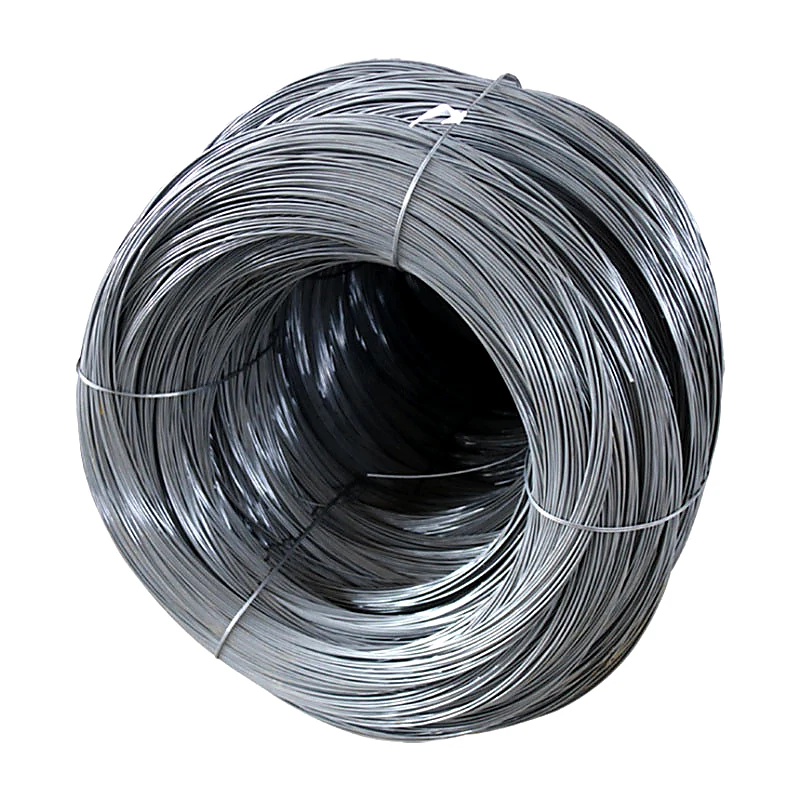
Cold Drawn Steel Wire
Cold Drawn Steel Wire serves as a starting material for nails, fasteners, and precision wire components. Its processing condition can be selected to accommodate specific forming and fabrication requirements.
- Mill Test Certificate Provided
- Strict Quality Inspection
- Custom Sizes Available
- On-Time Global Delivery
Cold Drawn Steel Wire is produced by drawing steel wire rod through a series of dies at room temperature. Before drawing, the wire rod undergoes surface preparation to remove oxide scale and reduce friction during processing.
During cold drawing, the wire diameter is progressively reduced through controlled deformation. Drawing speed, lubrication, and die condition influence dimensional consistency and surface quality throughout the production process.
Cold deformation generally increases the tensile strength and hardness of steel wire while reducing its ductility. The final mechanical properties depend on the steel composition, drawing reduction, and delivery condition, allowing different specifications to meet industrial requirements.
Product Features
- Controlled Wire Straightness:
Proper control of residual curvature helps maintain wire straightness, reducing unnecessary adjustments during straightening and handling while supporting stable material feeding in continuous production. - Surface Cleanliness:
Finished wire can be inspected for residual lubricants, loose particles, and contaminants. Appropriate cleanliness requirements help prepare the material for subsequent surface treatments and storage. - Consistent Coil Formation:
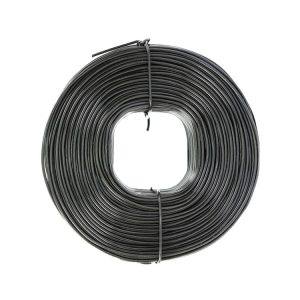
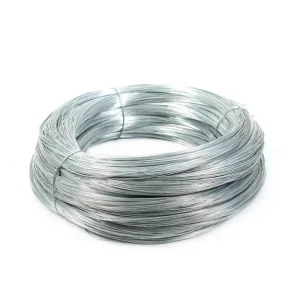
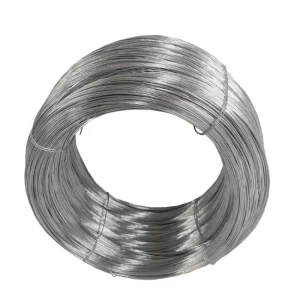
Uniform coil winding helps prevent tangling, uncontrolled unwinding, and localized deformation. Coils or spools can be selected according to handling, transportation, and storage requirements. - Material Identification and Traceability:
Coil labels and inspection records can provide material grades, heat numbers, and batch identification, supporting incoming material verification and traceability throughout the supply chain.
Cold Drawn Steel Wire – Technical Specifications
| Item | Available Range / Specification |
|---|---|
| Product Name | Cold Drawn Steel Wire |
| Material | Carbon Steel |
| Steel Grades | Q195, Q235, SAE 1006, SAE 1008, SAE 1010, SAE 1045 |
| Carbon Content | Approx. 0.06–0.50% (depending on steel grade) |
| Wire Diameter | 0.50–10.00 mm |
| Diameter Tolerance | ±0.02–0.10 mm (reference range) |
| Tensile Strength | 400–1200 MPa (depending on grade and drawing condition) |
| Elongation | Approx. 2–20% (grade and drawing condition dependent) |
| Manufacturing Process | Cold Drawing at Room Temperature |
| Surface Treatment | Pickled, Phosphated, or Lubricated |
| Surface Finish | Bright, Smooth, or Black |
| Wire Cross-Section | Round |
| Wire Diameter Reduction | Multiple Drawing Passes, Depending on Final Diameter |
| Supply Form | Coils, Spools, or Straightened Cut Lengths |
| Coil Weight | 25–500 kg per coil (reference range) |
| Packaging | Plastic Film, Woven Bags, or Pallets |
| Reference Standards | ASTM A510/A510M, EN 10218-1, EN 10218-2 |
| Quality Inspection | Diameter, Tensile Strength, Elongation, Surface Quality |
Applications
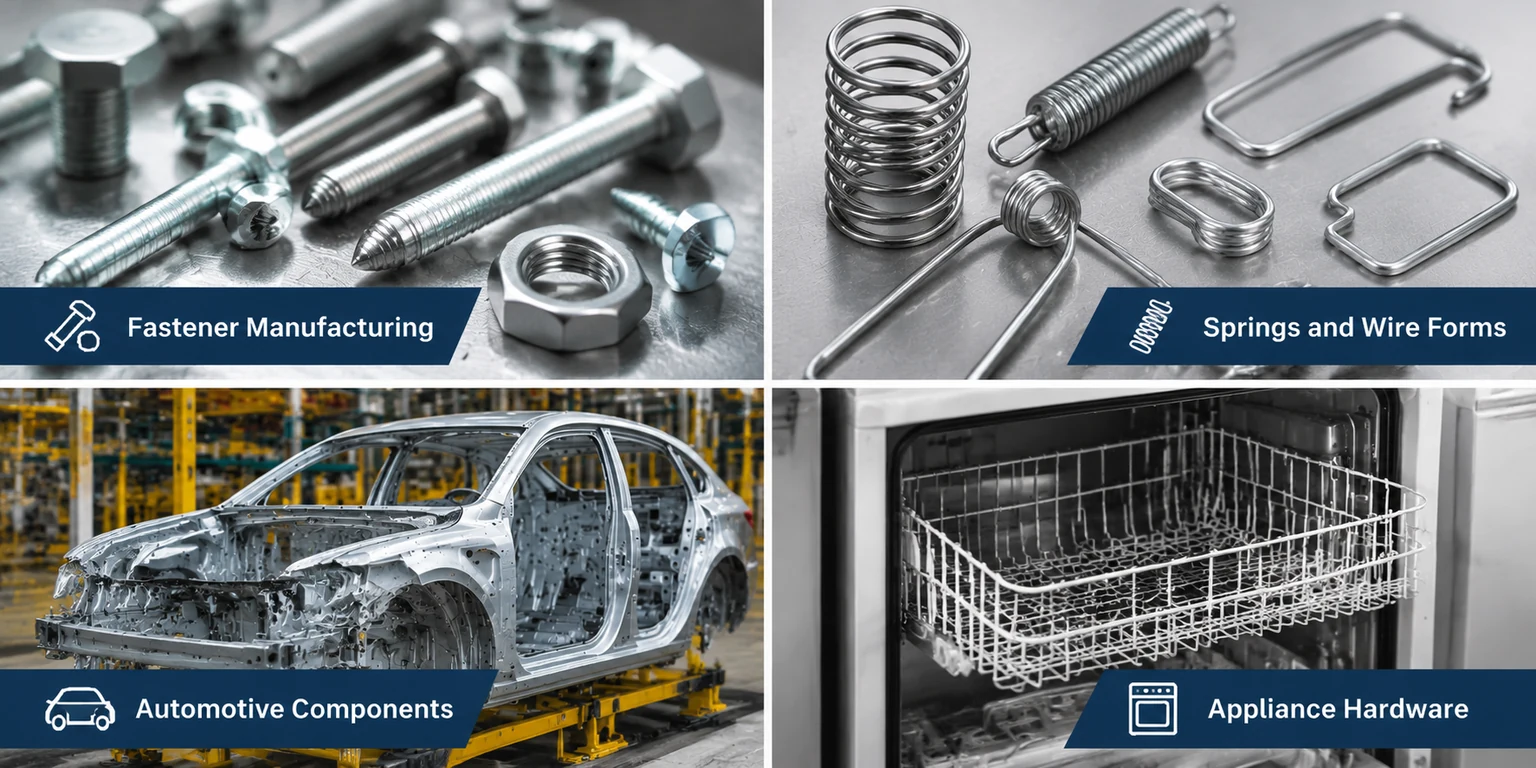
Cold Drawn Steel Wire is used in various manufacturing sectors where metal components require consistent material characteristics and reliable processing performance. Its suitability for different applications depends on the selected steel grade, wire condition, and specific production requirements.</p>
- Fastener Manufacturing:
Used as raw material for producing bolts, screws, rivets, and other metal fasteners. Material selection depends on forming methods, required mechanical properties, and the specifications of the finished components. - Springs and Wire Forms:
Applied in the production of formed wire components, retaining clips, brackets, and selected spring products. Appropriate steel grades and processing conditions are important for achieving the required forming characteristics and service performance. - Automotive Components:
Used in automotive hardware, metal fittings, wire assemblies, and selected vehicle components. Consistent material quality supports manufacturing operations involving bending, forming, and mechanical assembly. - Appliance Hardware:
Incorporated into wire racks, support frames, baskets, brackets, and other metal accessories for household and commercial appliances. Wire specifications are selected according to component design, forming requirements, and intended service conditions.
Frequently Asked Questions (FAQ)
1. What factors determine the selection of steel grade for cold drawn steel wire?
Steel grade selection depends on the intended application, required mechanical properties, forming method, and final component specifications. Carbon content and the original condition of the wire rod are important considerations when choosing suitable material.
2. How does the number of drawing passes affect the finished wire?
Multiple drawing passes progressively reduce the wire diameter and increase the degree of cold deformation. The drawing schedule influences the final strength, hardness, and ductility, making process control important for achieving the required material condition.
3. Can cold drawn steel wire be supplied in different surface conditions?
Yes. Depending on the manufacturing process and customer requirements, cold drawn steel wire can be supplied with bright, lubricated, phosphated, or other specified surface conditions. The available finish depends on the production route.
4. Can cold drawn steel wire undergo further processing after delivery?
Yes. Depending on its steel grade and delivery condition, the wire can undergo additional operations such as cutting, bending, straightening, forming, and surface treatment. Processing suitability should be evaluated against the required component specifications.
5. What quality tests are commonly performed on cold drawn steel wire?
Common inspection items include wire diameter, dimensional tolerance, tensile strength, elongation, and surface condition. Additional tests may be conducted according to the intended application and agreed technical requirements.
6. Can cold drawn steel wire be supplied with customized specifications?
Yes. Customized wire diameters, steel grades, coil weights, packaging methods, and delivery forms can be discussed according to production capabilities and order requirements. Technical specifications should be confirmed before production.