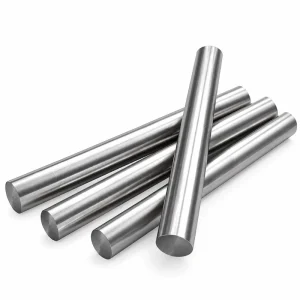
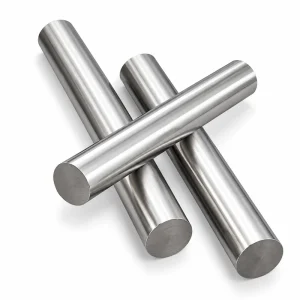
316L Stainless Steel Bar
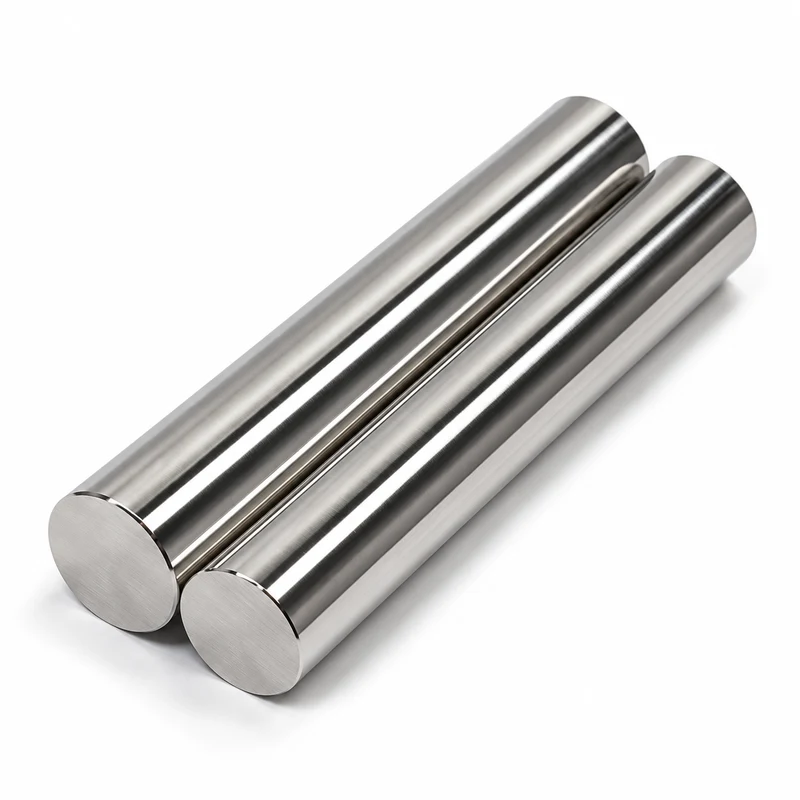
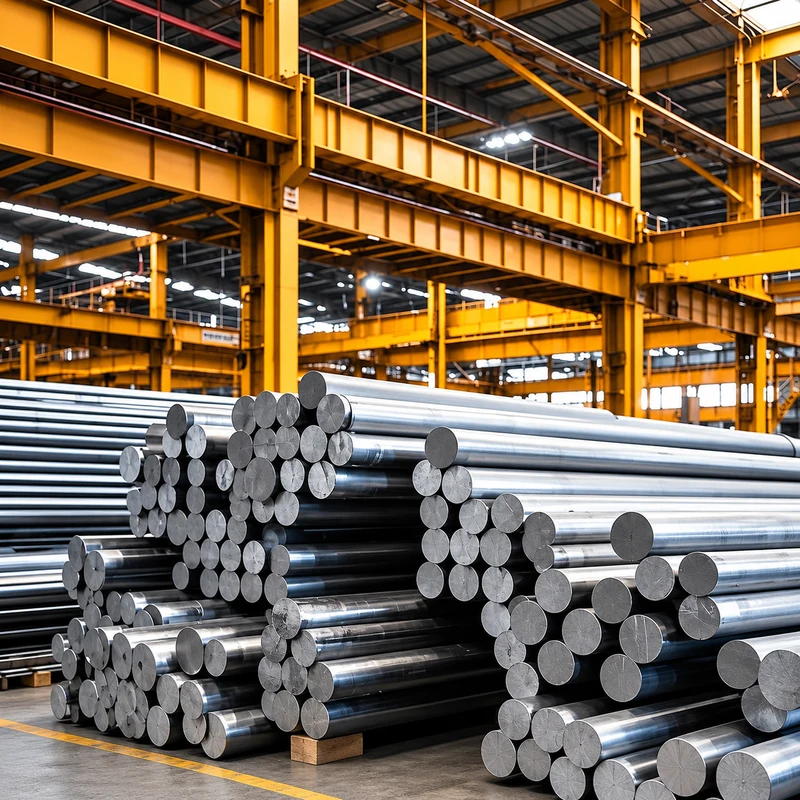
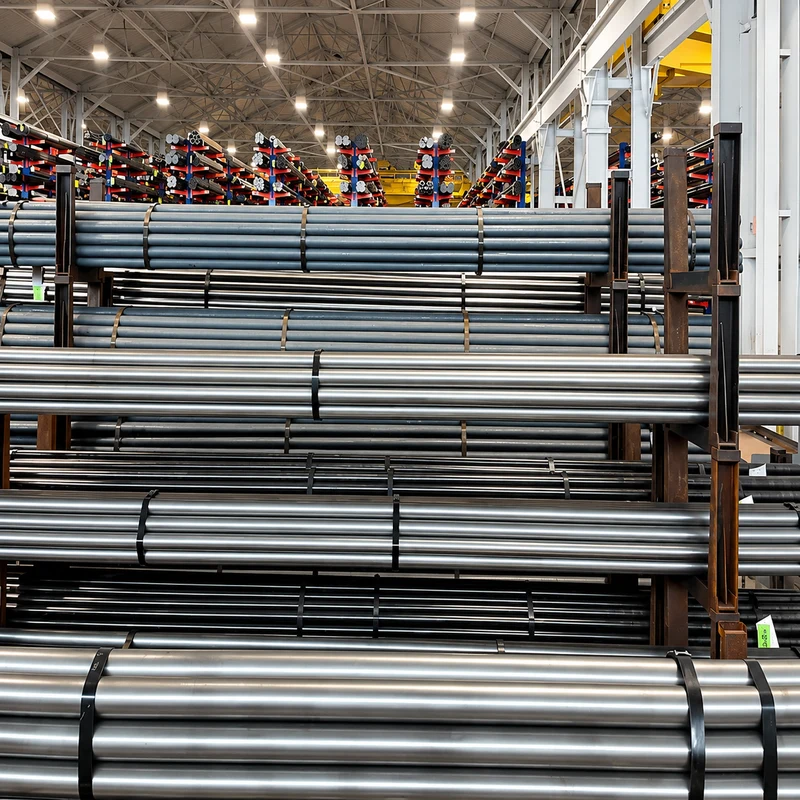
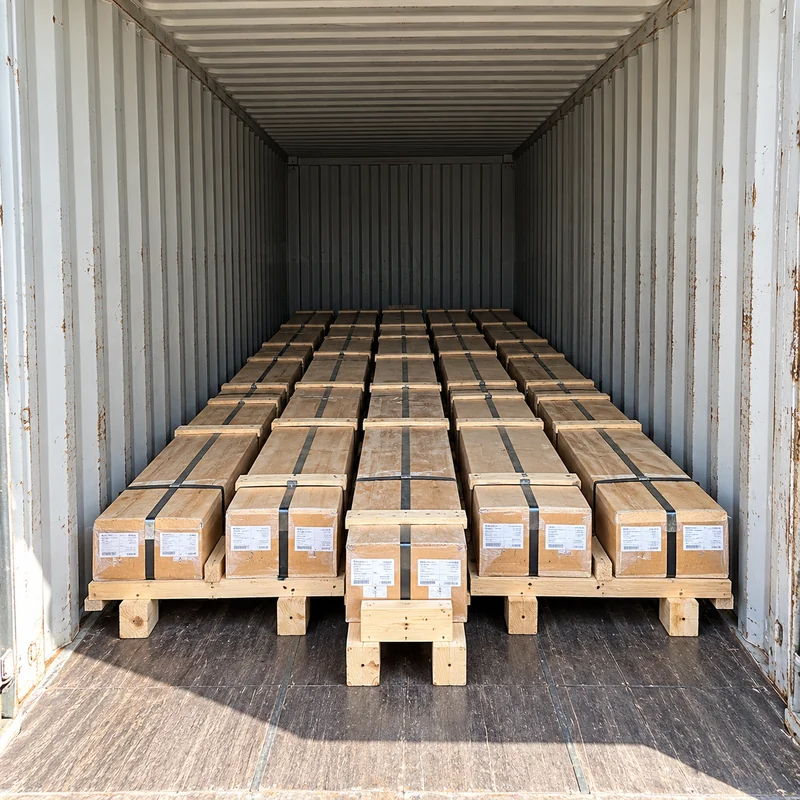
316L Stainless Steel Bar
316L stainless steel bar features low carbon content (≤0.03%) and improved resistance to sensitization during welding. Available to ASTM A276 specifications in hot rolled, cold drawn, and polished finishes. Suitable for chemical processing equipment, pharmaceutical machinery, valve components, and precision machining.
- Mill Test Certificate Provided
- Strict Quality Inspection
- Custom Sizes Available
- On-Time Global Delivery
316L stainless steel bar is used to manufacture welded components, valve parts, fittings, and precision-machined equipment parts. With a maximum carbon content of 0.03%, Grade 316L reduces the risk of sensitization and intergranular corrosion during welding, making it suitable for fabricated assemblies exposed to compatible corrosive environments.
Supplied to ASTM A276 specifications, 316L stainless steel bars are available in hot rolled, cold drawn, and polished finishes. Cold drawn bars provide improved dimensional accuracy and surface quality for CNC machining, threaded components, and equipment shafts. Custom diameters and cut-to-length processing can be arranged upon request.
Common applications include pharmaceutical processing equipment, chemical handling systems, welded machinery components, and industrial valves. Sky Steel Group supplies 316L stainless steel bars to equipment manufacturers, fabricators, and distributors for bulk orders and project-specific requirements.
Product Features
- Low Carbon Composition – Maximum carbon content of 0.03%, reducing the risk of sensitization and intergranular corrosion during welding.
- ASTM A276 Compliance – Available to ASTM A276 requirements, with material test certificates upon request.
- Welded Fabrication Applications – Suitable for welded assemblies and fabricated components where post-weld corrosion resistance is important.
- Cold Drawn Precision – Cold drawn bars offer tighter dimensional tolerances and smoother surfaces than typical hot rolled bars.
- Multiple Surface Finishes – Hot rolled, cold drawn, and polished finishes available according to machining and fabrication requirements.
- Custom Sizes & Processing – Standard and custom dimensions with cut-to-length processing options, subject to availability.
316L Stainless Steel Bar – Technical Specifications
| Parameter | Specification |
|---|---|
| Product Name | 316L Stainless Steel Bar |
| Material Grade | AISI 316L / UNS S31603 / EN 1.4404 |
| Material Type | Austenitic Stainless Steel |
| Manufacturing Standard | ASTM A276 / ASTM A479 (as applicable) |
| Production Process | Hot Rolled / Cold Drawn |
| Diameter | As per confirmed supply range |
| Length | Standard Lengths / Cut-to-Length |
| Diameter Tolerance | According to ordered size and finish |
| Surface Finish | Hot Rolled / Cold Drawn / Polished |
| Supply Condition | Solution Annealed / As Agreed |
| Chromium (Cr) | 16.00–18.00% |
| Nickel (Ni) | 10.00–14.00% |
| Molybdenum (Mo) | 2.00–3.00% |
| Carbon (C) | ≤ 0.030% |
| Manganese (Mn) | ≤ 2.00% |
| Silicon (Si) | ≤ 1.00% |
| Phosphorus (P) | ≤ 0.045% |
| Sulfur (S) | ≤ 0.030% |
| Tensile Strength | ≥ 485 MPa (annealed reference) |
| Yield Strength (0.2%) | ≥ 170 MPa (annealed reference) |
| Elongation | ≥ 40% (annealed reference) |
| Density | Approx. 7.98 g/cm³ |
| Processing Services | Cutting / Polishing (subject to availability) |
| Test Certificate | EN 10204 3.1 (Upon Request) |
Product Applications
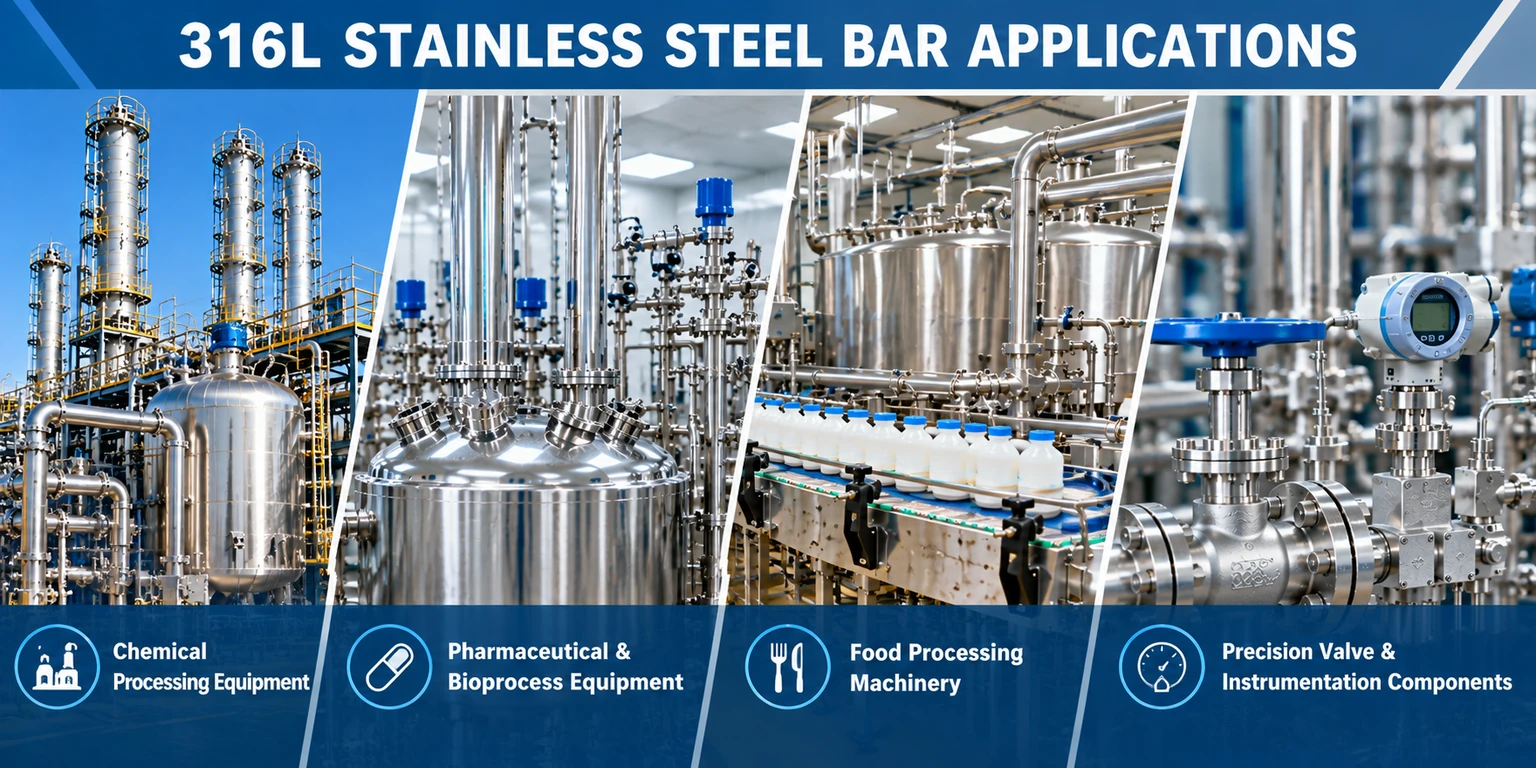
1. Chemical Processing Equipment
316L stainless steel bars are machined into reactor fittings, valve stems, welded connectors, and equipment components used in chemical processing plants. The low carbon content helps reduce sensitization during welding, while molybdenum improves resistance to localized corrosion in certain environments. Material selection should match the chemicals and operating conditions.
2. Pharmaceutical & Bioprocess Equipment
Pharmaceutical and bioprocess equipment manufacturers use 316L stainless steel bars for sanitary valve parts, mixer shafts, precision fittings, and equipment connectors. The material supports welded fabrication and can be machined and polished to specified surface requirements. Material traceability and surface finish are important for hygienic processing applications.
3. Food Processing Machinery
316L stainless steel bars are used to produce agitator shafts, fasteners, machine fittings, and other components for food and beverage processing equipment. Their low carbon composition is beneficial for selected welded assemblies, while suitable surface finishing supports cleaning and maintenance. Component design must account for hygiene and operating conditions.
4. Precision Valve & Instrumentation Components
316L stainless steel bars are machined into valve stems, instrument fittings, threaded connectors, and precision parts for industrial process control systems. Cold drawn bars can provide improved dimensional consistency for CNC machining. Diameter tolerance, surface finish, and material certification are key considerations when ordering components for instrumentation applications.