Galvanized Chain Link Fence Mesh
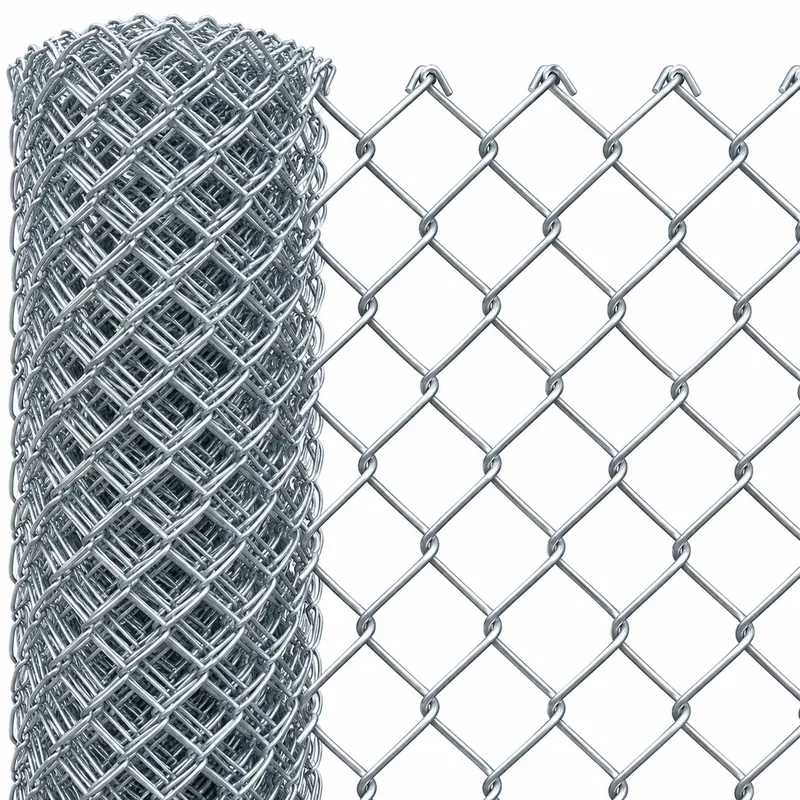
Galvanized Chain Link Fence Mesh
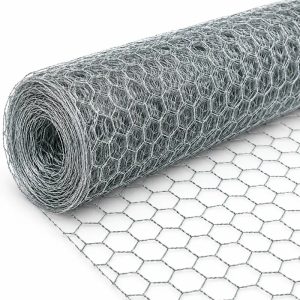
Galvanized Chain Link Fence Mesh is manufactured from galvanized steel wire woven into an interlocking diamond pattern. Available in various mesh openings, wire diameters, and roll dimensions, it is widely used for security fencing, industrial boundaries, and agricultural enclosures. Custom specifications and bulk supply options are available to meet different project requirements.
- Mill Test Certificate Provided
- Strict Quality Inspection
- Custom Sizes Available
- On-Time Global Delivery
The galvanizing process plays an important role in determining the corrosion resistance of chain link fencing. Depending on manufacturing requirements, zinc coating may be applied to the wire before fabrication or to the finished mesh. Coating mass, surface uniformity, and adhesion should be evaluated according to the intended exposure conditions and applicable technical specifications.
The performance of the finished product is influenced by the tensile properties of the steel wire, the consistency of the weaving tension, and the quality of the selvage edges. Common edge configurations include knuckled and twisted finishes, which should be selected according to installation requirements. Consistent opening geometry helps the **steel mesh** maintain proper alignment during fence assembly.
For international procurement, buyers should verify the specified wire diameter, mesh opening tolerances, zinc coating requirements, and finished roll weight. Inspection arrangements may include dimensional checks, coating verification, and visual examination of wire surfaces and edge finishes. Confirming these details before production helps reduce discrepancies between approved samples and delivered materials.
Product Features
- Flexible Fence Layout:
Adapts to straight runs, corners, and changes in terrain, making it suitable for fence lines with varying ground conditions. - Convenient Roll Installation:
Supplied in continuous lengths that can be unrolled and positioned along fence posts, reducing the need for multiple individual panels. - Easy On-Site Adjustment:
Fence sections can be shortened or joined by removing or inserting a spiral wire, allowing installers to adjust lengths without specialized cutting equipment. - Open-View Design:
Provides clear visibility through the fence, allowing personnel to monitor surrounding areas without creating a solid visual barrier. - Replaceable Mesh Sections:
Damaged sections can be removed and replaced without dismantling the entire fence, provided the supporting framework remains in suitable condition. - Compatible with Standard Fence Hardware:
Can be secured using tension bars, tension bands, tie wires, and other appropriate fittings for conventional chain link fence installations.
Technical Specifications
| Parameter | Specification |
|---|---|
| Product Name | Galvanized Chain Link Fence Mesh |
| Material | Low Carbon Steel Wire |
| Mesh Opening | 25 / 40 / 50 / 60 / 75 / 100 mm |
| Wire Diameter | 2.0–4.0 mm |
| Surface Treatment | Zinc Galvanized |
| Galvanizing Method | Galvanized Before / After Weaving |
| Mesh Pattern | Diamond-Shaped |
| Roll Height | 0.9–3.0 m |
| Roll Length | 10 / 15 / 20 / 25 / 30 m |
| Selvage Type | Knuckled / Twisted / Knuckled & Twisted |
| Zinc Coating | As Specified by Buyer |
| Supply Form | Rolls |
| Packaging | Wrapped Rolls / Palletized |
| Custom Sizes | Available Upon Request |
Applications
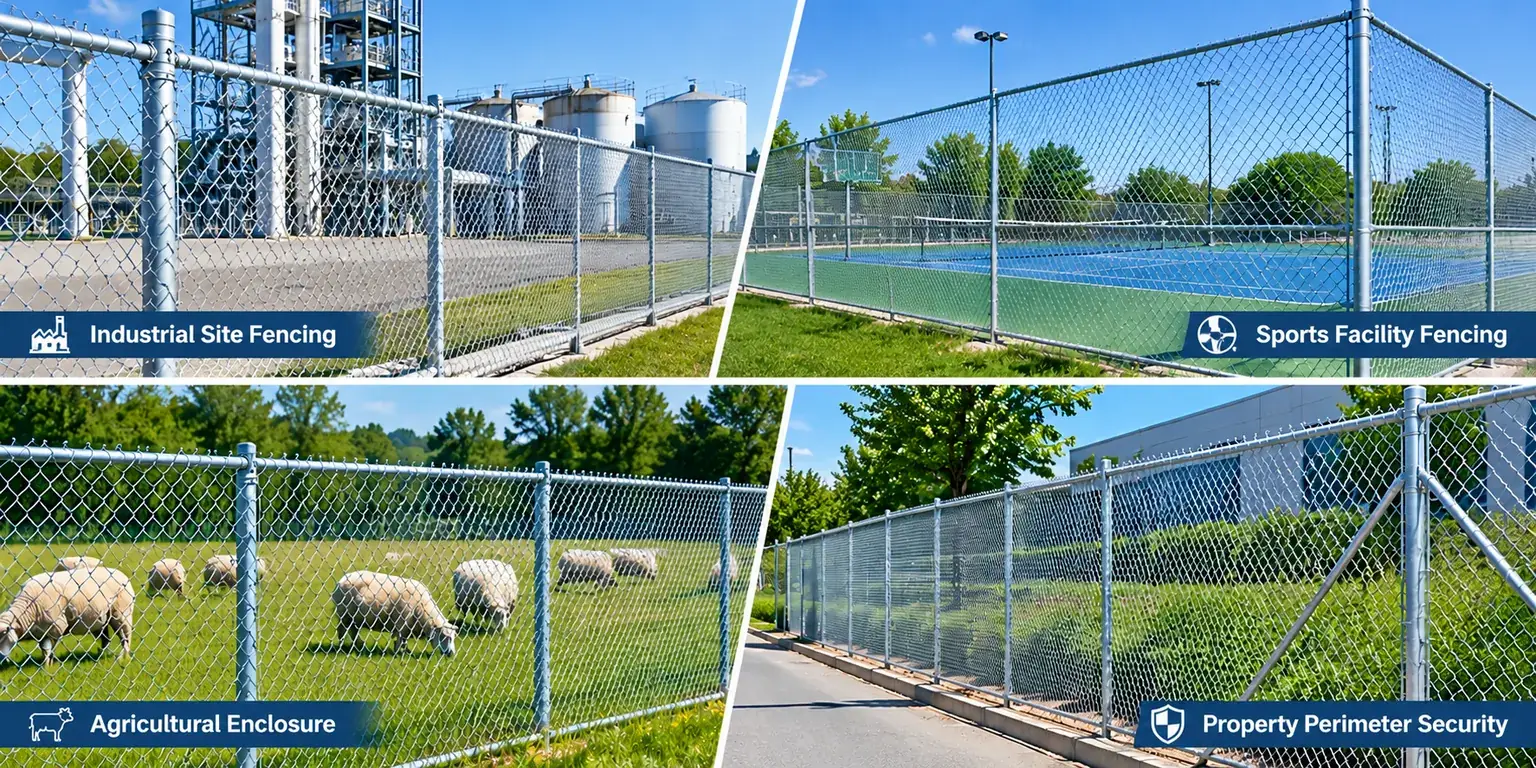
Galvanized Chain Link Fence Mesh is used in projects requiring defined boundaries, controlled access, and clear visibility across enclosed areas. It can be incorporated into permanent or temporary fencing systems, depending on the supporting framework and installation requirements. Fence height, post spacing, mesh specifications, and gate arrangements should be selected according to site conditions and the intended level of protection.</p>
- Industrial Site Fencing:
Installed around factories, warehouses, equipment yards, and industrial storage areas to establish controlled boundaries. The fencing system can be combined with access gates and appropriate security hardware to manage vehicle and personnel entry. Fence height and foundation requirements depend on site-specific conditions. - Sports Facility Fencing:
Used around tennis courts, basketball courts, and recreational grounds to define playing areas and help contain sports equipment. Mesh opening, fence height, and support arrangements should be selected according to the sport, expected impact loads, and facility requirements. - Agricultural Enclosures:
Suitable for dividing grazing areas, creating livestock holding pens, and establishing boundaries around agricultural facilities. Wire diameter, fence height, and lower-edge protection should be chosen according to animal size and behavior. Additional reinforcement may be necessary for larger or more active livestock. - Property Perimeter Security:
Applied around commercial properties, logistics centers, utility installations, and other managed premises. It provides a visible physical boundary and can be integrated with gates, access-control equipment, and additional security measures where required. The overall protection level depends on the complete fence system.
FAQ
1. What is the difference between galvanized before weaving and galvanized after weaving?
Galvanized Before Weaving (GBW) uses zinc-coated wire to manufacture the mesh, while Galvanized After Weaving (GAW) applies zinc coating to the completed mesh, including the wire intersections. Both methods provide corrosion protection, but actual performance depends on zinc coating mass, coating uniformity, and environmental conditions.
2. How is chain link fence mesh size measured?
Chain link mesh size is generally determined by the nominal clear opening between adjacent wires, rather than the full diagonal length of the diamond. Measurement methods may vary according to the applicable standard. Buyers should confirm the opening size, wire diameter, and measurement convention to avoid dimensional discrepancies.
3. What is the difference between knuckled and twisted selvage edges?
Knuckled selvage has wire ends bent back to reduce exposed sharp points, making it suitable for installations where contact safety is important. Twisted selvage features protruding wire ends twisted together. Knuckled-and-twisted combinations are also available, depending on the fence design and installation requirements.
4. Can galvanized chain link fence mesh be used in coastal environments?
Yes, but salt-laden air and moisture can accelerate corrosion, particularly in exposed coastal locations. Buyers should specify suitable zinc coating requirements based on local environmental conditions. For highly corrosive environments, additional protective coatings or alternative materials may be necessary to achieve the required service life.
5. Can damaged chain link fence mesh be repaired?
Yes. Minor damage can sometimes be repaired by replacing individual spiral wires, while larger damaged areas may require partial mesh replacement. Repairs should restore proper wire engagement, attachment, and fence tension. Severely damaged posts or supporting components should be inspected separately before the fence is returned to service.
6. What details are needed for a wholesale quotation?
Please provide the required mesh opening, wire diameter, roll height, roll length, selvage type, galvanizing method, zinc coating requirements, and estimated order quantity. Packaging preferences, destination port, and delivery terms such as FOB, CFR, or CIF will also help us prepare a more accurate quotation.