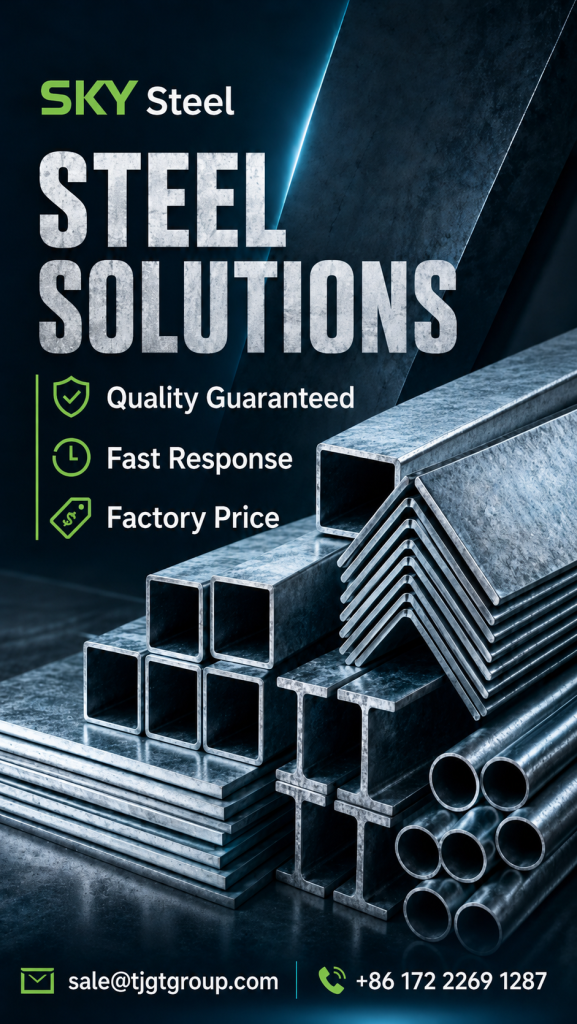
Gi Square Pipe For Greenhouse

Gi Square Pipe For Greenhouse
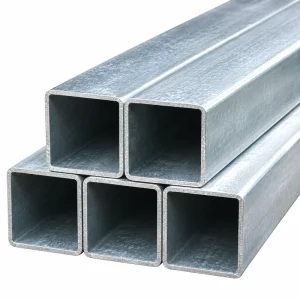
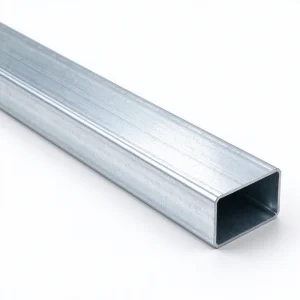
GI Square Pipe for Greenhouse is designed for agricultural greenhouse frameworks, providing structural support for posts, roof sections, and connecting members. Its square profile allows convenient positioning and fastening during frame assembly, while the galvanized surface helps protect the steel against moisture and corrosion in humid greenhouse environments. Suitable for commercial greenhouse construction and replacement projects.
- Mill Test Certificate Provided
- Strict Quality Inspection
- Custom Sizes Available
- On-Time Global Delivery
GI Square Pipe for Greenhouse is manufactured from cold-formed carbon steel strip using electric resistance welding (ERW). Pre-galvanized tubes are formed from zinc-coated steel strip, with coating grades such as Z180 and Z275 available depending on the raw material specification. For post-fabrication hot-dip galvanizing, the completed tubes are immersed in molten zinc to coat accessible internal and external surfaces, including the welded seam. Hot-dip galvanized finishes can be specified to ISO 1461 or ASTM A123 where applicable.
Common square tube sizes include 25 × 25 mm, 30 × 30 mm, 40 × 40 mm, and 50 × 50 mm, with wall thicknesses ranging from 1.2 mm to 3.0 mm. Q235 and S235JR are among the steel grades used for structural tubing. EN 10219 and ASTM A500 are commonly referenced for cold-formed structural hollow sections in European and American markets, respectively. Larger sections and thicker walls may be specified for greenhouse columns and supporting members.
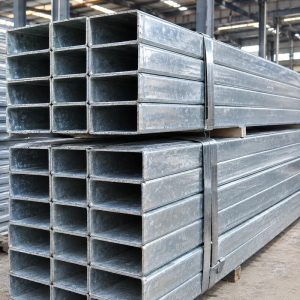
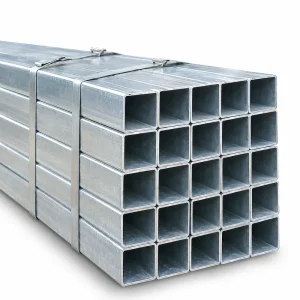
Greenhouse construction projects often require several tube sizes and lengths for different structural components. Buyers may order standard 6 m lengths for local cutting or request fixed lengths based on greenhouse frame drawings to reduce on-site processing. For bulk orders, quantities can be arranged by size and length, with bundle identification and packing lists prepared to help customers check materials during unloading and installation.
Product Features
- Glazing Channel Mounting: Flat surfaces accommodate film-lock channels and greenhouse covering attachment profiles.
- Pre-Punched Connections: Bolt holes and fixing points can be prepared according to greenhouse frame drawings, where specified.
- Corner and Joint Fabrication: Tube ends can be notched or prepared for connection plates, brackets, and prefabricated frame joints.
- Cut-Edge Protection: Exposed steel at cut ends and drilled holes can be treated with suitable zinc-rich coatings after fabrication.
Specifications
| Parameter | Specification |
|---|---|
| Product Name | GI Square Pipe for Greenhouse |
| Material | Carbon Steel |
| Steel Grade | Q235, S235JR, Other Grades on Request |
| Manufacturing Process | ERW (Electric Resistance Welded) |
| Cross-Section | Square Hollow Section (SHS) |
| Outside Dimensions | 25 × 25, 30 × 30, 40 × 40, 50 × 50 mm |
| Wall Thickness | 1.2–3.0 mm |
| Length | Standard 6 m; Cut-to-Length Available |
| Applicable Standards | EN 10219, ASTM A500, Other Standards as Specified |
| Surface Treatment | Pre-Galvanized / Hot-Dip Galvanized |
| Pre-Galvanized Coating | Z180, Z275 (Subject to Material Specification) |
| Hot-Dip Galvanizing | ISO 1461 / ASTM A123 (Where Applicable) |
| Pipe Ends | Plain Ends / Cut-to-Length |
| Additional Processing | Drilling, Punching, Notching (On Request) |
| Packaging | Steel Strip Bundles |
Applications

GI Square Pipe for Greenhouse is used in agricultural greenhouse structures where square steel sections form part of the main framework and secondary supporting systems. Different greenhouse designs require specific arrangements of columns, roof members, sidewall framing, and equipment supports. The following applications show how galvanized square steel pipes are incorporated into commercial greenhouse construction.</p>
- Commercial Greenhouse Frames: Used for vertical columns, horizontal beams, and structural supports in commercial vegetable, flower, and seedling greenhouses. Square pipes are incorporated into multi-span greenhouse frameworks, where columns and beams support roof structures and connect adjacent greenhouse sections. The arrangement of supporting members depends on greenhouse width, column spacing, roof configuration, and local wind and snow loads.
- Greenhouse Roof & Purlin Supports: Used as roof purlins, cross members, and secondary supports beneath greenhouse covering systems. Square steel tubes support glazing channels, roof panels, and other covering attachments in suitable greenhouse designs. Their flat surfaces provide contact areas for fixing brackets and connecting components, while member spacing and section dimensions are determined by the roof structure and covering material.
- Greenhouse Sidewall & Ventilation Frames: Installed in greenhouse sidewalls, end walls, ventilation openings, and access door frameworks. Square pipes form supporting members for roll-up ventilation systems, sidewall covering attachments, and greenhouse doors. Additional framing can be provided around ventilation openings to accommodate operating mechanisms, guide rails, and mounting brackets without obstructing the movement of ventilation components.
- Greenhouse Equipment & Irrigation Supports: Used to construct supporting frames for irrigation pipelines, suspended growing systems, cultivation equipment, and internal greenhouse installations. Square steel tubes form equipment stands, mounting frames, and horizontal supports where fixed attachment points are required. The supporting arrangement depends on equipment weight, installation height, attachment locations, and the loads transferred to the greenhouse structure.
Frequently Asked Questions
Can GI square pipes be used for both single-span and multi-span greenhouses?
Yes. Square tubes are used for end frames, sidewall supports, and secondary framing in single-span greenhouses. Multi-span structures may also use them for columns, connecting beams, and roof supports. Gutter connections and roof drainage need particular attention in multi-span greenhouses, where accumulated rainwater or drifting snow can increase local loads.
Is 1.5 mm or 2.0 mm wall thickness better for greenhouse frames?
For a 40 × 40 mm square tube, increasing the nominal wall thickness from 1.5 mm to 2.0 mm increases the theoretical steel cross-sectional area by approximately 32%, based on a simplified calculation excluding corner radii. The thicker tube also provides greater bending stiffness, although the allowable load depends on the member length, support conditions, and greenhouse structural design.
Do galvanized square pipes need additional protection after cutting or welding?
Cutting and welding can expose uncoated steel or damage the surrounding zinc layer, particularly at cut edges and welded joints. Damaged areas can be repaired using suitable zinc-rich coatings, with the repair method and coating thickness selected according to the applicable galvanizing standard. Welding galvanized steel requires appropriate ventilation and protection against zinc-containing fumes.
What should be specified for greenhouse pipes used near the coast?
For coastal greenhouses, post-fabrication hot-dip galvanizing to ISO 1461 or ASTM A123 may be specified where applicable. In locations with heavy salt exposure, an additional compatible paint system over the galvanized surface, known as duplex coating, may provide further protection. Particular attention should be given to connections and areas where moisture or salt deposits accumulate.
How much does a 40 × 40 × 2.0 mm galvanized square pipe weigh?
Using a simplified square-corner calculation and a steel density of 7,850 kg/m³, a 40 × 40 × 2.0 mm tube has a theoretical steel weight of approximately 2.39 kg/m before galvanizing. A 6 m length weighs approximately 14.3 kg on the same basis. Actual weight varies with corner radii, manufacturing tolerances, and zinc coating mass.
Can square greenhouse pipes be supplied with pre-drilled holes?
Pre-drilled or punched holes can be supplied where fabrication services are available. Hole diameter, spacing, and position should be indicated on the drawings. For post-fabrication hot-dip galvanized tubes, cutting and drilling are generally completed before galvanizing so accessible hole surfaces and edges can receive zinc coating. Holes made in pre-galvanized tubes afterward require suitable protection at exposed steel surfaces.