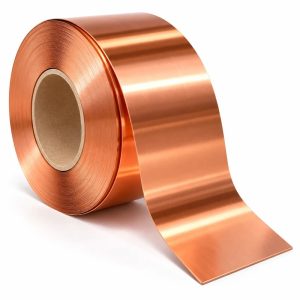
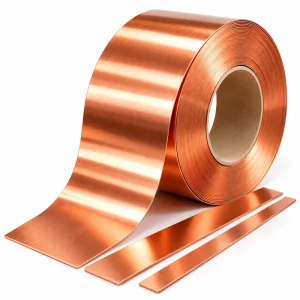
C11000 Copper Strip
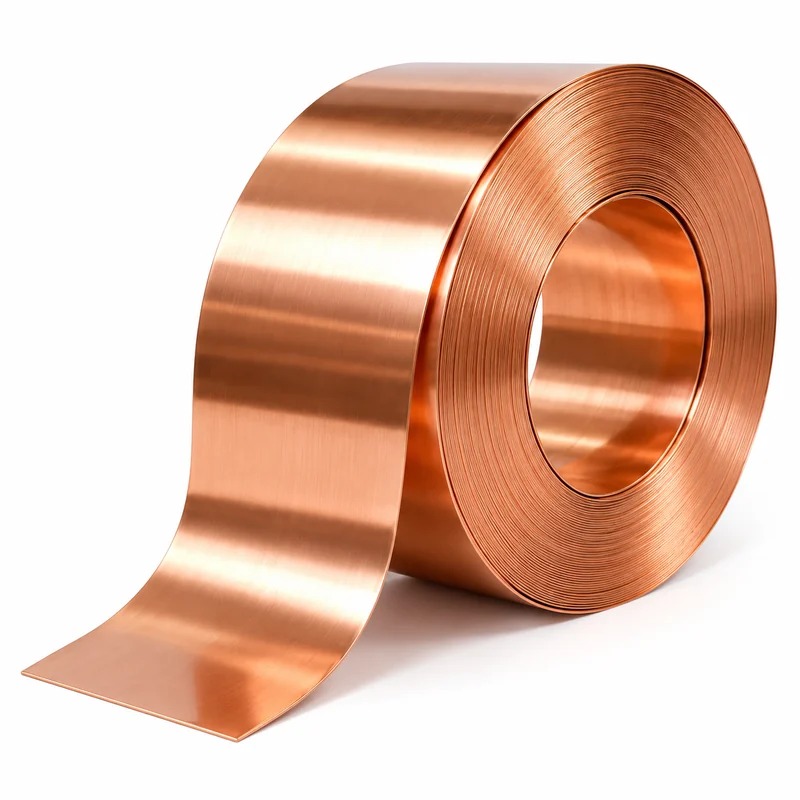
C11000 Copper Strip
C11000 Copper Strip offers high electrical conductivity, good formability, and reliable processing performance. Available in various thicknesses, widths, and tempers, it is suitable for electrical connectors, terminals, and precision stamped components. Custom sizes and slitting services are available.
- Mill Test Certificate Provided
- Strict Quality Inspection
- Custom Sizes Available
- On-Time Global Delivery
C11000 Copper Strip is manufactured from electrolytic tough pitch (ETP) copper, offering high electrical and thermal conductivity, good formability, and consistent material properties. It is widely used in electrical manufacturing and industrial applications requiring reliable conductive performance.
The material is suitable for electrical connectors, terminals, conductive contacts, busbar components, and precision stamped parts. Its combination of conductivity and processing flexibility supports the production of electrical components requiring dimensional accuracy and dependable performance.
Available in various thicknesses, widths, and tempers, C11000 copper strip supports stamping, bending, forming, and precision cutting. Custom specifications, slitting, and coil processing can be arranged according to component dimensions, manufacturing requirements, and order quantities for electrical equipment manufacturers and metal fabrication companies.
Product Features
- High Electrical Conductivity: Electrolytic tough pitch (ETP) copper provides excellent electrical conductivity for connectors, terminals, and power distribution components.
- Excellent Thermal Conductivity: Efficient heat transfer makes the material suitable for electrical components and industrial applications requiring thermal management.
- Good Formability: Supports bending, stamping, punching, and forming into electrical contacts, terminals, and precision metal components, depending on material temper.
- Consistent Material Properties: Available in different tempers to meet specific requirements for hardness, mechanical strength, and fabrication performance.
- Precision Strip Processing: Suitable for slitting and cutting into narrow strips with specified thickness, width, and dimensional tolerances.
- Custom Specifications: Thickness, width, temper, coil dimensions, and processing requirements can be specified according to electrical manufacturing and industrial applications.
Applications
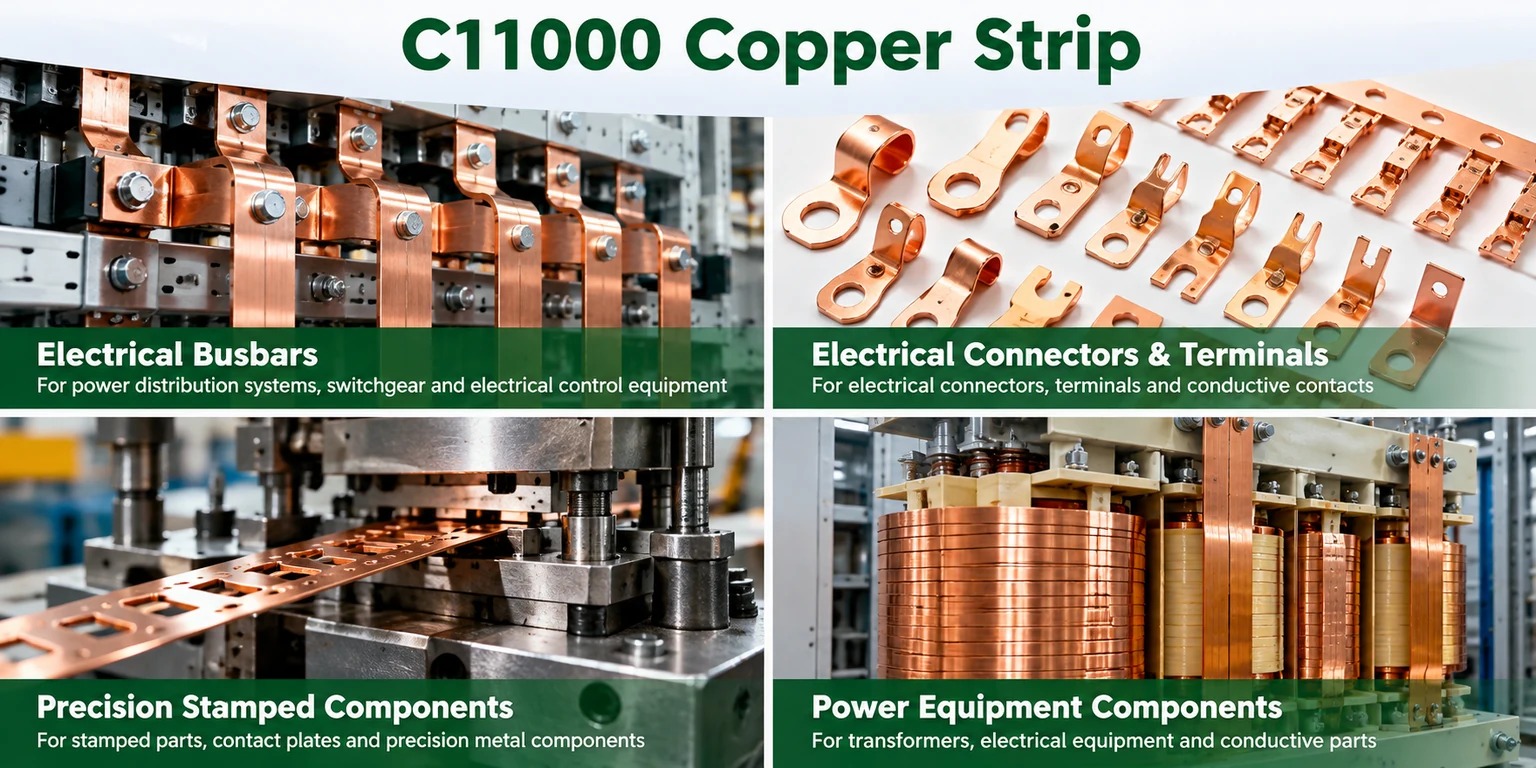
1. Electrical Busbars
C11000 copper strips are used to manufacture conductive busbar components, electrical links, and current-carrying connections in power distribution systems. The electrolytic tough pitch copper provides high electrical conductivity and good formability, supporting fabrication into flat conductors and customized electrical components. Typical applications include switchgear assemblies, distribution cabinets, and electrical control equipment. Strip thickness, width, temper, current-carrying requirements, connection design, and operating temperature should be considered during material selection. Electrical contact surfaces and joining methods should also be specified according to equipment requirements.
2. Electrical Connectors & Terminals
C11000 copper strips are suitable for manufacturing electrical connectors, terminal components, conductive contacts, and connection tabs used in electrical and electronic assemblies. The material combines high electrical conductivity with good processing flexibility, allowing manufacturers to produce components through stamping, bending, and precision cutting. Different material tempers can be selected according to forming requirements and dimensional stability. Typical applications include electrical terminals, conductive connection plates, and power connection components. Strip thickness tolerance, surface condition, burr control, and any required plating should be confirmed before production.
3. Precision Stamped Components
C11000 copper strips are used as raw materials for precision stamping and metal forming operations in electrical component manufacturing. The material can be processed into conductive tabs, contact plates, connection pieces, and customized stamped parts using suitable tooling and production methods. Its good formability supports bending, punching, and progressive die stamping, depending on the selected temper and component geometry. Consistent strip dimensions are important for automated feeding and repeatable manufacturing. Buyers should specify thickness tolerance, width tolerance, edge condition, surface quality, and mechanical properties according to their stamping equipment and finished component requirements.
4. Power Equipment Components
C11000 copper strips are used to manufacture conductive components for transformers, electrical control systems, and industrial power equipment. Their high electrical and thermal conductivity makes them suitable for applications requiring efficient current transfer and heat dissipation. The material can be cut, bent, and formed into customized conductive links, winding-related components, and electrical connection parts according to equipment design. Material temper, conductor dimensions, insulation requirements, joining methods, and operating conditions should be evaluated during selection. For specialized transformer winding applications, surface condition and insulation specifications should be confirmed with the equipment manufacturer.
Frequently Asked Questions (FAQ)
1. What is C11000 Copper Strip?
C11000 Copper Strip is manufactured from electrolytic tough pitch (ETP) copper, a widely used copper grade for electrical and industrial applications. It offers high electrical and thermal conductivity, good formability, and reliable processing characteristics. The material is commonly supplied in coil form and used to manufacture electrical connectors, terminals, conductive contacts, busbar components, and precision stamped parts.
2. What is the difference between C11000 and C10200 Copper Strip?
C11000 is electrolytic tough pitch copper, while C10200 is oxygen-free copper. Both provide high electrical and thermal conductivity, but they differ in oxygen content and suitability for certain manufacturing environments. C11000 is commonly selected for electrical connectors, terminals, and general conductive components. C10200 may be preferred for applications requiring low oxygen content or processing under high-temperature reducing conditions. Material selection should consider electrical requirements, fabrication methods, joining processes, and applicable standards.
3. Can C11000 Copper Strip be stamped and bent?
Yes. C11000 copper strip supports stamping, punching, bending, and other metal forming processes. Its forming performance depends on the selected temper, strip thickness, component geometry, and tooling conditions. Softer tempers are generally more suitable for demanding bending operations, while harder tempers may provide greater strength and dimensional stability. Buyers should specify the required temper, dimensional tolerances, edge condition, and surface quality according to their manufacturing processes.
4. What are the main applications of C11000 Copper Strip?
C11000 copper strip is widely used for electrical busbar components, connectors, terminals, conductive contacts, precision stamped parts, and power equipment components. Its high electrical conductivity makes it suitable for current-carrying applications, while its good formability supports fabrication into customized electrical parts. Typical customers include electrical equipment manufacturers, connector producers, metal stamping companies, and power distribution equipment suppliers. Material thickness, temper, surface condition, and electrical requirements should be selected according to the intended application.
5. Can the thickness, width, and temper of C11000 Copper Strip be customized?
C11000 Copper Strip can be supplied in different thicknesses, widths, and tempers, subject to production availability. Slitting and coil processing may be arranged to meet specific manufacturing requirements. Buyers can also specify thickness tolerance, width tolerance, edge condition, coil inner diameter, and packaging requirements. For precision stamping applications, dimensional consistency and surface quality should be confirmed before production to ensure compatibility with automated feeding and forming equipment.
6. What information should I provide when requesting a quotation?
For an accurate quotation, please provide the required copper grade, thickness, width, temper, order quantity, and applicable material standard. If the strip will be used for electrical connectors or precision stamping, include thickness and width tolerances, edge condition, surface finish, and any special conductivity or mechanical property requirements. Coil inner diameter, packaging method, delivery destination, and required processing services should also be specified to confirm production feasibility, pricing, and lead time.