Galvanized Square Tubing With Holes

Galvanized Square Tubing With Holes
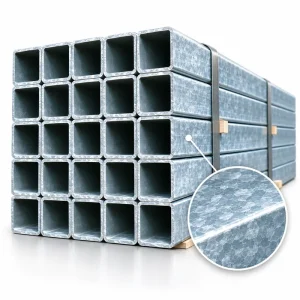
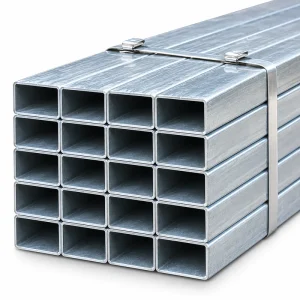
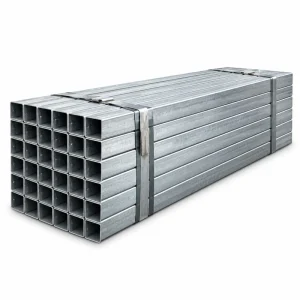
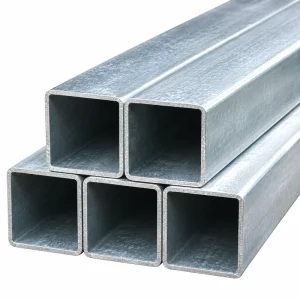
Galvanized Square Tubing With Holes offers convenient fastening points for assembling brackets, cross members, and removable components. Its square profile provides flat contact surfaces for connecting plates, while the galvanized finish helps protect exposed surfaces against corrosion. Suitable for modular frameworks and equipment installations where components may need periodic adjustment or replacement.
- Mill Test Certificate Provided
- Strict Quality Inspection
- Custom Sizes Available
- On-Time Global Delivery
Galvanized Square Tubing With Holes is not limited to a single perforation style. Round holes are commonly used where a defined diameter is required, while square and rectangular openings provide different clearance profiles. Elongated slots, including those with rounded ends, are another option. These variations allow the perforation geometry to be selected according to the component being produced rather than relying on one standard hole pattern.
A tube may have identical openings repeated along its length, or a combination of hole sizes positioned at specific intervals. For example, a fabrication drawing might specify larger rectangular openings near one end and smaller round holes elsewhere on the same face. Where holes are placed on adjacent or opposite faces, their relative positions become important, particularly when the finished tube must match an existing component.
Not every hole pattern can be produced with the same tooling. Small round holes and larger rectangular cutouts place different demands on the punching or cutting process, especially in thicker tube walls. For galvanized steel pipe supplied with these openings, the manufacturing sequence also affects how exposed edges are protected. Hole dimensions, edge quality, and the condition of the finished surface should therefore be checked against the agreed specification.
Product Features
- Uniform Square Cross-Section:
Equal external width and height provide a consistent square profile along the tube length, distinguishing it from rectangular hollow sections. - Controlled Tube Straightness:
Longitudinal straightness is an important quality consideration, particularly for tubes used in assemblies requiring accurate positioning over extended lengths. - Consistent Wall Thickness:
Wall thickness uniformity helps maintain predictable section geometry and reduces dimensional variation between individual tubes. - Defined End Conditions:
Tube ends can be specified for squareness and burr removal, helping maintain consistent finished lengths and reducing handling hazards.
Technical Specifications
| Parameter | Specification |
|---|---|
| Product Type | Galvanized Square Tubing With Holes |
| Cross-Section | Square Hollow Section (SHS) |
| Outside Dimensions | 20×20 / 25×25 / 40×40 / 50×50 / 75×75 / 100×100 mm |
| Nominal Wall Thickness | 1.2 / 1.5 / 2.0 / 2.5 / 3.0 mm |
| Reference Steel Grades | Q235B / Q355B |
| Nominal Tube Length | 3000 / 6000 mm |
| Hole Types | Round / Square / Rectangular / Oblong |
| Perforation Method | Punching / Drilling / Cutting |
| Surface Finish | Galvanized |
| Dimensional Requirements | According to Approved Drawing |
Hole Configuration Reference
| Hole Type | Example Dimensions | Measurement |
|---|---|---|
| Round Hole | Ø6 / Ø8 / Ø10 / Ø12 mm | Diameter |
| Square Hole | 8×8 / 10×10 / 12×12 mm | Width × Height |
| Rectangular Hole | 10×20 / 12×25 / 15×30 mm | Width × Length |
| Oblong Slot | 8×20 / 10×25 / 12×30 mm | Width × Overall Length |
Note: The dimensions listed above are illustrative reference options, not verified production specifications. Actual tube sizes, hole configurations, processing methods and availability must be confirmed before ordering.
Applications
Galvanized Square Tubing With Holes is used in a range of fabricated steel assemblies where different opening configurations are incorporated into the design. Typical applications include:

- General Framing & Brackets:
Used in fabricated support frames, mounting brackets and secondary steel assemblies. Round, square or rectangular openings can be specified to accommodate the required connection details. - Storage Racks & Shelving:
Applied in warehouse shelving components, storage frames and rack accessories. Hole configurations can be designed around shelf positioning and compatible fittings. Structural load ratings must be established for the completed rack system. - Cable Trays & Equipment Support:
Used for selected cable-support frames, equipment brackets and service installations. Perforated tubing can form part of the supporting structure, subject to the required loads and connection design. - Adjustable Structures & Custom Systems:
Suitable for selected greenhouse accessories, repositionable support members and fabricated assemblies that require different mounting positions. Hole layouts and tube specifications should match the intended installation.
Frequently Asked Questions
1. Can square holes be used with carriage bolts?
Yes, provided the square opening matches the bolt’s square neck dimensions. A properly matched square hole can help prevent the bolt from rotating during tightening. The fit should account for manufacturing tolerances, and not every carriage bolt is suitable for every square-hole size.
2. Why do some rectangular holes have rounded corners?
Perfectly sharp internal corners are difficult to produce with many conventional punching processes. A small corner radius may result from the tooling and can also reduce stress concentration compared with a sharp corner. If a component requires a particular corner shape, the radius should be shown on the drawing rather than assumed.
3. How close can a hole be positioned to the end of the tube?
There is no single minimum distance suitable for every design. A hole placed too close to the end may cause local deformation or leave insufficient material around a fastener. The required end distance depends on the hole dimensions, wall thickness, loading conditions, and fabrication method.
4. Will punching leave marks on the galvanized surface?
It can. Punching may leave burrs, slight surface impressions, or exposed steel along the hole edges, particularly when the tube is galvanized before perforation. The extent depends on the tooling and processing sequence. Edge finishing and suitable corrosion protection can be specified where necessary.
5. Should buyers request a sample before bulk production?
For a new hole pattern or a component that must fit existing equipment, a sample is worth considering. It allows the buyer to check the hole positions, fastener fit, and overall dimensions before committing to a larger quantity. A sample is particularly useful when several openings must align with another fabricated part.
6. Can the same hole pattern be used on different square tube sizes?
Not always. A pattern suitable for a 50 × 50 mm tube may leave insufficient material around the openings on a 25 × 25 mm tube. Changes in wall thickness can also affect the punching process. Each tube size should be checked for adequate edge distances and manufacturing feasibility rather than automatically reusing the same layout.