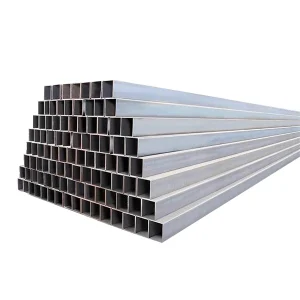
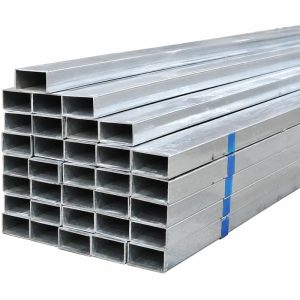
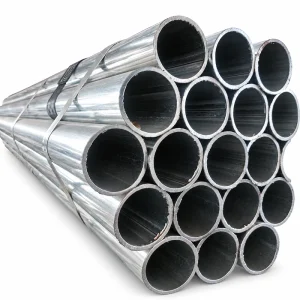
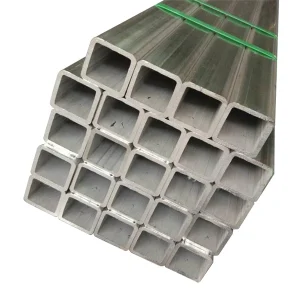
Hot Dip Galvanized Seamless Steel Pipe
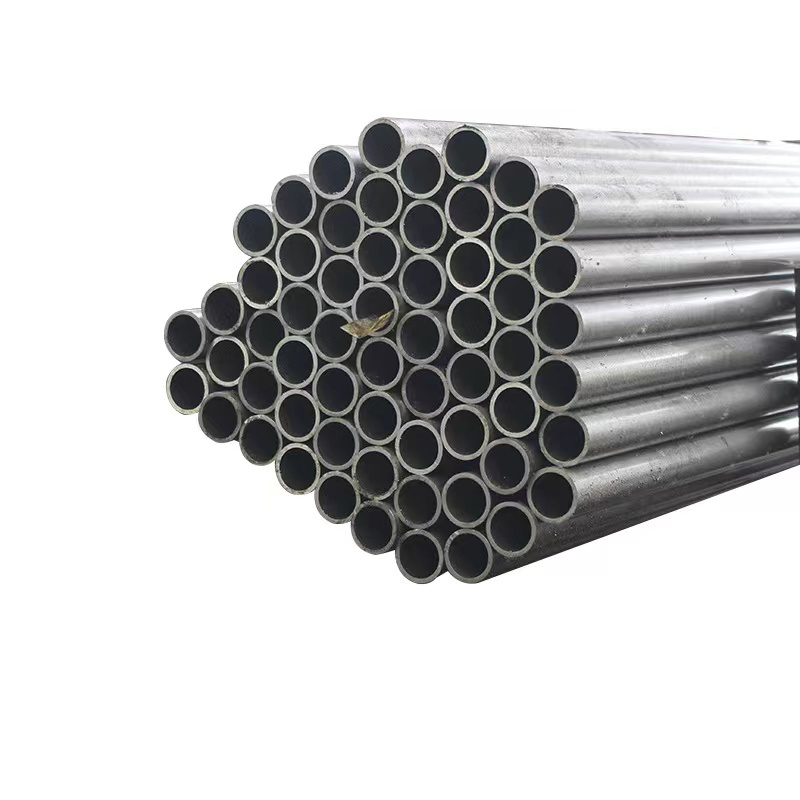
Hot Dip Galvanized Seamless Steel Pipe
Hot Dip Galvanized Seamless Steel Pipe is manufactured from seamless carbon steel pipe and coated with zinc through a hot-dip galvanizing process to improve corrosion resistance. It is suitable for industrial piping, structural supports, water supply systems, and outdoor installations.
- Mill Test Certificate Provided
- Strict Quality Inspection
- Custom Sizes Available
- On-Time Global Delivery
The seamless construction eliminates longitudinal weld seams and provides consistent pipe integrity for applications requiring specific mechanical properties. The hot-dip zinc coating forms a protective layer on the steel surface, helping reduce corrosion caused by moisture and atmospheric exposure.
Commonly specified base pipe standards include ASTM A53, ASTM A106, and API 5L, depending on the intended application. Available specifications may include different outside diameters, wall thicknesses, pipe schedules, and lengths. Zinc coating requirements, end finishes, and dimensional tolerances can be determined according to the applicable standards and purchase specifications. For applications requiring additional corrosion protection, galvanized steel tubing may be considered based on the specified dimensions, coating requirements, and service conditions.
For projects involving galvanized steel, product selection should consider operating conditions, required mechanical properties, and intended service environments. Our galvanized steel pipe solutions can be evaluated according to specific project requirements, with technical support available for product selection and specification confirmation.
Key Features
- Seamless Construction: No longitudinal weld seams for consistent pipe structure.
- Corrosion Resistance: Hot-dip zinc coating protects against atmospheric corrosion.
- Material Standards: ASTM A53, ASTM A106, or API 5L base pipes, subject to requirements.
- Various Sizes: Multiple diameters, wall thicknesses, and lengths available.
- Quality Assurance: Inspection and MTC documentation available upon request, subject to confirmation.
Technical Specifications
| Parameter | Specification |
|---|---|
| Product Name | Hot Dip Galvanized Seamless Steel Pipe |
| Material | Carbon Steel |
| Manufacturing Process | Seamless (Hot Rolled / Cold Drawn) |
| Base Pipe Standards | ASTM A53, ASTM A106, API 5L (subject to availability) |
| Steel Grades | ASTM A53 Gr. B, ASTM A106 Gr. B, API 5L Gr. B (as specified) |
| Outside Diameter | According to applicable pipe standard and order requirements |
| Wall Thickness | Various wall thicknesses and pipe schedules |
| Pipe Length | According to order requirements |
| Surface Treatment | Hot Dip Galvanized |
| Zinc Coating | According to applicable galvanizing specification and agreed requirements |
| End Finish | Plain, Beveled, or Threaded (subject to availability) |
| Inspection & Testing | Dimensional Inspection, Hydrostatic Testing, NDT (as required) |
| Documentation | Mill Test Certificate (MTC), subject to order requirements |
Applications
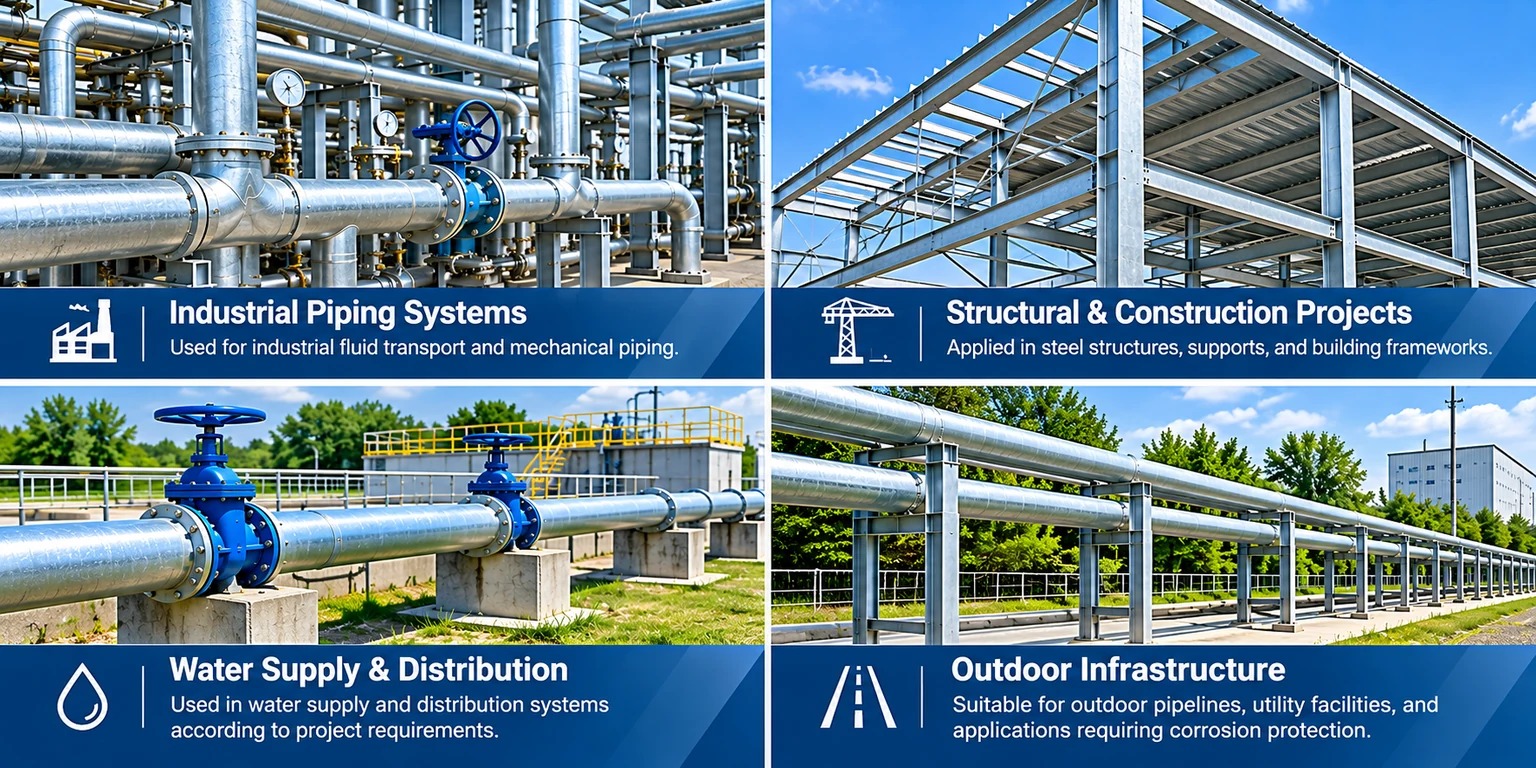
Industrial Piping Systems
Hot dip galvanized seamless steel pipes are used in industrial piping systems where seamless construction and corrosion protection are required. Typical applications include mechanical piping, utility pipelines, and industrial fluid transportation systems, subject to operating conditions.
Structural & Construction Projects
These pipes are suitable for structural supports, steel frameworks, and construction installations requiring durable steel components. The galvanized coating helps protect exposed steel surfaces against atmospheric corrosion in outdoor and humid environments.
Water Supply & Distribution
Galvanized seamless steel pipes can be used in suitable water supply and distribution systems, including industrial water pipelines and utility networks. Material selection depends on water quality, operating pressure, applicable regulations, and project specifications.
Outdoor Infrastructure
Hot dip galvanized seamless steel pipes are used in outdoor utility installations, industrial facilities, and infrastructure projects. Their zinc coating provides additional protection against moisture and environmental exposure, helping reduce maintenance requirements under suitable conditions.
Frequently Asked Questions (FAQ)
1. What is hot dip galvanized seamless steel pipe?
Hot dip galvanized seamless steel pipe is manufactured from seamless carbon steel pipe and coated with zinc by immersion in molten zinc. The seamless construction eliminates longitudinal weld seams, while the zinc coating provides corrosion protection for industrial and outdoor applications.
2. What is the difference between galvanized seamless steel pipe and galvanized welded steel pipe?
The main difference is the manufacturing process. Seamless steel pipes are produced without longitudinal weld seams, while welded steel pipes are manufactured by forming and welding steel strips or plates. Both types can be hot dip galvanized, but their mechanical properties, dimensional ranges, and applicable standards may differ.
3. What standards are available for hot dip galvanized seamless steel pipes?
Common base pipe specifications include ASTM A53/A53M, ASTM A106/A106M, and API 5L. ASTM A53 includes provisions for galvanized pipe, while ASTM A106 and API 5L primarily specify base pipe requirements. Galvanizing requirements must be confirmed separately where they are not covered by the selected pipe specification.
4. What sizes and wall thicknesses are available?
Hot dip galvanized seamless steel pipes are available in various outside diameters, wall thicknesses, and pipe schedules, depending on the applicable standard and manufacturing capabilities. Common schedule designations include SCH 40 and SCH 80. Customers should specify the required outside diameter, wall thickness, and length when requesting a quotation.
5. What is the zinc coating thickness of hot dip galvanized seamless steel pipe?
Zinc coating thickness depends on the applicable galvanizing specification and customer requirements. Coating requirements may be expressed in micrometers (µm) or coating mass (g/m²). The required coating thickness, uniformity, and inspection method should be confirmed before production.
6. Is hot dip galvanized seamless steel pipe suitable for high-pressure applications?
Seamless steel pipes may be used in pressure piping systems when their material grade, dimensions, design pressure, and operating temperature meet the applicable engineering requirements. However, galvanizing does not increase the pipe’s pressure rating. Suitability must be verified according to the relevant piping design code and service conditions.
7. Can galvanized seamless steel pipes be used for water supply systems?
Galvanized seamless steel pipes may be used in certain industrial water distribution and utility systems. For potable water applications, suitability depends on local regulations, water chemistry, and applicable drinking-water material requirements. Galvanized steel is not suitable for every water supply environment.
8. What testing and quality certificates are available?
Depending on the selected pipe standard and purchase requirements, inspection may include dimensional checks, mechanical testing, hydrostatic testing, nondestructive examination, and zinc coating inspection. Mill Test Certificates (MTC) and additional inspection documents may be available upon request, subject to confirmation.
9. What is the service life of hot dip galvanized seamless steel pipe?
Service life depends on zinc coating thickness, atmospheric exposure, humidity, chemical contamination, and maintenance conditions. Hot dip galvanizing can extend the service life of carbon steel pipes in suitable environments, but no fixed service life can be guaranteed without evaluating the installation conditions.
10. What information is required to request a quotation?
Customers should provide the required pipe standard, steel grade, outside diameter, wall thickness or schedule, length, zinc coating requirements, order quantity, and delivery destination. Additional requirements, such as pipe end preparation, testing, and inspection documentation, should also be specified.