ASTM A106 Seamless Carbon Steel Pipe
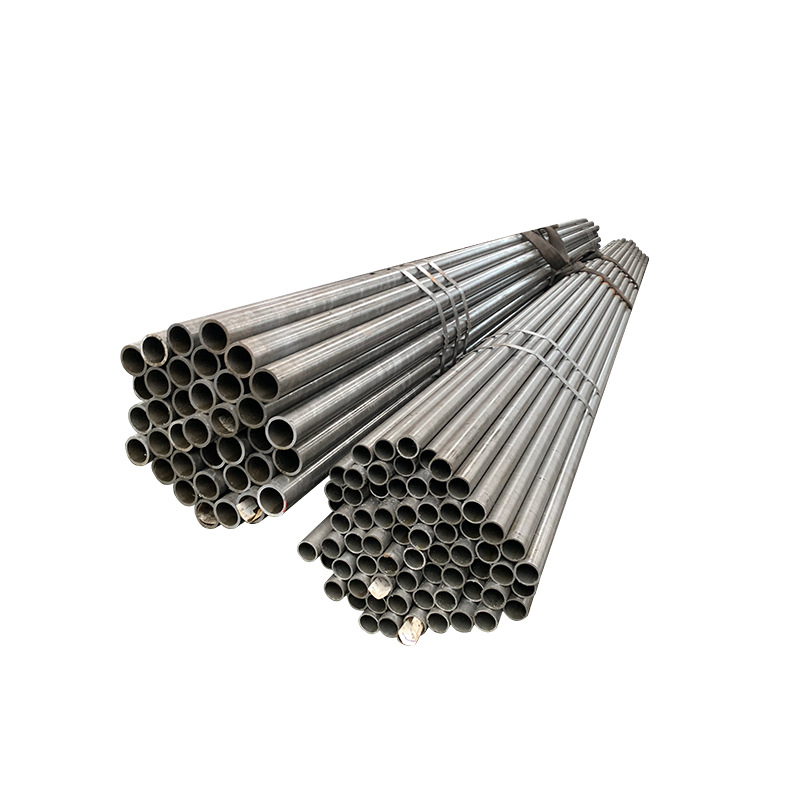
ASTM A106 Seamless Carbon Steel Pipe
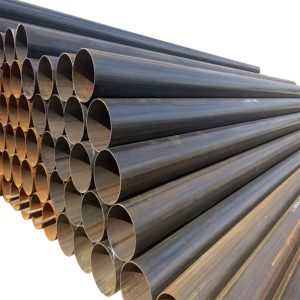
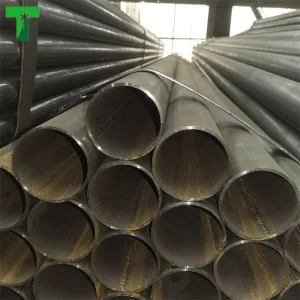
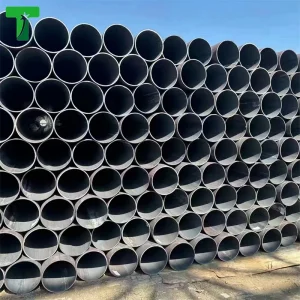
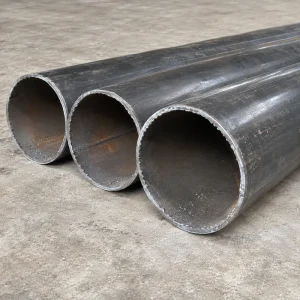
ASTM A106 Seamless Carbon Steel Pipe is manufactured to ASTM A106/A106M standards for high-temperature and pressure piping applications. Available in Grade A, Grade B, and Grade C, with Schedule 40, Schedule 80, and other applicable wall thicknesses. Commonly used in oil and gas pipelines, power plants, petrochemical facilities, and industrial steam systems.
- Mill Test Certificate Provided
- Strict Quality Inspection
- Custom Sizes Available
- On-Time Global Delivery
ASTM A106 Seamless Carbon Steel Pipe is produced through a seamless manufacturing process without longitudinal welded joints. The material offers specified mechanical properties and is intended for elevated-temperature service. Its chemical composition and mechanical requirements are controlled under ASTM A106/A106M to support consistent material quality for industrial piping projects.
In engineering applications, pipe selection depends on design pressure, operating temperature, fluid characteristics, and applicable piping codes. Engineers must consider wall thickness, corrosion allowance, thermal expansion, and joining methods to ensure compatibility with the intended service conditions. Proper material selection and fabrication procedures are essential for reliable piping system performance.
For international procurement, ASTM A106 seamless pipes can be supplied with different lengths, end preparations, and inspection requirements, subject to manufacturing availability. Buyers should confirm dimensional tolerances, required testing, material traceability, and documentation before ordering. Mill Test Certificates and third-party inspection services can be arranged according to agreed project specifications.
Product Features
- Mechanical Strength: ASTM A106 Grade B provides a minimum tensile strength of 415 MPa and a minimum yield strength of 240 MPa.
- Welding Compatibility: Suitable for industrial welding and fabrication using appropriate welding procedures.
- End Preparation Options: Plain and beveled ends are available for different piping connections and installation requirements.
- Quality Testing: Hydrostatic or permitted nondestructive electric testing is performed according to ASTM A106/A106M requirements.
Technical Specifications
| Item | Specification |
|---|---|
| Product Name | ASTM A106 Seamless Carbon Steel Pipe |
| Standard | ASTM A106/A106M |
| Steel Grade | Grade A, Grade B, Grade C |
| Manufacturing Process | Seamless (Hot Finished / Cold Drawn) |
| Nominal Pipe Size | NPS 1/8″–48″ (subject to manufacturing availability and applicable standard requirements) |
| Wall Thickness | SCH 20, SCH 40, SCH 80, SCH 160, XXS and other applicable thicknesses |
| Outside Diameter | According to ASME B36.10M and specified pipe dimensions |
| Length | 5.8 m, 6 m, 12 m or customized |
| Surface Finish | Black / Bare / Protective Oil / Optional Coating |
| Pipe Ends | Plain End (PE), Beveled End (BE) |
| Minimum Tensile Strength | Grade A: 330 MPa; Grade B: 415 MPa; Grade C: 485 MPa |
| Minimum Yield Strength | Grade A: 205 MPa; Grade B: 240 MPa; Grade C: 275 MPa |
| Testing | Mechanical testing, hydrostatic or permitted nondestructive electric testing, dimensional inspection |
| Documentation | Mill Test Certificate (MTC), additional inspection documents upon agreement |
| Applications | Steam pipelines, power plants, oil refineries, petrochemical processing and industrial pressure piping |
Applications
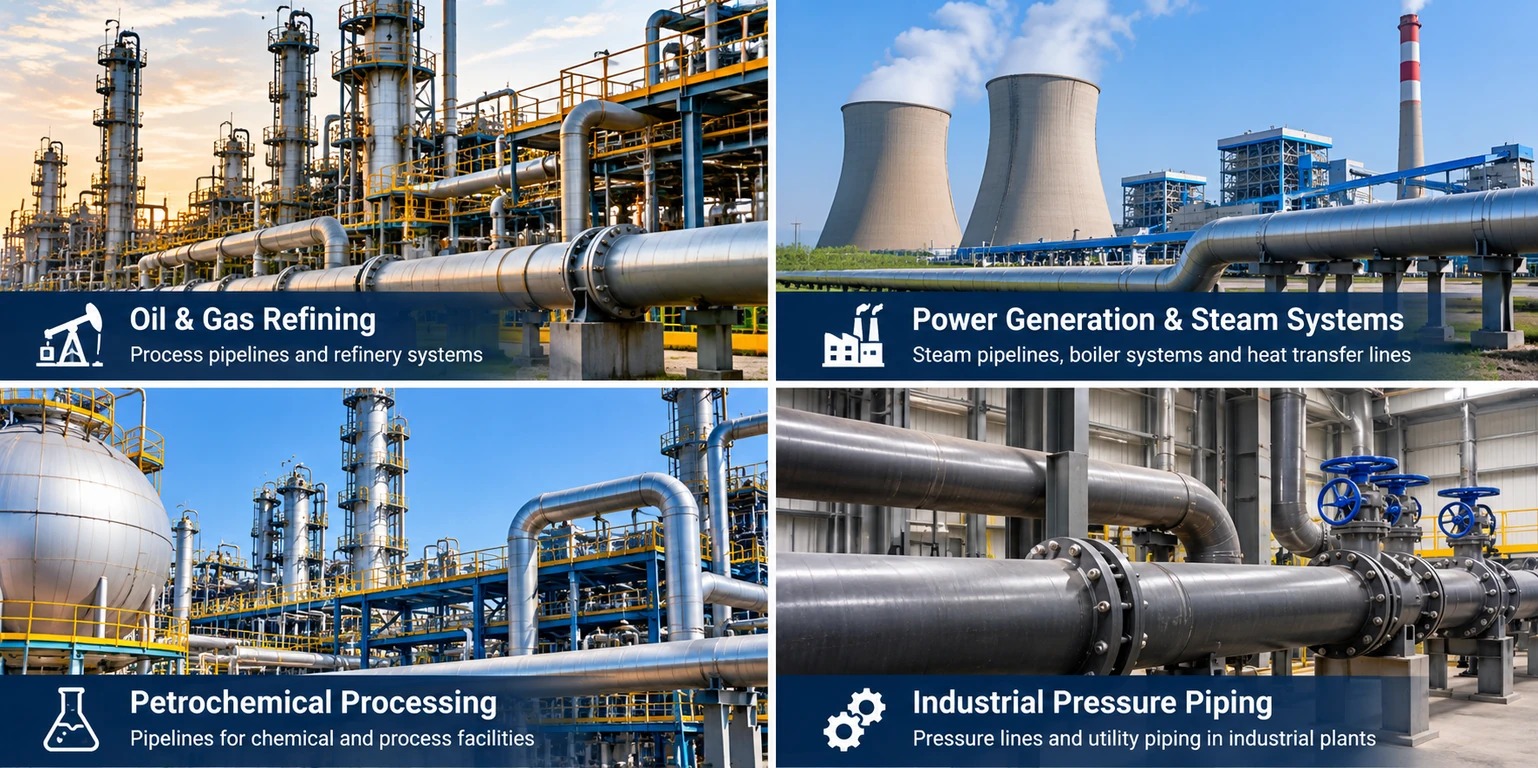
1. Oil & Gas Refining
ASTM A106 seamless carbon steel pipes are used in oil refineries, petroleum processing facilities, and related industrial piping systems. Typical applications include refinery process lines, equipment connections, and the transportation of compatible fluids under elevated-temperature conditions. Material grade, design pressure, operating temperature, and corrosion allowance must be evaluated according to applicable piping codes and project specifications.</p >
2. Power Generation & Steam Systems
ASTM A106 seamless pipes are commonly specified for thermal power plants, steam distribution networks, and boiler-related piping installations. They are used in selected steam lines, high-temperature utility piping, and equipment connections where carbon steel is suitable for the operating conditions. Wall thickness, thermal expansion, temperature limitations, and pressure requirements should be considered during engineering design.</p >
3. Petrochemical Processing
ASTM A106 seamless carbon steel pipes are used in petrochemical production facilities, chemical processing plants, and industrial process equipment. Typical applications include process fluid transportation, equipment interconnections, and piping systems operating under specified temperature and pressure conditions. Chemical compatibility, corrosion allowance, material grade, and inspection requirements should be evaluated before selecting pipes for petrochemical processing systems.</p >
4. Industrial Pressure Piping
ASTM A106 seamless carbon steel pipes are used in industrial pressure piping networks, mechanical utility systems, and process equipment installations. Common applications include steam lines, hot fluid transportation, and industrial equipment connections. Pipe dimensions, wall thickness, welding procedures, and inspection requirements should be selected according to applicable pressure piping codes and project specifications.</p >
Frequently Asked Questions (FAQ)
1. What is ASTM A106 seamless carbon steel pipe?
ASTM A106 seamless carbon steel pipe is manufactured in accordance with ASTM A106/A106M specifications for high-temperature service. It is commonly used in oil refineries, power plants, petrochemical facilities, and industrial piping systems. Its seamless construction eliminates the longitudinal welded seam found in welded steel pipes.
2. What is the difference between ASTM A106 Grade A, Grade B, and Grade C?
ASTM A106 seamless carbon steel pipes are available in three grades, which differ in chemical composition and minimum mechanical strength.</p >
- Grade A: Minimum tensile strength of 330 MPa (48,000 psi) and minimum yield strength of 205 MPa (30,000 psi).
- Grade B: Minimum tensile strength of 415 MPa (60,000 psi) and minimum yield strength of 240 MPa (35,000 psi).
- Grade C: Minimum tensile strength of 485 MPa (70,000 psi) and minimum yield strength of 275 MPa (40,000 psi).
ASTM A106 Grade B is widely specified for industrial piping applications. The appropriate grade should be selected according to operating conditions and project specifications.
3. What is the difference between ASTM A106 and ASTM A53 steel pipe?
ASTM A106 covers seamless carbon steel pipe intended for high-temperature service, while ASTM A53 covers black and hot-dipped galvanized steel pipe available in both seamless and welded types.
ASTM A106 is commonly specified for high-temperature process piping, steam lines, and refinery applications. ASTM A53 is frequently used in mechanical, pressure, and general piping systems. Material selection should follow the applicable piping design code and project requirements.
4. What sizes and wall thicknesses are available for ASTM A106 seamless pipes?
ASTM A106 seamless carbon steel pipes are commonly available in nominal pipe sizes from NPS 1/2 to NPS 24, depending on manufacturing capabilities and stock availability. Other sizes may be supplied subject to technical requirements and mill confirmation.
Common wall thickness designations include Schedule 40 (SCH 40), Schedule 80 (SCH 80), Schedule 160 (SCH 160), and XXS. Pipe dimensions are generally specified according to ASME B36.10M. Specific sizes, schedules, and lengths should be confirmed before ordering.
5. Is ASTM A106 seamless carbon steel pipe suitable for high-temperature and high-pressure applications?
Yes. ASTM A106 seamless carbon steel pipe is intended for high-temperature service and is commonly used in steam systems, oil refineries, petrochemical facilities, and industrial pressure piping.
Its suitability for a particular operating temperature and pressure depends on the material grade, pipe dimensions, wall thickness, corrosion allowance, and applicable piping design code. Engineering evaluation is required to determine the appropriate specifications for each application.
6. What testing and certificates are available for ASTM A106 seamless carbon steel pipes?
ASTM A106 seamless carbon steel pipes undergo chemical analysis, mechanical testing, and hydrostatic testing or permitted nondestructive electric testing in accordance with the applicable requirements of ASTM A106/A106M.
Mill Test Certificates (MTC) and relevant inspection documentation can be provided with the shipment. EN 10204 3.1 inspection certificates, additional nondestructive testing, dimensional inspection reports, and independent third-party inspections by organizations such as SGS or Bureau Veritas (BV) can be arranged upon request, subject to the agreed purchase specifications.