Black Steel Fire Sprinkler Pipe
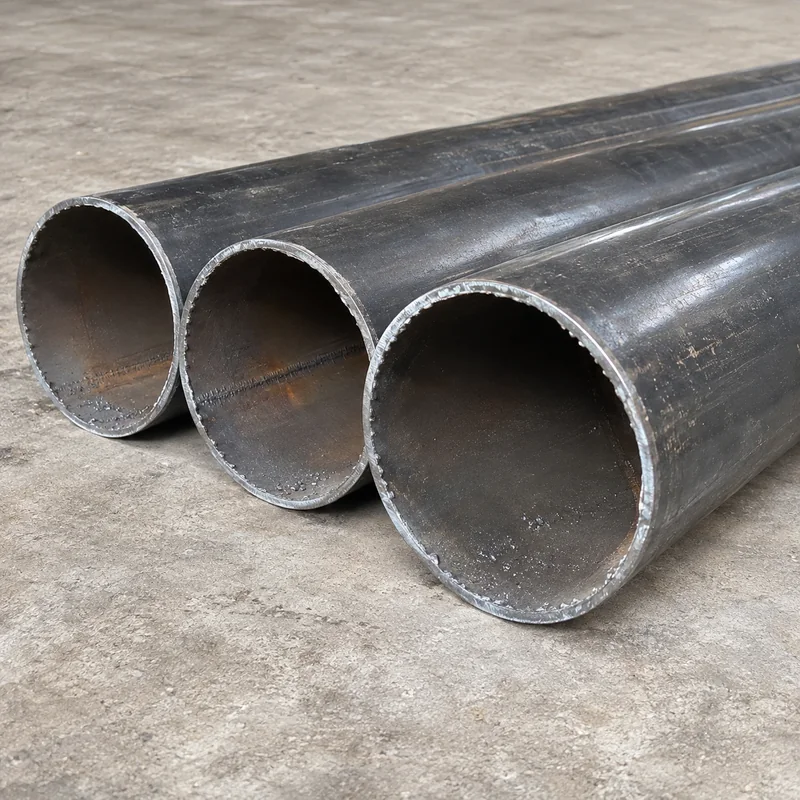
Black Steel Fire Sprinkler Pipe
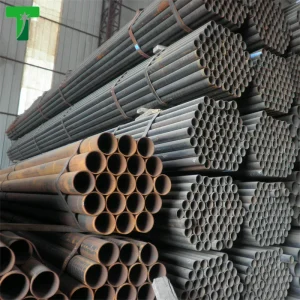
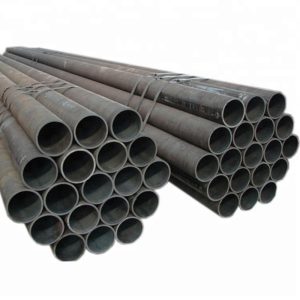
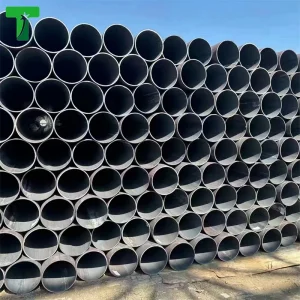
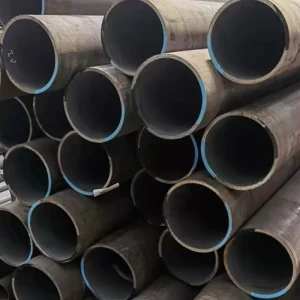
Black Steel Fire Sprinkler Pipe is designed for water-based fire protection systems in commercial, industrial, and residential buildings. Available in various diameters, wall thicknesses, and lengths, these carbon steel pipes support sprinkler piping installations with grooved, threaded, or welded connections, depending on project specifications and applicable fire protection standards.
- Mill Test Certificate Provided
- Strict Quality Inspection
- Custom Sizes Available
- On-Time Global Delivery
Fire sprinkler networks consist of main distribution pipes, cross mains, and branch lines that deliver water to individual sprinkler heads. Black carbon steel piping is commonly specified for these networks, particularly in systems where pipe routing and hydraulic calculations determine the layout. Within the broader carbon steel pipe range, sprinkler pipes are selected according to the required wall schedule, working pressure, and installation conditions.
Schedule 10 and Schedule 40 are frequently specified for sprinkler piping, although their suitability depends on the system design and applicable requirements. Pipe supports, hanger locations, and clearance around structural components must be considered when preparing the installation layout. In areas exposed to moisture or condensation, surface protection may also require additional attention.
On construction sites, sprinkler piping is often delivered in separate batches for different floors, zones, or installation phases. Contractors generally identify materials by pipe schedule, nominal size, and project reference before distributing them to working areas. Other carbon steel tubing products may be supplied for separate mechanical or fabrication work, but sprinkler piping must be selected according to the fire protection system specifications.
Product Features
- Smooth Internal Bore: Provides a continuous flow passage with minimal internal obstruction, subject to pipe manufacturing tolerances.
- Grooving Compatibility: Pipe ends can be prepared for roll-grooved or cut-grooved joints where permitted by the pipe specification and coupling manufacturer.
- Field Fabrication: Allows on-site cutting and pipe-end preparation to accommodate installation adjustments.
- Coating Flexibility: Supports compatible primer or protective coating applications according to environmental conditions and project requirements.
- Material Traceability: Pipe markings and batch identification can be maintained for material verification and inventory control.
Technical Specifications
| Parameter | Specification |
|---|---|
| Product Name | Black Steel Fire Sprinkler Pipe |
| Material | Carbon Steel |
| Manufacturing Process | ERW (Electric Resistance Welded) |
| Standard | ASTM A795, ASTM A53 |
| Steel Grade | ASTM A795 Grade A/B; ASTM A53 Grade A/B |
| Outside Diameter | 21.3–219.1 mm |
| Wall Thickness | Schedule 10, Schedule 40 |
| Length | 5.8 m, 6 m, 12 m or Customized |
| Surface Finish | Black, Bare, Oiled |
| Pipe Ends | Plain, Grooved, Threaded |
| Inspection | Dimensional, Visual, Hydrostatic Testing |
| Application | Fire Sprinkler Systems, Fire Water Supply |
| Packaging | Steel Bundles, Protective Wrapping |
Applications
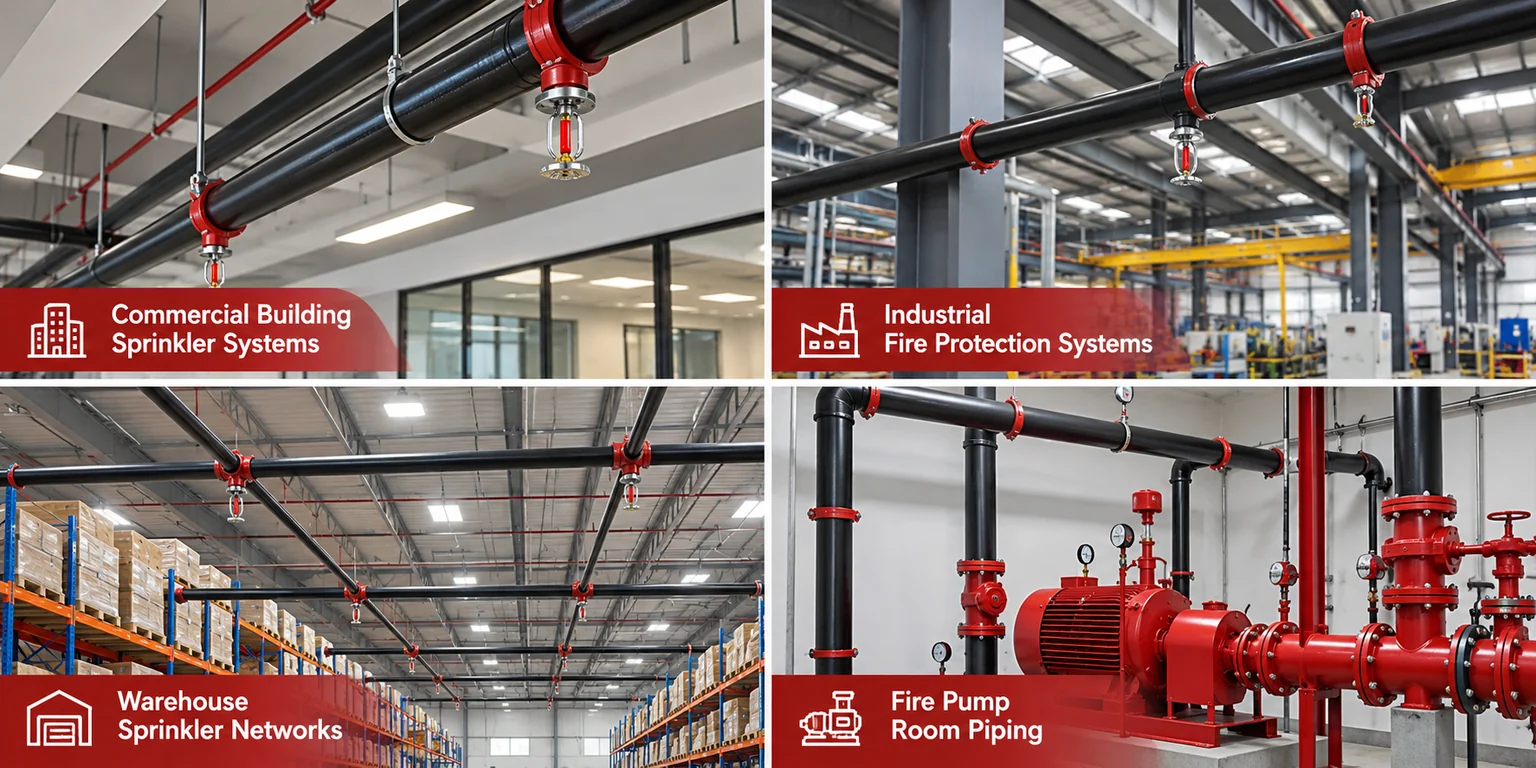
Black Steel Fire Sprinkler Pipe is used in water-based fire protection networks across buildings and industrial facilities. Piping arrangements vary with building layouts, sprinkler locations, and water supply configurations. The following applications illustrate typical installation environments and their specific piping requirements.
- Commercial Building Sprinkler Systems:
Installed above suspended ceilings, along service corridors, and within utility spaces in offices, shopping centers, and hotels. Main distribution lines and branch piping supply sprinkler heads throughout designated protection areas, with pipe routing coordinated around building services. - Industrial Fire Protection Systems:
Used in manufacturing plants, workshops, and production facilities where sprinkler piping runs alongside structural beams, machinery, and overhead equipment. Installation layouts account for equipment clearance, maintenance access, and the positioning of sprinkler heads. - Warehouse Sprinkler Networks:
Applied in storage warehouses, distribution centers, and logistics facilities with overhead sprinkler installations. Pipe arrangements are coordinated with storage rack layouts, ceiling heights, and sprinkler coverage requirements. Changes in storage configurations may require adjustments to the fire protection design. - Fire Pump Room Piping:
Used for fire pump discharge lines and associated water distribution connections where the selected pipe meets the system specifications. Piping layouts accommodate isolation valves, pressure gauges, fittings, and maintenance access around pump equipment.
Frequently Asked Questions
1. What is the difference between Schedule 10 and Schedule 40 sprinkler pipes?
Schedule 40 has a thicker wall than Schedule 10 at the same nominal diameter. For example, a 2-inch Schedule 10 steel pipe has a nominal wall thickness of 2.77 mm, compared with 3.91 mm for Schedule 40. This affects pipe weight, internal diameter, and the types of joints that can be used.
2. Can black steel sprinkler pipes be used in dry pipe systems?
Yes, provided the pipe is suitable for the specified system. One concern with dry systems is water left behind after testing or system operation. It can remain in low sections of the piping even after draining. Over time, these areas may develop localized corrosion.
3. Can black steel fire sprinkler pipes be cut and threaded on site?
Threading is possible on suitable pipe sizes and wall thicknesses. Schedule 40 is commonly used for threaded connections, while thin-wall sprinkler pipes may have restrictions on threading. Cutting and threading should follow the applicable pipe and fitting specifications.
4. How much clearance is needed around sprinkler piping above ceilings?
There is no single clearance dimension for every installation. The available space must accommodate pipe hangers, fittings, ceiling supports, and nearby mechanical services. Sprinkler head positioning and access requirements also affect the final pipe layout.
5. Can black steel sprinkler pipes be painted after installation?
Yes, where the coating system and project requirements permit it. The pipe surface should be cleaned before applying a compatible primer or finish coat. Paint must not interfere with sprinkler heads, mechanical joints, identification markings, or other components that require access.
6. What pipe defects should be checked before installation?
Look for flattened ends, dents, damaged threads, excessive corrosion, and visible deformation. Pipe ends should also be checked for burrs or damage that could interfere with joint preparation. Any pipe with questionable damage should be set aside for inspection rather than installed immediately.