Galvanized Scaffolding Steel Pipe

Galvanized Scaffolding Steel Pipe
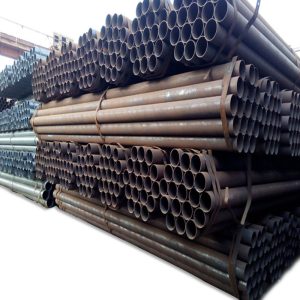
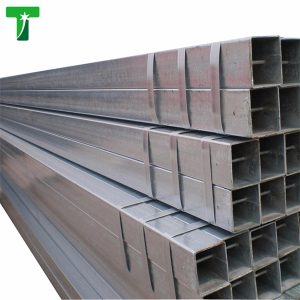
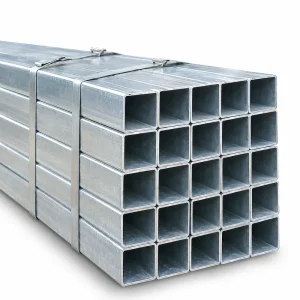
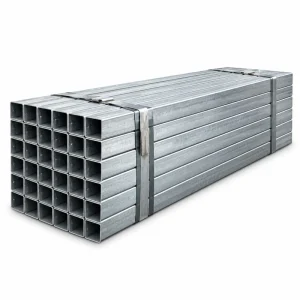
Galvanized Scaffolding Steel Pipe is designed for scaffolding structures used in construction, maintenance, and renovation projects. Available in various diameters, wall thicknesses, and lengths, these pipes feature a zinc coating for corrosion protection and can be supplied to meet different scaffolding system requirements. Custom sizes and bulk orders are available.
- Mill Test Certificate Provided
- Strict Quality Inspection
- Custom Sizes Available
- On-Time Global Delivery
Galvanized Scaffolding Steel Pipe is manufactured from ERW carbon steel tubing, with pre-galvanized and hot-dip galvanized finishes available. Pre-galvanized pipes are formed from zinc-coated steel strip, with welded seams requiring appropriate corrosion protection. Hot-dip galvanizing after fabrication provides zinc coating on accessible internal and external surfaces, including the welded area.
Common outside diameters include 42.7 mm, 48.0 mm, and 48.3 mm, with wall thicknesses such as 2.5 mm, 3.2 mm, and 4.0 mm. EN 39 specifies 48.3 mm scaffolding tubes with nominal wall thicknesses of 3.2 mm for Type 3 and 4.0 mm for Type 4. Other steel tube specifications, including ASTM A53 and JIS G 3444, may be requested for projects requiring different material grades or dimensional requirements.
Scaffolding pipes are used as vertical standards, horizontal ledgers, and diagonal braces in tube-and-coupler systems. The 48.3 mm diameter is commonly paired with compatible forged or pressed steel couplers, while other diameters require matching fittings. Hot-dip galvanized pipes are frequently selected for outdoor scaffolding where corrosion resistance is required during repeated installation and dismantling.
Product Features
- Round Tube Profile: Circular cross-section suitable for clamping and connection within tubular scaffolding assemblies.
- Reusable Components: Steel tubes can be dismantled and reused when they remain free from damage and meet inspection requirements.
- Cut-to-Length Supply: Pipe lengths can be prepared to match specified scaffolding configurations.
- Plain-End Design: Straight pipe ends allow insertion into compatible sleeve couplers and joint fittings.
- Surface Protection: Zinc coating reduces direct exposure of the underlying steel to moisture and atmospheric conditions.
- Site Handling: Individual tubes can be transported, stacked, and assembled into different scaffolding arrangements.
Specifications
| Parameter | Specification |
|---|---|
| Product Name | Galvanized Scaffolding Steel Pipe |
| Manufacturing Process | ERW (Electric Resistance Welded) |
| Outside Diameter | 42.7 mm, 48.0 mm, 48.3 mm |
| Wall Thickness | 2.5 mm, 3.2 mm, 4.0 mm |
| Standard Length | 1–6 m; custom lengths available |
| Steel Grade | S235GT, Q235, Q355, STK500 |
| Applicable Standards | EN 39, relevant BS 1139 requirements, ASTM A53, JIS G 3444 (as specified) |
| Surface Treatment | Pre-Galvanized / Hot-Dip Galvanized |
| Zinc Coating | According to specified coating requirements |
| Pipe Ends | Plain Ends |
| Dimensional Tolerance | According to applicable product standards |
| Packaging | Steel Strip Bundles |
Applications
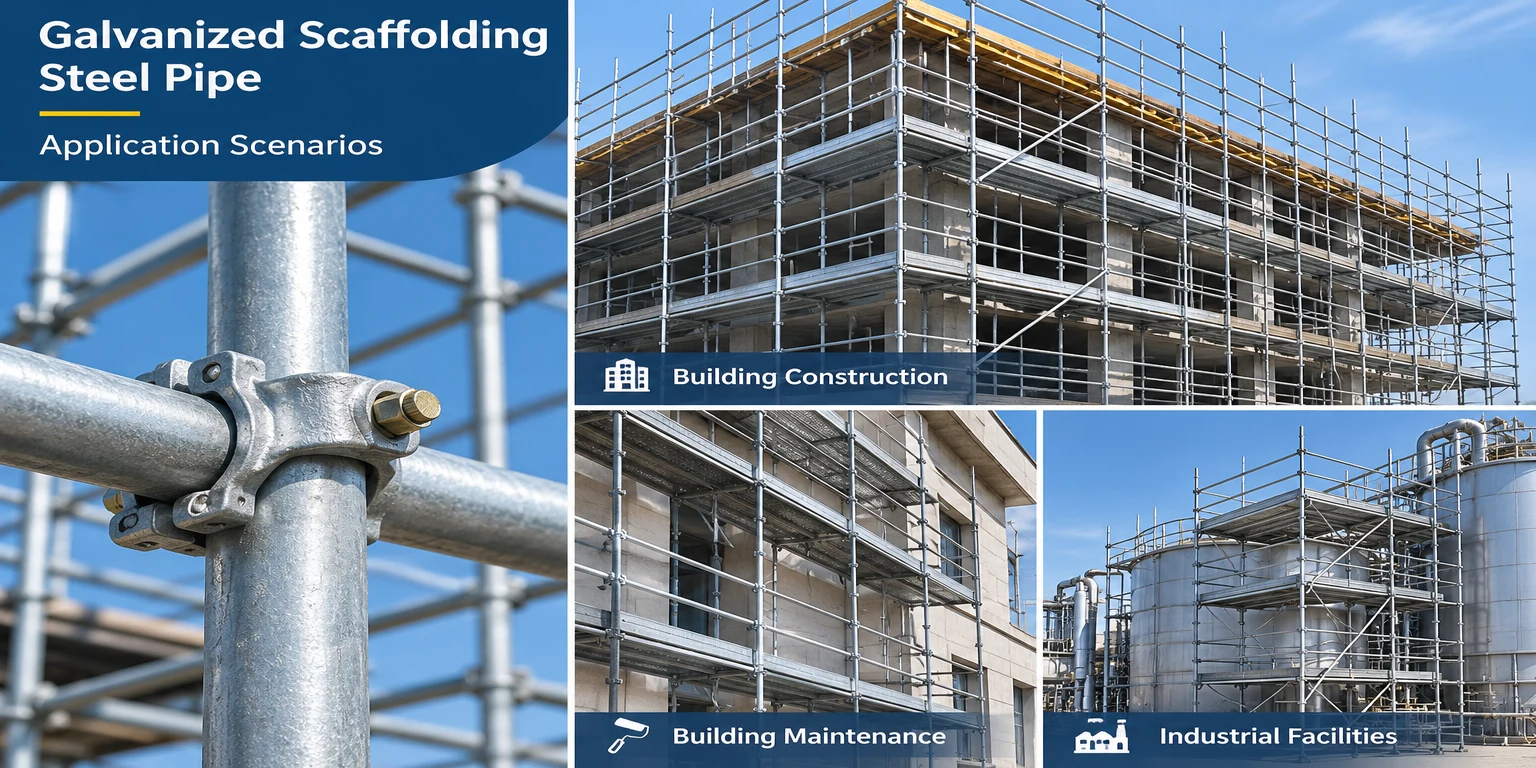
Galvanized Scaffolding Steel Pipe is used in temporary access structures for building construction, exterior maintenance, industrial equipment servicing, and infrastructure projects. Scaffolding arrangements vary according to the working height, required platform capacity, structural geometry, and site access conditions. The following applications represent common uses of scaffolding steel pipes in construction and industrial environments.</p >
- Building Construction: Used to erect temporary scaffolding around residential buildings, commercial developments, and industrial structures during masonry work, concrete repairs, plastering, and exterior finishing. Scaffolding tubes form supporting frameworks for working platforms, allowing construction personnel to access different elevations. Scaffold height, platform loading, bracing arrangements, and anchorage requirements are determined by the approved scaffolding design and site conditions.
- Facade Maintenance & Renovation: Installed around building exteriors for painting, facade restoration, window replacement, waterproofing, and exterior wall repairs. Tube-and-coupler scaffolding can be arranged around balconies, projecting architectural features, and irregular building surfaces where standard access equipment may be difficult to position. Working platforms and access routes are configured according to the maintenance tasks, building geometry, and required safety clearances.
- Industrial Equipment Maintenance: Used to construct temporary access platforms around storage tanks, processing vessels, pipelines, boilers, and other industrial equipment during inspection, cleaning, and repair operations. Scaffolding structures can be configured to accommodate curved surfaces, elevated pipework, and restricted maintenance areas. Platform locations, support arrangements, and access openings are planned around equipment dimensions, operating restrictions, and maintenance requirements.
- Shipyard & Infrastructure Projects: Used in shipbuilding facilities, bridge maintenance, port construction, and infrastructure repair projects where temporary access is required around large or irregular structures. Scaffolding tubes can be assembled into working platforms alongside ship hulls, bridge components, and structural steel assemblies. Scaffold configurations are adapted to the available support points, working elevations, environmental exposure, and project-specific access requirements.
Frequently Asked Questions
What is the difference between 48.0 mm and 48.3 mm scaffolding pipes?
EN 39 scaffolding tubes have a nominal outside diameter of 48.3 mm. The 48.0 mm size is also found in some markets, but the two should not be treated as interchangeable. When ordering replacement tubes, check the actual pipe diameter and the coupler manufacturer’s approved size range.
What is the difference between EN 39 Type 3 and Type 4 scaffolding tubes?
EN 39 Type 3 tubes have a nominal wall thickness of 3.2 mm, compared with 4.0 mm for Type 4. Both use a nominal outside diameter of 48.3 mm. A 6 m Type 4 tube is approximately 4.5 kg heavier than a Type 3 tube, based on nominal steel dimensions. The thicker wall increases the tube’s cross-sectional properties but does not establish the safe load of an assembled scaffold.
Which is better for scaffolding pipes, pre-galvanized or hot-dip galvanized?
Hot-dip galvanizing after fabrication coats the accessible inner and outer pipe surfaces, including the welded seam. Pre-galvanized pipes are made from zinc-coated strip, and the weld area may require additional protection. For long-term outdoor exposure, post-fabrication hot-dip galvanizing is generally the better choice when a suitable coating specification is used.
How much weight can a 48.3 mm scaffolding pipe support?
There is no single safe load rating for a 48.3 mm pipe. For example, a 48.3 × 4.0 mm tube has a greater cross-sectional area than a 48.3 × 3.2 mm tube, but its allowable load also depends on unsupported length, steel grade, end restraints, and whether the tube carries compression or bending. Scaffold loads must be calculated for the actual assembly, including couplers, bracing, and foundations.
How can I check the wall thickness and galvanizing quality before shipment?
Wall thickness can be measured at the pipe ends using a suitable micrometer or ultrasonic thickness gauge. Measurements should be taken at several positions and compared with the specified tolerances. Zinc coating thickness can be checked using a calibrated magnetic coating thickness gauge. Weld condition, straightness, and surface defects should also be inspected against the agreed acceptance criteria.
What information do you need to quote galvanized scaffolding steel pipes?
Please send the outside diameter, wall thickness, pipe length, steel grade, galvanizing method, and required quantity. For EN 39 tubes, specify Type 3 or Type 4. If a minimum zinc coating thickness, inspection certificate, or particular packaging method is required, include it in the inquiry so these costs can be included in the quotation.