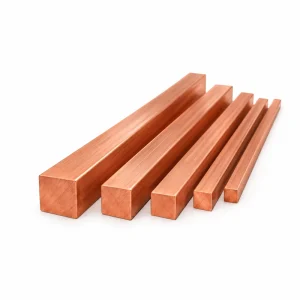
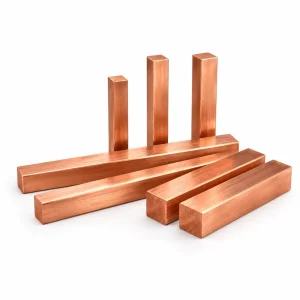
C10100 TU2 Copper Square Bar
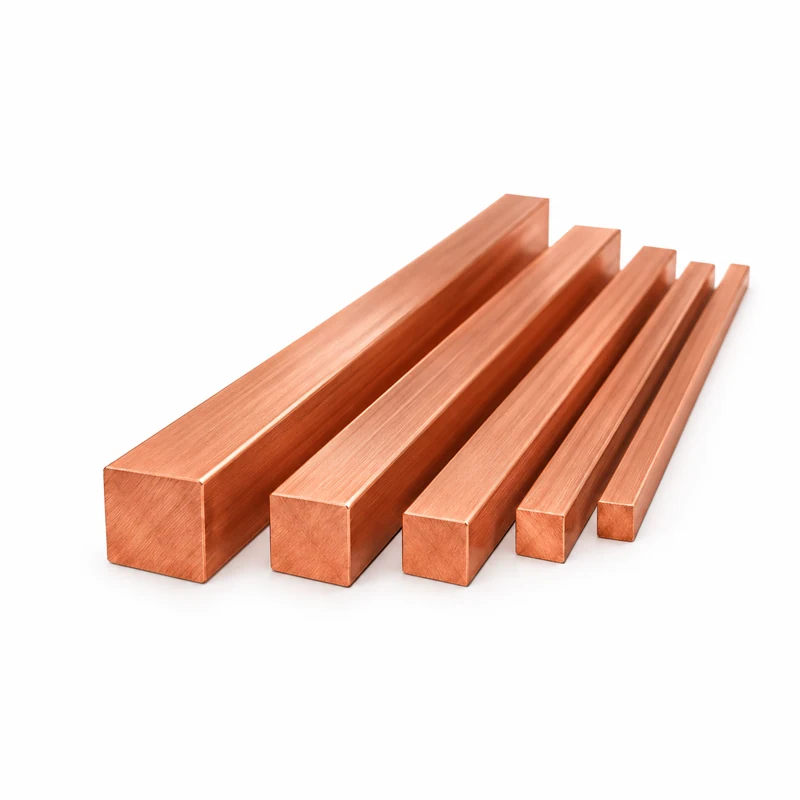
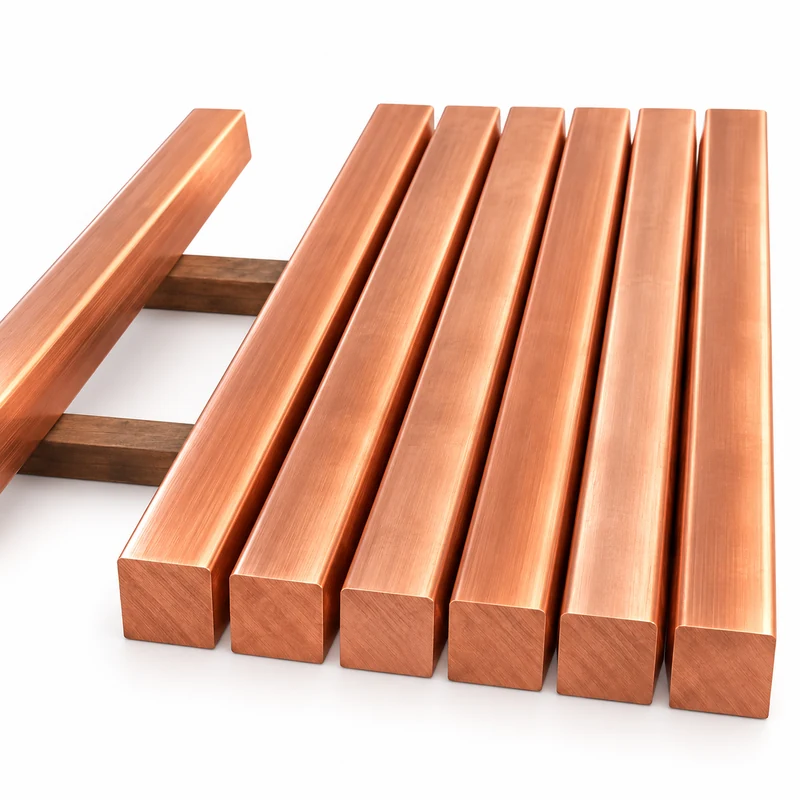
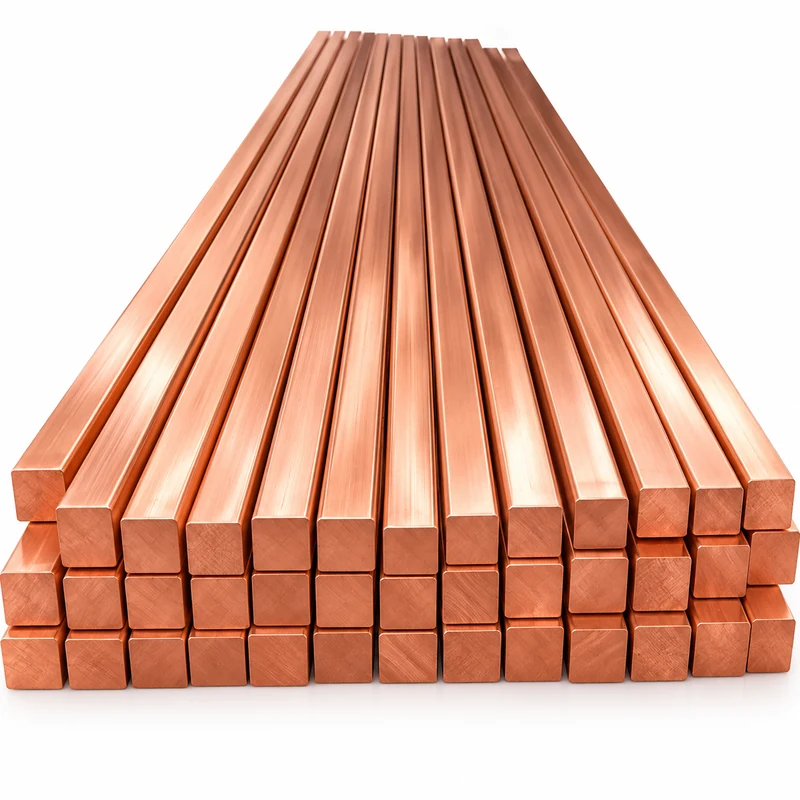
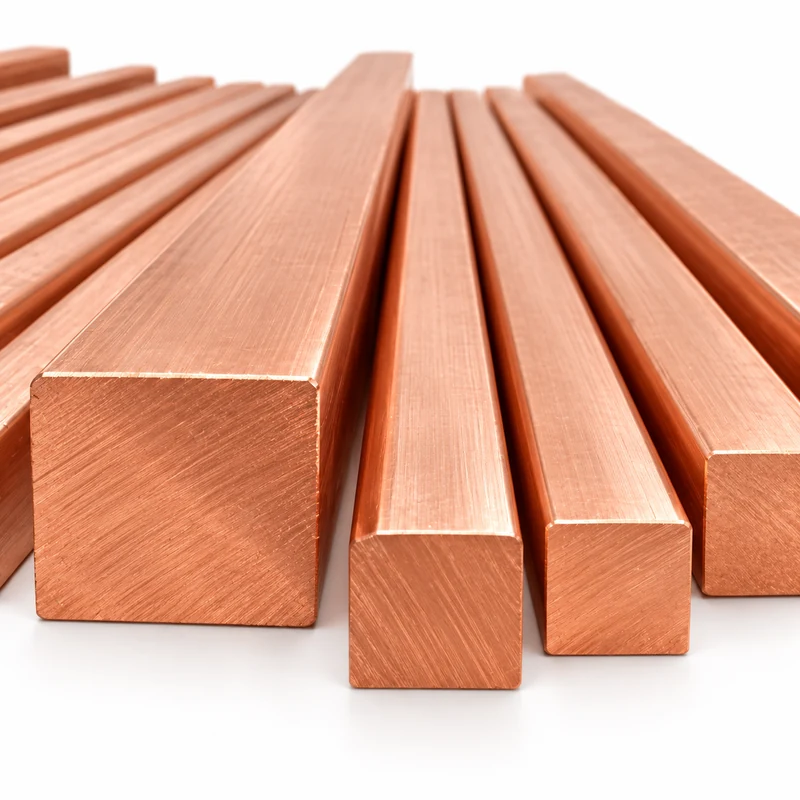
C10100 TU2 Copper Square Bar
C10100 TU2 Copper Square Bar is designed for electrical and precision engineering applications requiring high conductivity and low oxygen content. Its oxygen-free copper composition supports reliable current transmission, thermal performance, and fabrication of electrical connectors, conductive components, and precision-machined industrial parts.
- Mill Test Certificate Provided
- Strict Quality Inspection
- Custom Sizes Available
- On-Time Global Delivery
C10100 TU2 Copper Square Bar is a high-purity, oxygen-free copper product designed for electrical and precision engineering applications. UNS C10100 offers excellent electrical and thermal conductivity, making it suitable for components requiring efficient current transmission and heat dissipation.
The solid square profile provides flat surfaces for cutting, drilling, milling, and precision machining. Its ductility and low oxygen content support the production of conductive blocks, electrical terminals, connectors, and specialized industrial components.
C10100 copper square bars can be specified according to applicable ASTM B187/B187M requirements, including dimensions, temper, and tolerances. Buyers should confirm the required material designation, surface condition, and inspection documentation before ordering. Material test certificates can be supplied where included in the agreed purchase specifications.
Product Features
- Oxygen-Free Copper: Low oxygen content and high material purity for demanding electrical and industrial applications.
- Excellent Electrical Conductivity: Supports efficient current transmission in electrical connectors, terminals, and conductive components.
- High Thermal Conductivity: Facilitates effective heat transfer in electrical equipment and thermal management components.
- Good Machinability: Suitable for cutting, drilling, milling, and precision machining with appropriate tooling.
- Square Cross-Section: Provides flat surfaces for secure clamping, accurate positioning, and component fabrication.
- Industrial Applications: Suitable for power distribution components, precision electrical parts, conductive blocks, and specialized equipment.
Technical Specifications
| Parameter | Specification |
|---|---|
| Product Name | C10100 TU2 Copper Square Bar |
| Material Type | Oxygen-Free Copper |
| UNS Grade | C10100 (OFE Copper) |
| Chinese Grade | TU2 (Comparable oxygen-free copper grade; verify equivalence) |
| Applicable Standard | ASTM B187/B187M, subject to product specification |
| Cross-Section | Solid Square |
| Square Size | Specified by side length × side length (mm) |
| Length | According to purchase specification |
| Temper | Annealed or cold-worked, as specified |
| Electrical Conductivity | Excellent; depends on grade and temper |
| Thermal Conductivity | High; depends on temperature and material condition |
| Density | Approximately 8.9 g/cm³ |
| Surface Condition | Clean, free from harmful surface defects |
| Dimensional Tolerance | According to applicable standard and agreed dimensions |
| Processing Methods | Cutting, drilling, milling, and machining |
| Typical Applications | Electrical connectors, conductive blocks, precision components, and power distribution equipment |
| Quality Inspection | Chemical composition, dimensional inspection, and applicable electrical tests |
| Documentation | Material Test Certificate (MTC), as agreed in purchase order |
Applications
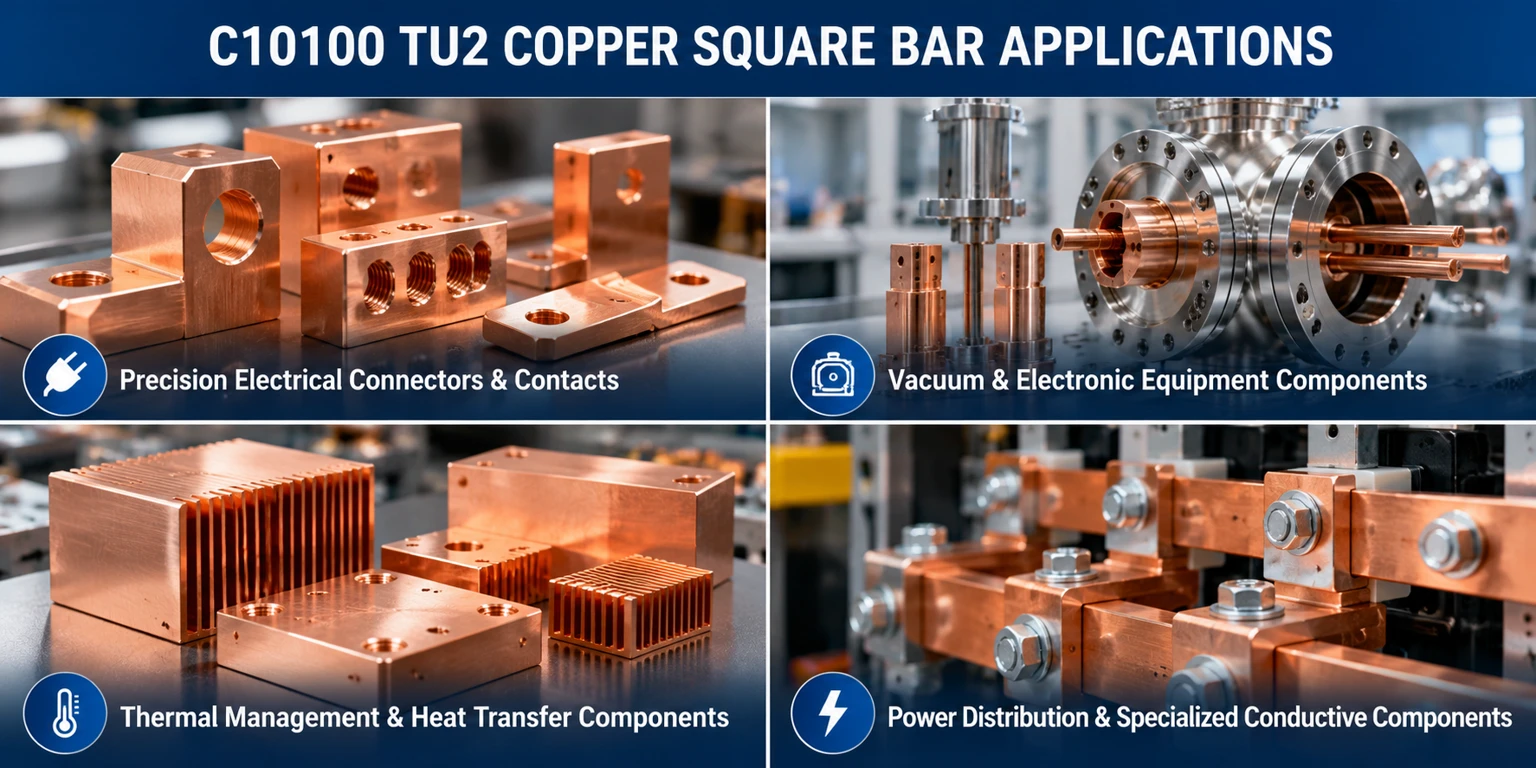
1. Precision Electrical Connectors & Contacts
C10100 oxygen-free copper square bars are used to manufacture precision electrical connectors, conductive terminals, contact blocks, and specialized electrical connection components. Their excellent electrical conductivity and low oxygen content support efficient current transmission in demanding electrical assemblies. The solid square profile provides flat surfaces for accurate drilling, milling, and machining of customized components. Contact resistance, surface finish, mechanical pressure, and operating temperature should be considered when designing electrical connections. Protective plating may also be required depending on the service environment.
2. Vacuum & Electronic Equipment Components
C10100 oxygen-free copper square bars are suitable for selected vacuum equipment, electronic instruments, and specialized electrical assemblies requiring low oxygen content and consistent material properties. They can be machined into conductive supports, connection blocks, electrical feedthrough components, and precision equipment parts. Their thermal and electrical conductivity supports applications involving current transmission and heat dissipation. For high-vacuum or ultra-high-vacuum environments, material cleanliness, surface preparation, outgassing characteristics, and joining methods must be evaluated according to equipment specifications.
3. Thermal Management & Heat Transfer Components
C10100 oxygen-free copper square bars are used to manufacture heat spreaders, conductive cooling blocks, thermal contact components, and precision heat transfer parts. Their high thermal conductivity supports effective heat dissipation in electronic equipment, power devices, and specialized industrial systems. Square copper stock can be machined into components with flat contact surfaces, mounting holes, and customized cooling geometries. Thermal performance depends on component dimensions, surface contact quality, operating temperature, and cooling conditions. Suitable mechanical design is essential for maintaining reliable heat transfer.
4. Power Distribution & Specialized Conductive Components
C10100 oxygen-free copper square bars are used to produce conductive blocks, busbar connection components, electrical terminals, and specialized power distribution hardware. Their excellent electrical conductivity supports efficient current transmission in properly designed electrical systems. The square cross-section allows accurate positioning, cutting, drilling, and fabrication of conductive components with flat connection surfaces. Material selection and component design should account for current capacity, electrical contact resistance, mechanical loading, temperature rise, and applicable equipment standards. Surface protection and connection methods should be selected according to operating conditions.
Frequently Asked Questions (FAQ)
1. What is C10100 TU2 copper square bar?
C10100 TU2 Copper Square Bar refers to oxygen-free copper square stock used in electrical and precision engineering applications. UNS C10100 is an oxygen-free electronic (OFE) copper grade, while TU2 is a Chinese oxygen-free copper designation. Both are associated with high electrical conductivity and low oxygen content, but their chemical composition and technical requirements should be verified against the applicable material standards.
2. What is the difference between C10100 and C11000 copper square bars?
C10100 is oxygen-free electronic copper, while C11000 is electrolytic tough pitch (ETP) copper. Both offer excellent electrical and thermal conductivity. C10100 is generally preferred for applications requiring very low oxygen content, such as selected vacuum and specialized electronic components. C11000 is commonly used for general electrical conductors, connectors, and busbar components. Final material selection depends on operating conditions, fabrication methods, and applicable specifications.
3. What standards apply to C10100 copper square bars?
ASTM B187/B187M covers copper bus bars, rods, and shapes for electrical applications and may be applicable to C10100 square bars when the specified product requirements are satisfied. TU2 copper products should be evaluated according to the relevant Chinese material and product standards. Buyers should confirm the required grade, temper, dimensions, tolerances, and inspection requirements before placing an order.
4. Can C10100 copper square bars be used in vacuum equipment?
Yes. C10100 oxygen-free copper can be used in selected vacuum equipment, electronic instruments, and specialized conductive assemblies. Its low oxygen content and high conductivity make it suitable for certain precision components. However, suitability for high-vacuum or ultra-high-vacuum systems also depends on material cleanliness, surface treatment, outgassing behavior, joining methods, and the equipment manufacturer’s specifications.
5. Can C10100 copper square bars be machined into precision components?
Yes. C10100 copper square bars can be cut, drilled, milled, and machined into electrical connectors, conductive blocks, heat transfer components, and precision equipment parts. Their square cross-section provides flat surfaces for clamping and accurate positioning. Because high-purity copper is ductile and may produce continuous chips, appropriate cutting tools, lubrication, and machining parameters are important for maintaining dimensional accuracy and surface quality.
6. What are the main applications of C10100 copper square bars?
C10100 copper square bars are used in precision electrical connectors, selected vacuum equipment components, thermal management systems, conductive supports, and specialized power distribution assemblies. Their electrical and thermal conductivity supports efficient current transmission and heat transfer. The material is particularly useful where low oxygen content is an important design consideration. Application suitability should be evaluated according to mechanical loading, operating temperature, and environmental requirements.
7. What information should buyers provide when ordering C10100 copper square bars?
Buyers should specify the required material grade, applicable standard, square dimensions, length, temper, dimensional tolerances, quantity, and intended application. Additional requirements may include surface finish, electrical conductivity testing, chemical analysis, and material traceability. Material test certificates (MTC) and inspection documentation should be included in the agreed purchase specifications to ensure that the supplied material meets the required technical conditions.