Galvanized Steel Wire for Fencing
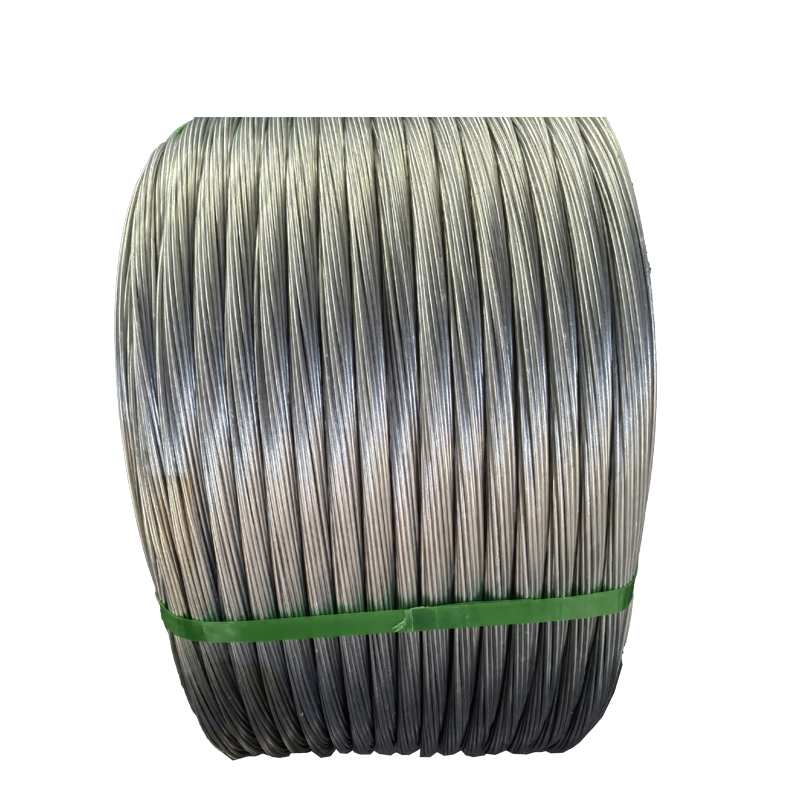
Galvanized Steel Wire for Fencing
Galvanized Steel Wire for Fencing is suitable for livestock enclosures, agricultural boundaries, and rural perimeter fencing. It can be used as individual fence strands or processed into woven fencing materials, with wire grades selected according to fence design, post spacing, and installation conditions.
- Mill Test Certificate Provided
- Strict Quality Inspection
- Custom Sizes Available
- On-Time Global Delivery
Galvanized Steel Wire for Fencing is manufactured from carbon steel wire rod through controlled drawing and galvanizing processes. Depending on the required mechanical properties, the wire may undergo additional heat treatment during production. The manufacturing sequence is selected to achieve the specified material condition while maintaining consistent wire geometry.
Quality control includes inspections of surface condition, dimensional accuracy, and zinc coating integrity. Mechanical testing may cover tensile strength and elongation, while coating assessments evaluate adhesion and coating mass. Inspection procedures and acceptance criteria are determined according to the applicable product standard and agreed technical specifications.
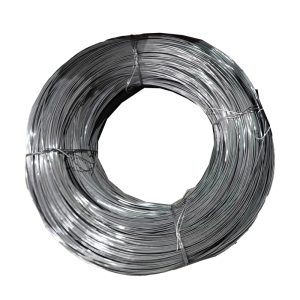
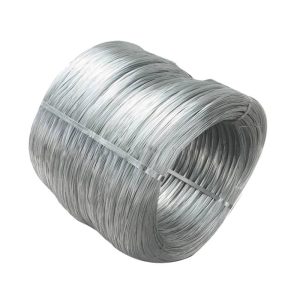
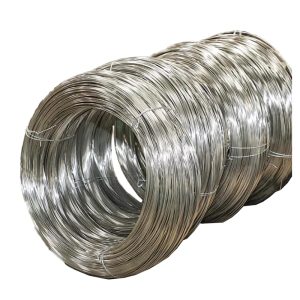
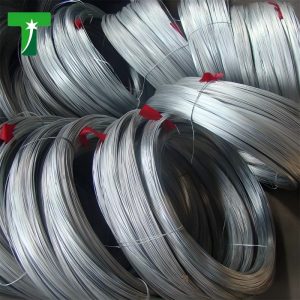
Finished wire is wound into coils or spools using controlled winding methods to facilitate handling and unwinding. Commercial orders may specify coil weight, internal diameter, protective wrapping, and identification labels. Material traceability records and inspection certificates can be supplied when agreed upon as part of the purchase requirements.
Product Features
- Consistent Strand Alignment: Uniform wire geometry helps maintain straight, evenly positioned strands along fence lines, reducing irregularities during installation.
- Controlled Tension Adjustment: Suitable wire grades allow installers to adjust strand tension using compatible strainers and tensioning devices without exceeding the recommended working load.
- Compatibility with Fence Hardware: The wire can be used with appropriately sized staples, clips, strainers, and other fastening components commonly employed in fencing systems.
- Resistance to Outdoor Weathering: The zinc layer provides sacrificial protection to the underlying steel, helping limit corrosion caused by rain, humidity, and atmospheric exposure.
- Adaptability to Uneven Terrain: Individual wire strands can follow gradual changes in ground elevation when supported by properly positioned posts and intermediate supports.
- Maintenance and Repair Accessibility: Individual damaged sections can be repaired using suitable wire joiners or replacement strands, reducing the need to dismantle an entire fence line.
Technical Specifications
| Parameter | Specification |
|---|---|
| Product Name | Galvanized Steel Wire for Fencing |
| Material | Carbon Steel |
| Wire Diameter | 1.6–5.0 mm (Reference Range) |
| Tensile Strength | 350–1800 MPa (50,800–261,100 psi, Reference Range; Grade Dependent) |
| Wire Condition | Soft / Medium Tensile / High Tensile, as Specified |
| Galvanizing Method | Hot-Dip Galvanized / Electro Galvanized |
| Zinc Coating Mass | According to Wire Diameter and Coating Class |
| Surface Finish | Galvanized, Smooth Surface |
| Diameter Tolerance | According to Applicable Standard |
| Elongation | According to Tensile Grade and Specification |
| Applicable Standards | ASTM A641/A641M, EN 10244-2 (Coating Requirements), or Other Agreed Specifications, Where Applicable |
| Supply Form | Coils / Spools |
| Coil Weight | According to Order Requirements |
| Packaging | Protective Wrapping / Palletized Packaging |
Applications
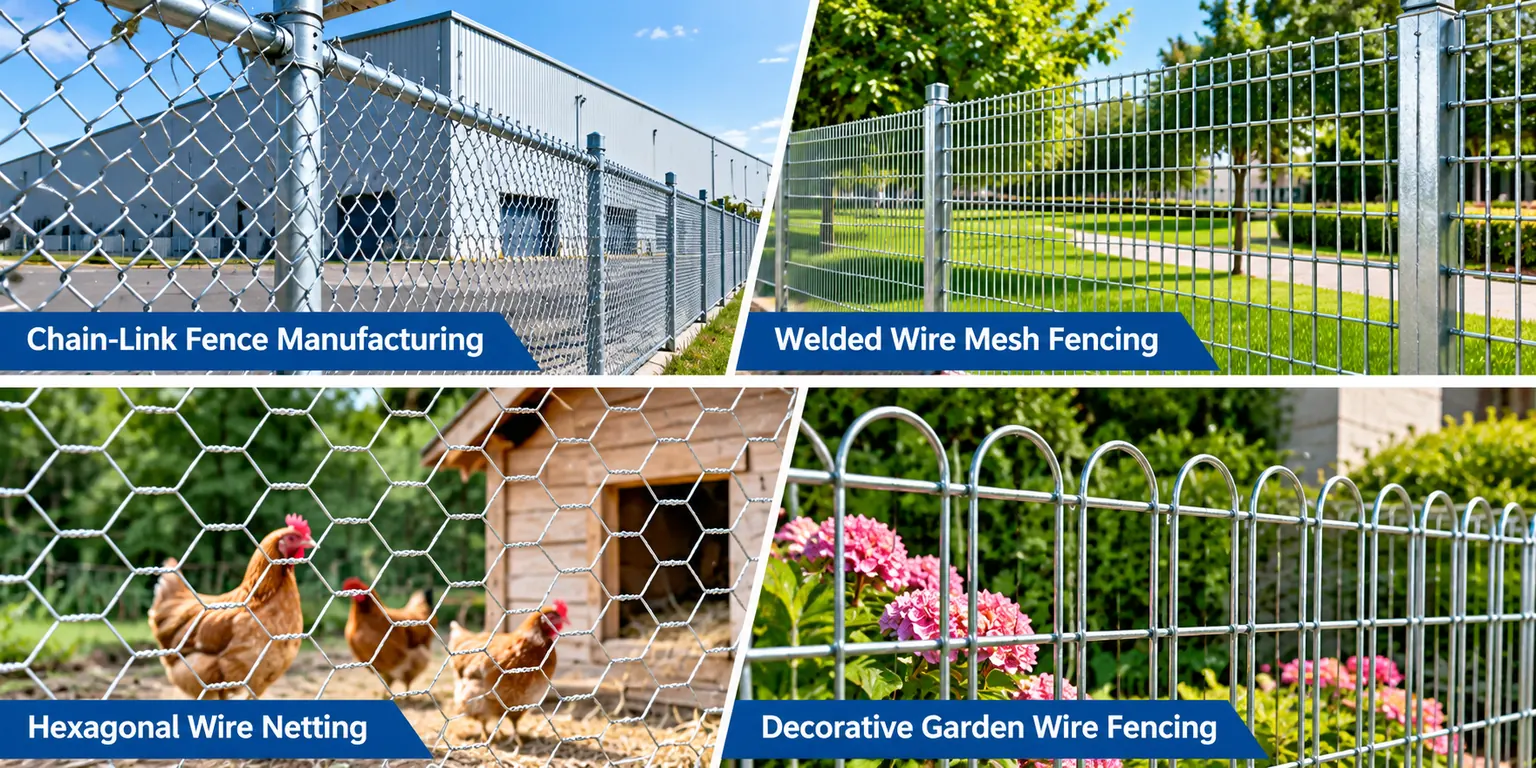
Galvanized Steel Wire for Fencing is used in the production of various wire mesh products and perimeter enclosure systems for industrial, agricultural, commercial, and residential environments. Depending on the manufacturing process, the wire can be woven, twisted, welded, or formed into different mesh configurations. Each fencing application requires suitable material properties, mesh dimensions, and fabrication methods to achieve the intended enclosure function. Wire selection should account for processing compatibility, installation requirements, and environmental exposure.
- Chain-Link Fence Manufacturing: Galvanized steel wire is used to manufacture diamond-pattern chain-link mesh for industrial facilities, warehouses, sports grounds, and commercial perimeter enclosures. During production, individual wire strands are formed into interlocking spirals to create a continuous flexible mesh structure. Wire diameter, mesh opening size, and mechanical properties should be selected according to the required fence height, installation method, and manufacturing equipment. The wire must have sufficient forming capability to withstand the bending operations involved in mesh production without excessive cracking or breakage.
- Welded Wire Mesh Fencing: Suitable galvanized steel wire can be processed into welded mesh panels for public parks, residential developments, industrial compounds, and institutional boundaries. Longitudinal and transverse wires are arranged at predetermined intervals and joined at their intersections using resistance welding equipment. Wire composition, surface condition, and welding parameters must be compatible with the selected manufacturing process. Because welding may damage the zinc coating around the joints, additional corrosion protection or galvanizing after fabrication may be required according to the finished fence specification.
- Hexagonal Wire Netting: Galvanized steel wire is used in the manufacture of hexagonal wire mesh for poultry enclosures, garden barriers, small animal housing, and agricultural protection systems. The manufacturing process twists adjacent wire strands together to form interconnected hexagonal openings, producing a flexible mesh that can be cut and shaped during installation. Wire ductility, twisting performance, and mesh opening dimensions are important considerations for consistent production. The finished netting can be attached to timber or metal supporting frames according to the enclosure design and required containment function.
- Decorative Garden Wire Fencing: Galvanized steel wire can be formed into decorative fencing components for residential gardens, landscaped areas, pedestrian boundaries, and ornamental enclosures. Depending on the fence design, the wire may be bent into curved profiles, looped patterns, or other geometric arrangements before assembly into finished panels. Suitable forming characteristics are required to maintain the intended shape without damaging the wire surface. Decorative fence designs should consider panel dimensions, connection methods, supporting structures, and any additional surface finishing required for the installation environment.
Frequently Asked Questions (FAQ)
1. What is the difference between galvanized fencing wire and high tensile galvanized steel wire?
Galvanized fencing wire is a broad product category covering steel wire used in different fencing systems, while high tensile galvanized steel wire refers to wire manufactured to achieve a specified higher tensile strength. High tensile grades are often selected for tensioned fence lines, whereas more ductile grades may be preferred for mesh weaving and complex forming operations. The appropriate grade depends on the fence design and manufacturing process.
2. Can the same galvanized steel wire be used for chain-link and welded wire mesh fencing?
Not necessarily. Chain-link mesh production requires wire that can be formed into interlocking spirals without excessive cracking, while welded mesh production requires material compatible with resistance welding. Differences in steel composition, mechanical properties, and surface condition can affect manufacturing performance. Buyers should confirm the intended mesh type and processing method before selecting a wire specification.
3. Should galvanized fencing wire be galvanized before or after mesh fabrication?
Both methods are used, depending on the finished fencing product. Pre-galvanized wire is coated before weaving or forming, while some welded mesh products are galvanized after fabrication to protect welded intersections. Forming and welding can affect an existing zinc coating, so the required corrosion protection should be evaluated according to the manufacturing sequence and intended exposure conditions.
4. How should wire diameter and mesh opening size be selected for fencing?
Wire diameter and mesh opening size should be selected according to the fence’s intended function, required rigidity, expected mechanical loads, and installation conditions. Smaller openings may be necessary for poultry or small-animal enclosures, while larger openings are commonly used in general perimeter fencing. The selected dimensions should also be compatible with the manufacturing equipment and supporting fence structure.
5. Can galvanized fencing wire be used in coastal or highly corrosive environments?
Galvanized fencing wire can be used in outdoor environments, but coastal exposure and industrial pollution may accelerate zinc coating consumption. A heavier coating or additional protective treatment may be necessary depending on the required service life. For demanding environments, buyers should specify the exposure conditions and obtain confirmation that the proposed coating system is suitable.
6. What technical information is needed when ordering galvanized steel wire for fence manufacturing?
Buyers should identify the finished fencing product, such as chain-link mesh, welded panels, or hexagonal netting, together with the required manufacturing process. The purchase specification should define the applicable material and coating requirements, mechanical properties, dimensional tolerances, and any processing limitations. Sample testing or trial production may be appropriate when introducing a new wire grade to existing manufacturing equipment.