Hot Dip Galvanized Square Steel Pipe
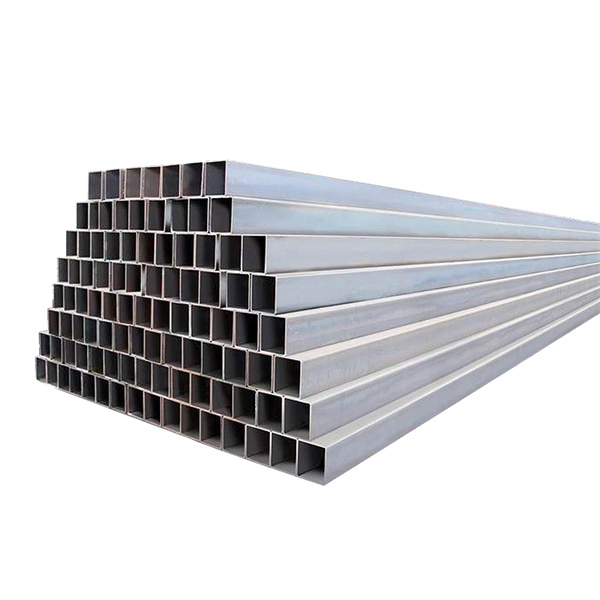
Hot Dip Galvanized Square Steel Pipe
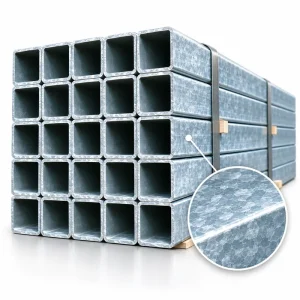
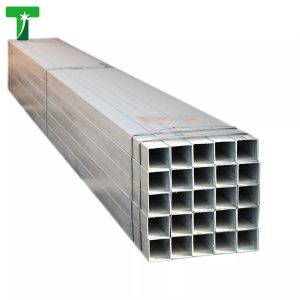
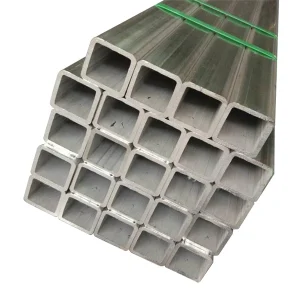
Hot Dip Galvanized Square Steel Pipes offer excellent corrosion resistance and structural strength for construction, fencing, and industrial applications. They are available in various sizes, wall thicknesses, and steel grades, with custom dimensions available upon request.
- Mill Test Certificate Provided
- Strict Quality Inspection
- Custom Sizes Available
- On-Time Global Delivery
Hot Dip Galvanized Square Steel Pipe is produced by forming and welding carbon steel into a square hollow section, followed by immersion in molten zinc. The galvanizing process forms a protective coating on accessible steel surfaces, including internal surfaces where proper drainage and venting are provided.
Manufacturing specifications can be selected according to ASTM A500/A500M or EN 10219, depending on project requirements. Galvanizing requirements may be specified under ASTM A123/A123M or ISO 1461, where applicable. Dimensional tolerances, zinc coating thickness, and inspection requirements should be confirmed before production. These structural and coating standards are also relevant when specifying galvanized steel tubing for construction and industrial applications.
The square hollow profile allows convenient connections to beams, brackets, and other structural components. These galvanized steel products can be supplied with plain ends or cut to specified lengths. Our galvanized steel pipe range also supports various construction and industrial fabrication requirements, with material test certificates available according to agreed order specifications.
Product Features
- Hot-Dip Zinc Coating: Zinc coating provides barrier and sacrificial protection against corrosion.
- Square Hollow Profile: Uniform square geometry facilitates structural alignment, connections, and assembly.
- Reliable Welded Construction: ERW manufacturing provides consistent pipe geometry and weld quality under controlled production conditions.
- Structural Grade Options: Available to specified structural steel grades and applicable manufacturing standards.
- Fabrication Flexibility: Suitable for cutting, drilling, bolting, and welding with appropriate treatment of exposed steel.
- Quality Inspection: Dimensional checks, coating thickness measurements, and material test certificates can be arranged according to order requirements.
Product Specifications
| Parameter | Specification |
|---|---|
| Product Name | Hot Dip Galvanized Square Steel Pipe |
| Material | Carbon Steel |
| Steel Grade | Q235B, Q355B, ASTM A500 Grade B/C, S235JR, S355JR |
| Manufacturing Process | ERW (Electric Resistance Welded) |
| Galvanizing Process | Hot-Dip Galvanizing After Fabrication |
| Size | 20 × 20 mm – 300 × 300 mm |
| Wall Thickness | 1.5 – 12.0 mm |
| Length | 5.8 m, 6 m, 12 m, or Customized |
| Zinc Coating | According to ASTM A123/A123M or ISO 1461, as applicable |
| Manufacturing Standards | ASTM A500/A500M, EN 10219 |
| Surface Finish | Hot-Dip Galvanized |
| End Type | Plain Ends, Cut Ends |
| Applications | Construction, Fencing, Structural Frames, Industrial Fabrication |
| Packaging | Steel Straps, Bundles, or Customized |
| Inspection | Dimensional Inspection, Coating Thickness Test, MTC Upon Request |
Applications
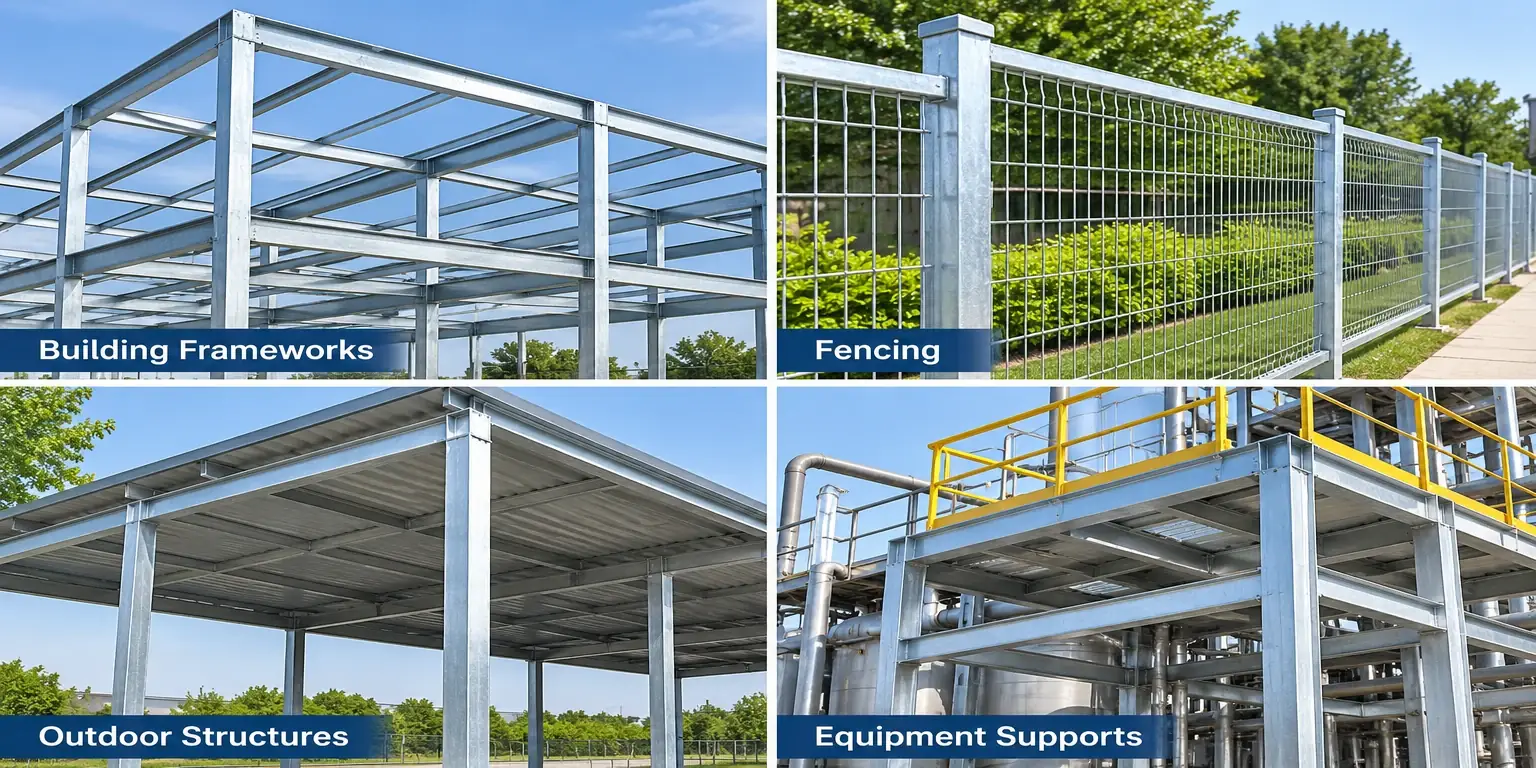
Hot Dip Galvanized Square Steel Pipes are widely used in construction, infrastructure, agricultural facilities, and industrial fabrication. Their square hollow sections provide flat surfaces for convenient connections and structural assembly, while the hot-dip zinc coating helps protect exposed steel surfaces in outdoor environments. These pipes can be incorporated into both permanent structures and prefabricated steel assemblies, subject to project design requirements.
- Building Frameworks:
Hot dip galvanized square steel pipes are used for secondary structural frames, roof supports, wall framing, bracing members, and prefabricated building components. Their square profiles facilitate alignment and connections with steel plates, brackets, and other structural members. Material grades, wall thicknesses, and connection details should be selected according to the required structural loads. - Fencing and Security Systems:
These pipes are commonly used as fence posts, gate frames, perimeter barriers, and security fencing supports for residential, commercial, and industrial properties. The galvanized coating helps reduce corrosion caused by rain and outdoor exposure. Different cross-sectional sizes and wall thicknesses can be selected according to fence height, wind loads, and installation requirements. - Outdoor Structures and Shelters:
Galvanized square steel pipes are suitable for carports, canopies, walkway shelters, agricultural structures, and outdoor equipment enclosures. Their hollow structural design supports fabricated frames while allowing convenient cutting, drilling, and bolted connections. Exposed cut edges, welds, and damaged galvanized surfaces should receive appropriate corrosion-protection treatment after fabrication. - Industrial Equipment Supports:
Square steel pipes are used in machinery frames, equipment mounting structures, maintenance platforms, storage rack frames, and industrial support assemblies. Their flat sides simplify the installation of brackets, mounting plates, and mechanical fasteners. Pipe dimensions, steel grades, and fabrication methods can be specified to meet equipment loading and installation requirements.
Frequently Asked Questions (FAQ)
1. What is the difference between hot dip galvanized and pre-galvanized square steel pipes?
Hot dip galvanized square steel pipes are galvanized after forming and welding, allowing molten zinc to coat accessible internal and external surfaces. Pre-galvanized square pipes are manufactured from previously galvanized steel strip, with welded seams typically requiring additional corrosion protection. Hot-dip galvanizing after fabrication is often preferred for outdoor structural applications where more comprehensive coating coverage is required.
2. What manufacturing and galvanizing standards are available?
Common structural pipe standards include ASTM A500/A500M and EN 10219, depending on project specifications. Hot-dip galvanizing requirements may follow ASTM A123/A123M or ISO 1461, where applicable. Steel grades, dimensional tolerances, coating requirements, and inspection procedures should be confirmed before production to ensure compliance with the customer’s technical specifications.
3. What zinc coating thickness is available for hot dip galvanized square steel pipes?
Zinc coating thickness depends on the steel thickness, galvanizing process, and applicable coating standard. Requirements may be specified according to ASTM A123/A123M or ISO 1461, where applicable. Customers can specify the required coating standard and inspection criteria when requesting a quotation. Coating thickness measurements and inspection reports can be arranged according to the purchase agreement.
4. Can hot dip galvanized square steel pipes be cut, drilled, or welded?
Yes. Hot dip galvanized square steel pipes can be cut, drilled, bolted, and welded using suitable fabrication procedures. Welding galvanized steel requires appropriate ventilation and fume controls. After fabrication, damaged zinc coatings, exposed cut edges, and welded areas should be repaired using an approved corrosion-protection method to maintain the required protective performance.
5. How do I select the correct square pipe size and wall thickness for my project?
The appropriate dimensions depend on the intended application, structural loads, support spacing, connection design, and applicable engineering standards. For example, fence posts, roof supports, and industrial frames may require different section sizes and wall thicknesses. Customers are encouraged to provide project drawings, loading requirements, and technical specifications so suitable products can be evaluated.
6. What information is required to obtain an accurate quotation?
For an accurate quotation, please provide the outside dimensions, wall thickness, pipe length, steel grade, galvanizing requirements, order quantity, and destination port. If applicable, include manufacturing standards, coating inspection requirements, and any special cutting or packaging instructions. Detailed specifications help confirm product availability, production requirements, estimated lead time, and shipping arrangements.