Hot Rolled Steel Coil 1.5mm–12 mm — Q235B / Q355B / SS400 / SPHC, Black or Pickled and Oiled
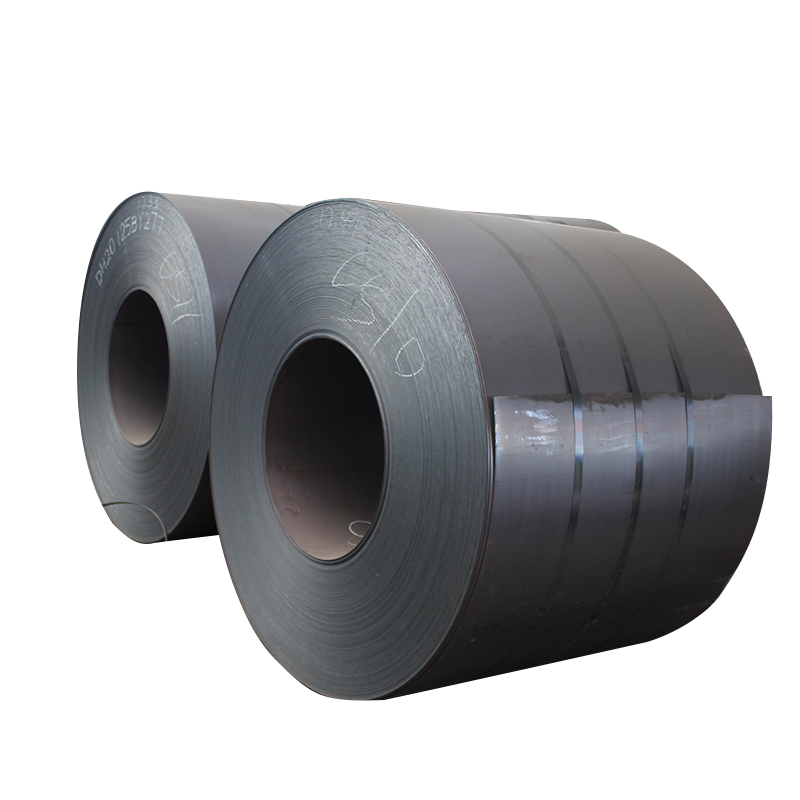
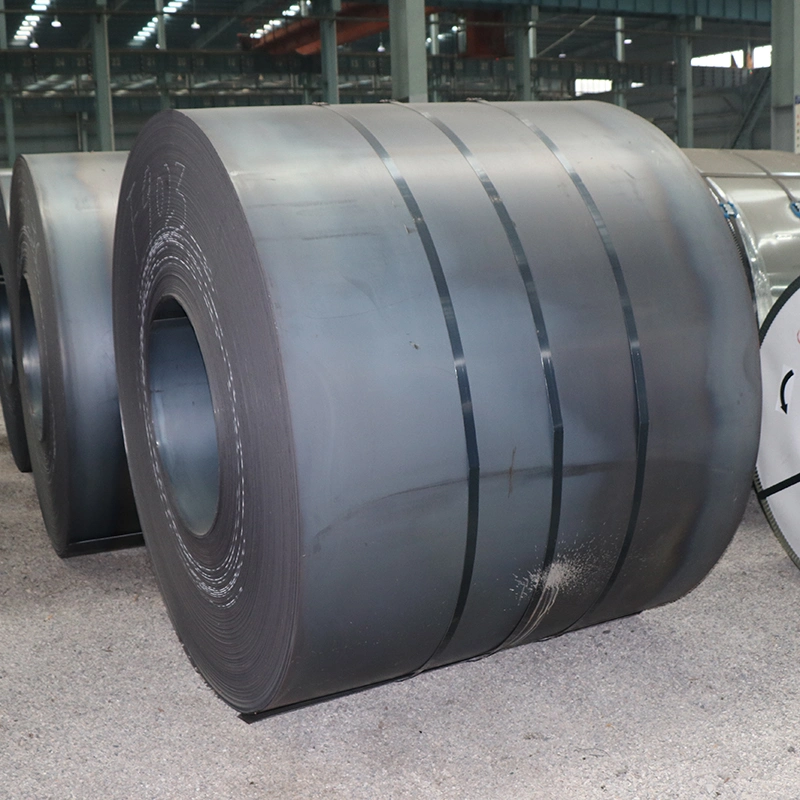
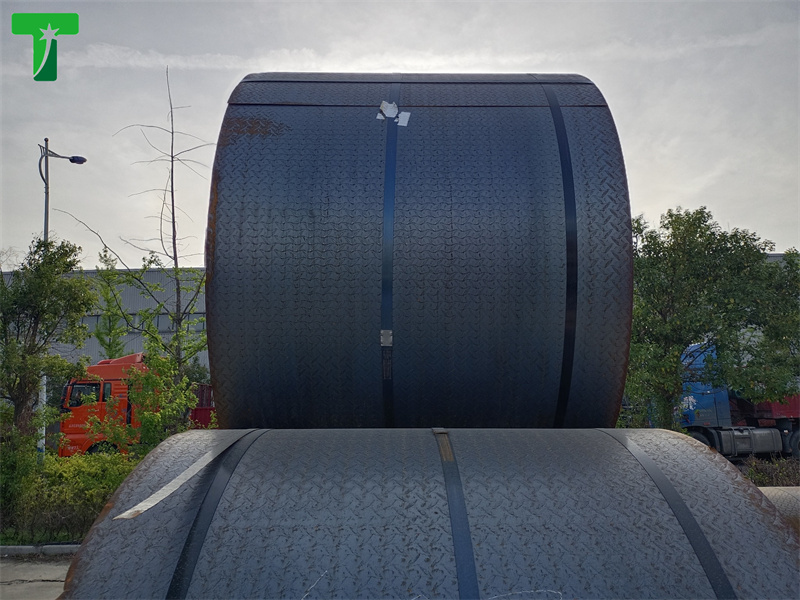
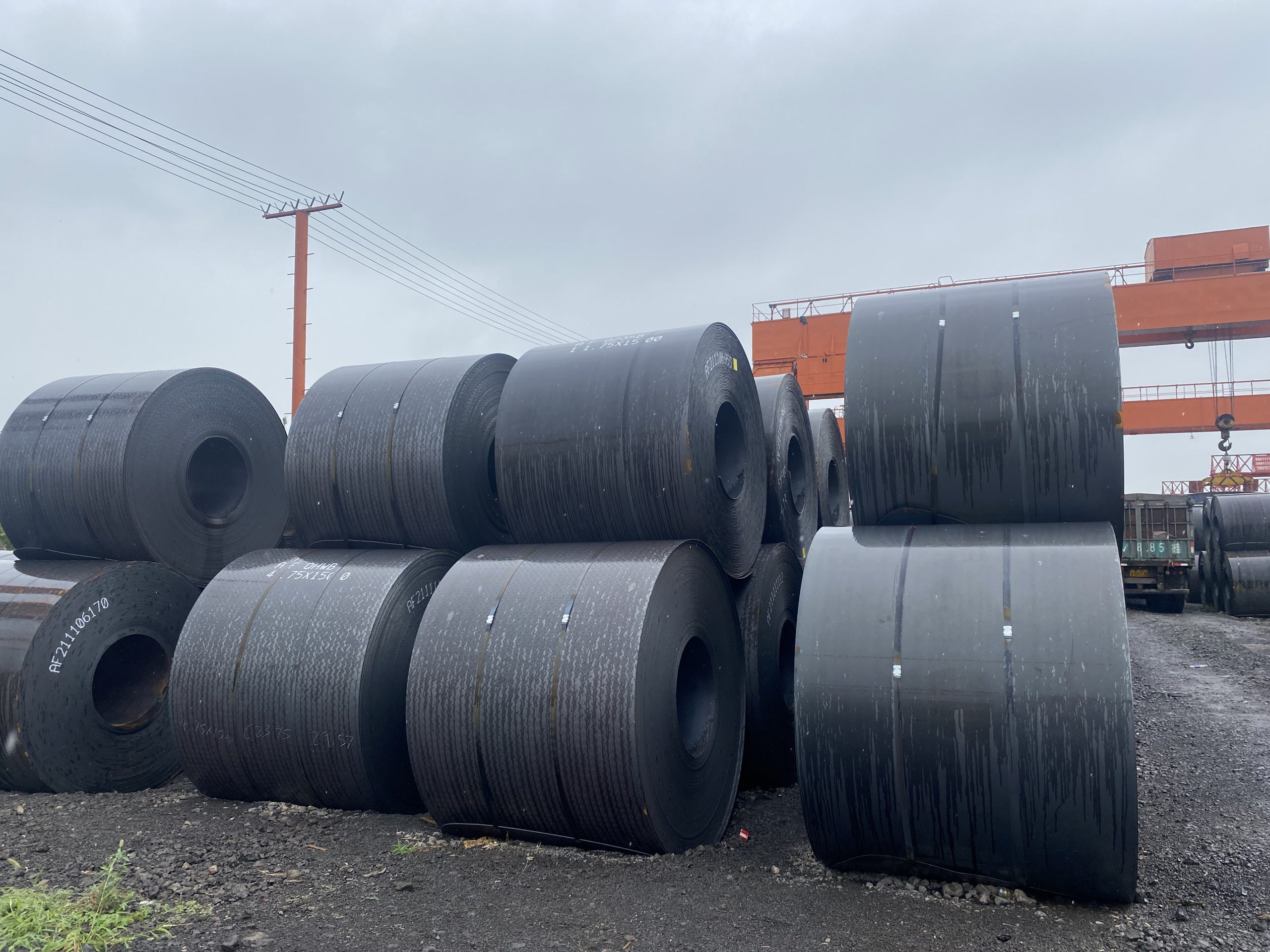
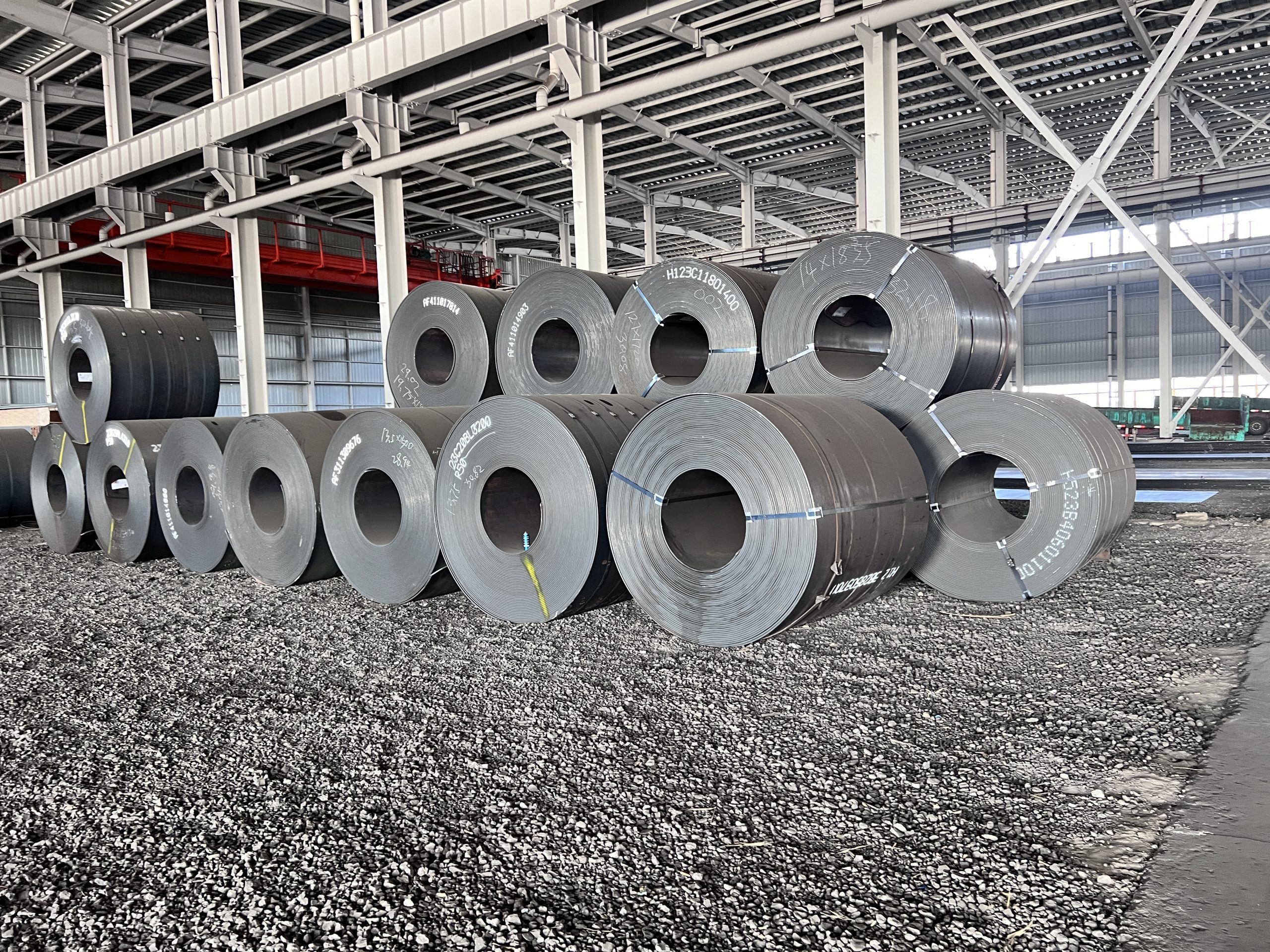
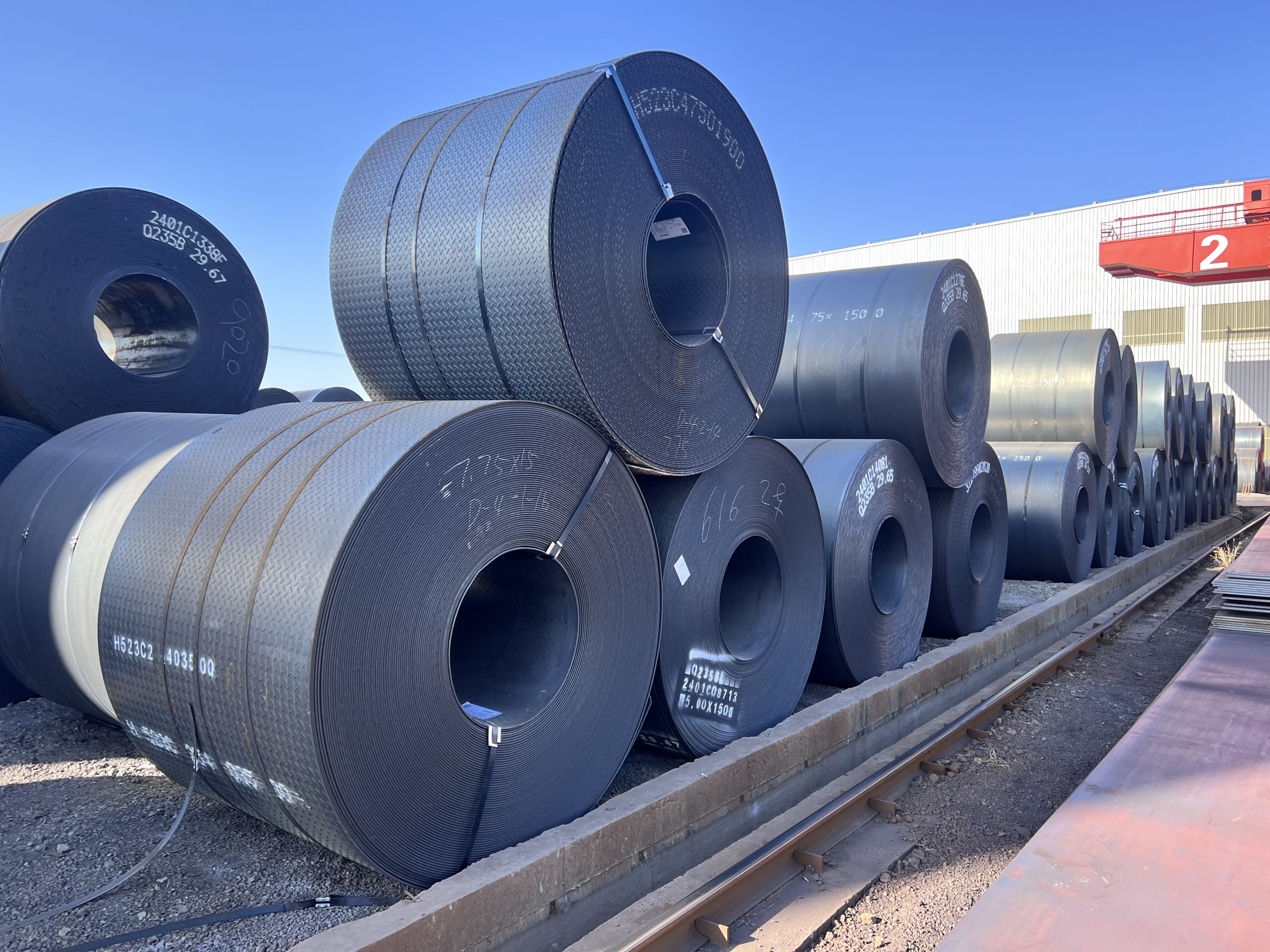
Hot Rolled Steel Coil 1.5mm–12 mm — Q235B / Q355B / SS400 / SPHC, Black or Pickled and Oiled
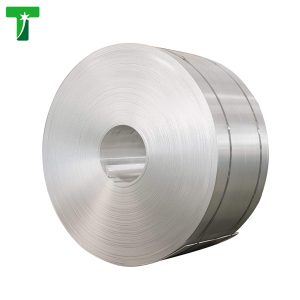
Hot rolled coil in 1.5mm–12 mm thickness, with yield strength of 175–355 MPa, tensile strength of 270–630 MPa and elongation of 21–38% by grade. Low carbon content supports welding without preheat, and a consistent grain structure gives uniform forming behaviour along the coil length. Surfaces are supplied as-rolled or pickled and oiled.
- Mill Test Certificate Provided
- Strict Quality Inspection
- Custom Sizes Available
- On-Time Global Delivery
Hot rolled steel coil is rolled from a reheated slab above the recrystallization temperature, leaving an as-rolled mill scale surface; the same pass sets the properties that downstream fabrication depends on.
Weldability is the first of these. Carbon is held at 0.22% or below in the GB, JIS and EN structural grades, with low manganese, so they weld without preheat and without the cold-cracking risk of higher-carbon strip. Because composition is controlled from coil to coil, welding parameters stay stable across the full length, which matters on continuous ERW pipe and tube lines.
Formability is the second. Elongation runs from 21% for structural grades to 38% for deep-drawing grades, allowing cold bending, roll forming, blanking and stamping without edge cracking. A uniform grain structure means the first metre and the last metre of a coil form alike, so press settings need no adjustment mid-run.
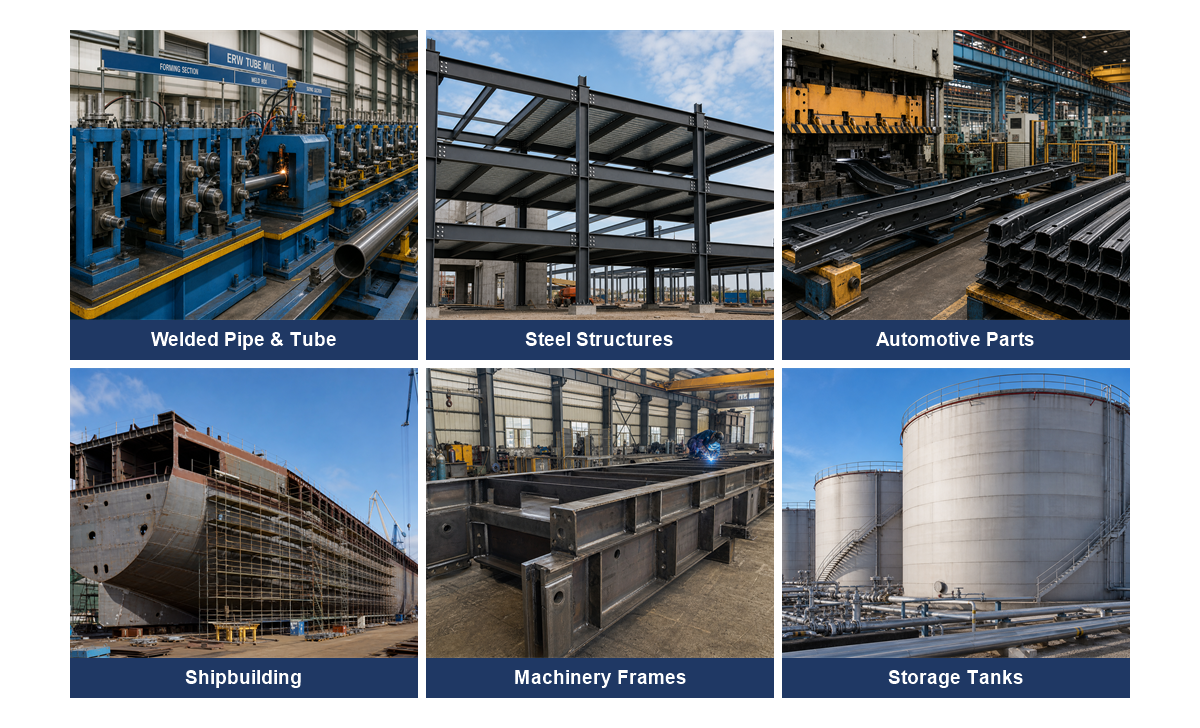
Used for welded pipe and tube, steel structures and bridges, automotive chassis and wheel rims, shipbuilding, machinery frames and storage tanks, the coil is slit or cut to length and formed directly. Stable weld quality and even forming reduce rework and scrap rates, and after pickling the clean surface accepts galvanizing or painting without extra preparation.
Key Features
- Consistent Weldability: Carbon held at 0.22% or below with low manganese — structural grades weld without preheat.
- High Load Capacity: Charpy V-notch impact ≥ 34 J at 20 °C — qualified for cold-climate projects, Arctic pipelines, Andean-region bridges, and offshore platforms.
- Good Formability: Elongation from 21% to 38% by grade — cold bending, roll forming and stamping without edge cracking.
- Two Surface Options: Black as-rolled mill scale, or pickled and oiled where painting, galvanizing or precision forming follows.
- Certified Quality: Supplied to GB/T 3274, JIS G3101, EN 10025-2 and ASTM A36/A1011; MTC per EN 10204 3.1 with SGS or BV inspection.
Hot Rolled Steel Coil Specifications
| Item | Specification |
|---|---|
| Product | Hot Rolled Steel Coil / Sheet – Black or Pickled & Oiled |
| Standard | GB/T 3274 · GB/T 709 · JIS G3101 · JIS G3131 · EN 10025-2 · ASTM A36 / A1011 / A572 |
| Grade | Q195 / Q235B / Q355B · SS400 · SPHC / SPHT1 · S235JR / S275JR / S355JR · A36 / A572 Gr.50 |
| Grade Cross Reference | Q235B ↔ SS400 ↔ S235JR ↔ A36 Q355B ↔ SM490 ↔ S355JR ↔ A572 Gr.50 SPHC ↔ DD11 ↔ A1011 CS · SPHT1 ↔ DD14 ↔ A1011 DS |
| Chemical Composition | Q235B: C ≤ 0.22% / Mn 0.30–0.65% / Si ≤ 0.35% / P ≤ 0.045% / S ≤ 0.045% Other grades as per ordered standard |
| Mechanical Properties | Yield Strength Re 175 – 355 MPa Tensile Strength Rm 270 – 630 MPa Elongation 21 – 38% (by grade) |
| Thickness | 1.5 – 12.0 mm |
| Thickness Tolerance | ±0.3 mm (typical) – as per GB/T 709 or EN 10051 |
| Width | 600 – 2000 mm (Common 1000 / 1250 / 1500 / 2000 mm) |
| Coil Inner Diameter | 508 mm / 610 mm |
| Coil Weight & OD | 5 – 25 MT per Coil / Max OD 2200 mm |
| Surface | Black As-Rolled (Mill Scale) / Pickled & Oiled (P&O) |
| Edge | Mill Edge / Slit Edge (Deburred) / Round Edge on Request |
| Delivery Condition | Hot Rolled, As-Rolled / Pickled & Oiled / Normalized on Request |
| Packing | Eye to Sky or Eye to Wall / Waterproof Kraft Paper / Plastic Film / Steel Strapping / Wooden Pallet |
| Documentation | MTC per EN 10204 3.1 / Certificate of Origin / SGS · BV · TUV · INTERTEK Inspection Available · ISO 9001:2015 |
| MOQ | One 20GP Container; Trial Orders Available for In-Stock Grades |
Applications
Hot rolled coil is rolled to final gauge, so structural strength is set at the mill rather than added downstream. Slitting, cut-to-length and roll forming turn it into welded pipe and tube, steel structures and bridges, automotive chassis and wheel rims, shipbuilding blocks, machinery frames and storage tanks. Agricultural equipment, container bodies and general fabrication draw on the same coil.
FAQ
1. How do I choose between Q235B, SS400, S235JR and A36?
These four sit in the same strength band — roughly 235–250 MPa yield, 20%+ elongation. They’re interchangeable in chemistry and mechanicals; the difference is paperwork, not steel. EU buyers usually specify EN 10025-2 (S235JR), Chinese mills default to Q235B, US fabricators ask for A36. Pick whichever standard your engineer writes on the drawing — same coil, different certificate stamp.
2. Should the coil be supplied black or pickled and oiled?
Black (mill scale on) is the cheapest option and works fine if you’re cutting and welding the part as-is. Go for pickled and oiled (P&O) if the coil is heading into painting, galvanizing, laser cutting, or any coating line — mill scale doesn’t bond with paint or zinc, and you’ll burn time blasting it off later. If you’re not sure what the next process is, P&O keeps your options open.
3. What thickness tolerance applies from 1.5 to 12 mm?
Standard tolerance is ±0.3 mm across most of the 1.5–12 mm band, per GB/T 709 or EN 10051. Going tighter (say ±0.15 mm) is doable on 3–8 mm but gets harder below 2 mm — thin gauges stretch more during rolling. If your drawings call for ±0.10 mm, send the spec over and we’ll check with the mill before quoting rather than promise what we can’t hold.
4. Does the coil need preheating before welding?
For Q235B / SS400 / S235JR / A36 up to about 12 mm thick, no preheat — carbon stays under 0.22% and CEV is low enough to weld cold. Step up to Q355B / S355JR or any section over 25 mm, and preheat becomes a real question; your WPS should drive that, not the coil spec. We’re happy to send the actual CEV number per heat if you want to plug it into your welding procedure.
5. What documentation and inspection are provided?
Every coil ships with an EN 10204 3.1 Mill Test Certificate — heat number, full chemistry, mechanicals, all stamped. Certificate of Origin is standard. If you need SGS, BV, TUV or Intertek inspection at our mill before dispatch, just tell us when you issue the PO — it usually adds 2–3 days to lead time but covers you for the project file.