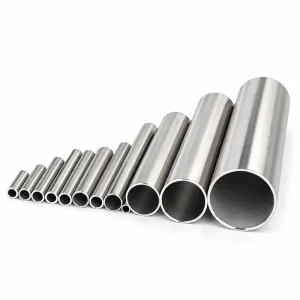
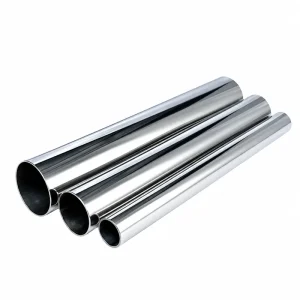
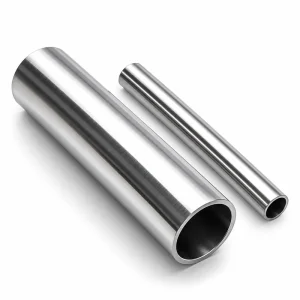
Schedule 40 Stainless Steel Seamless Pipe
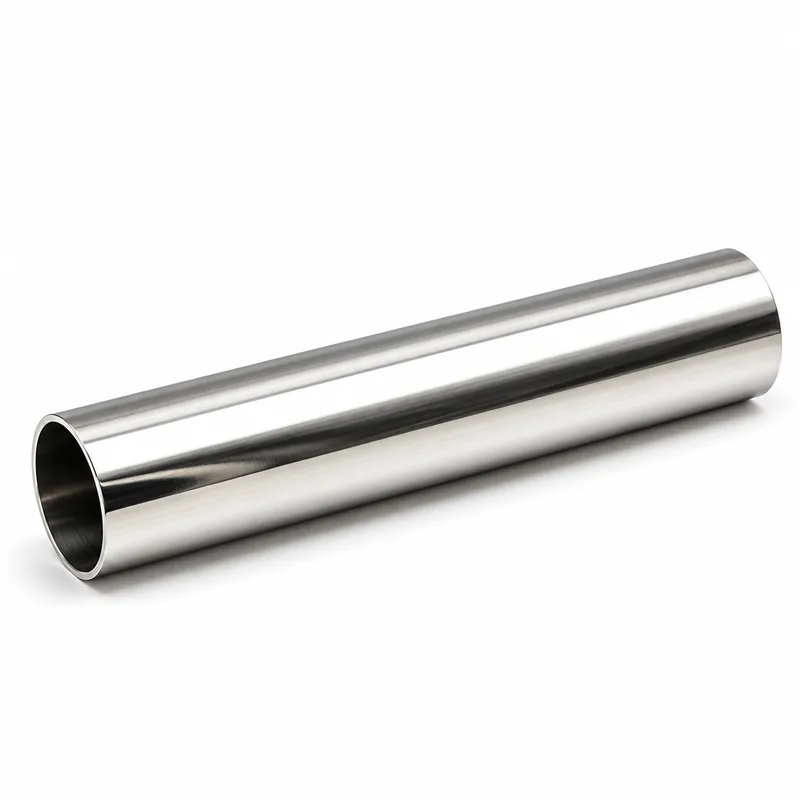
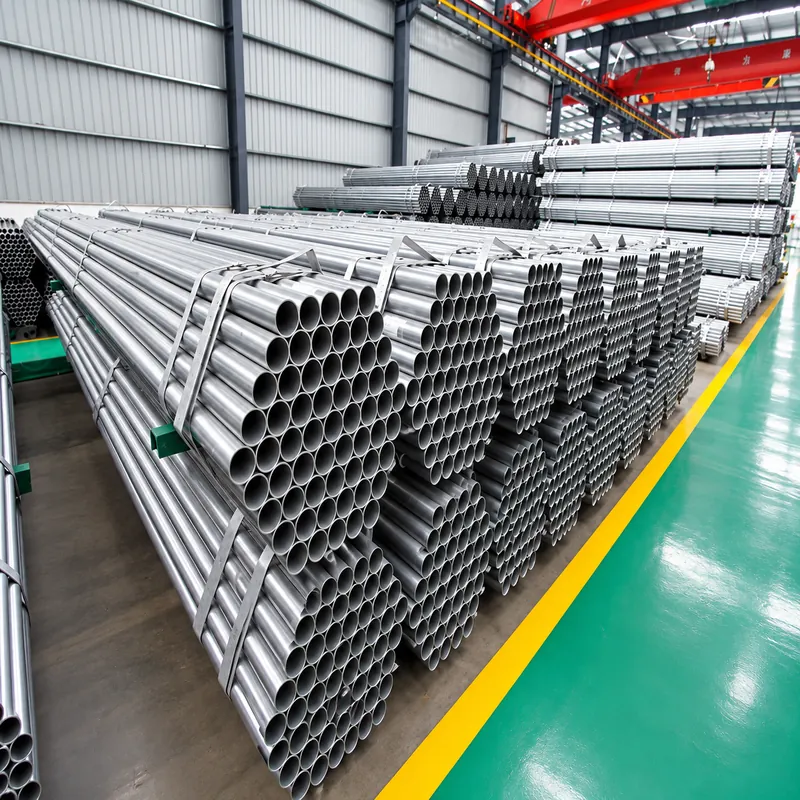
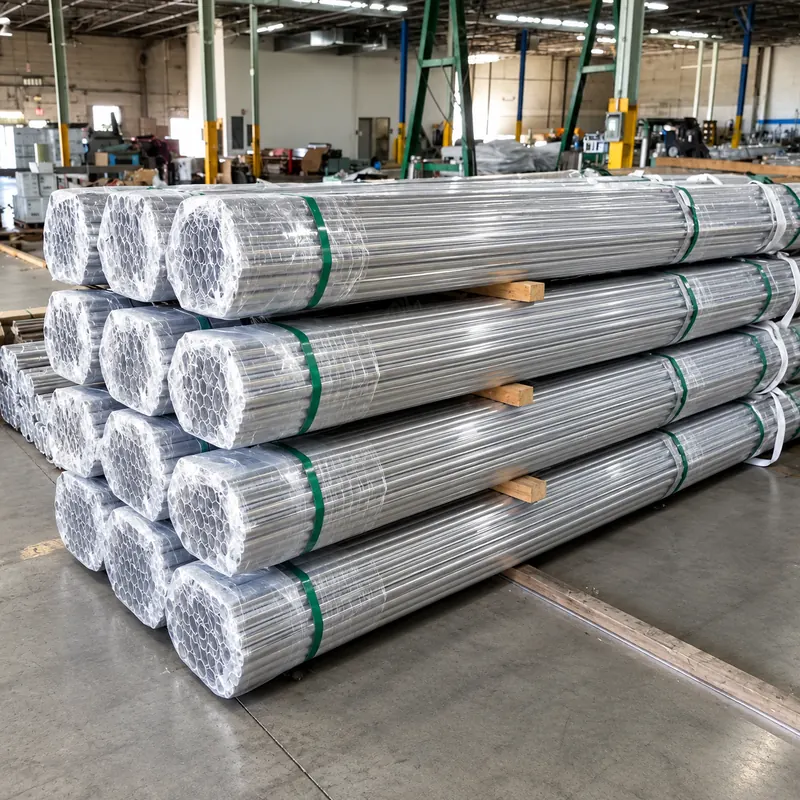
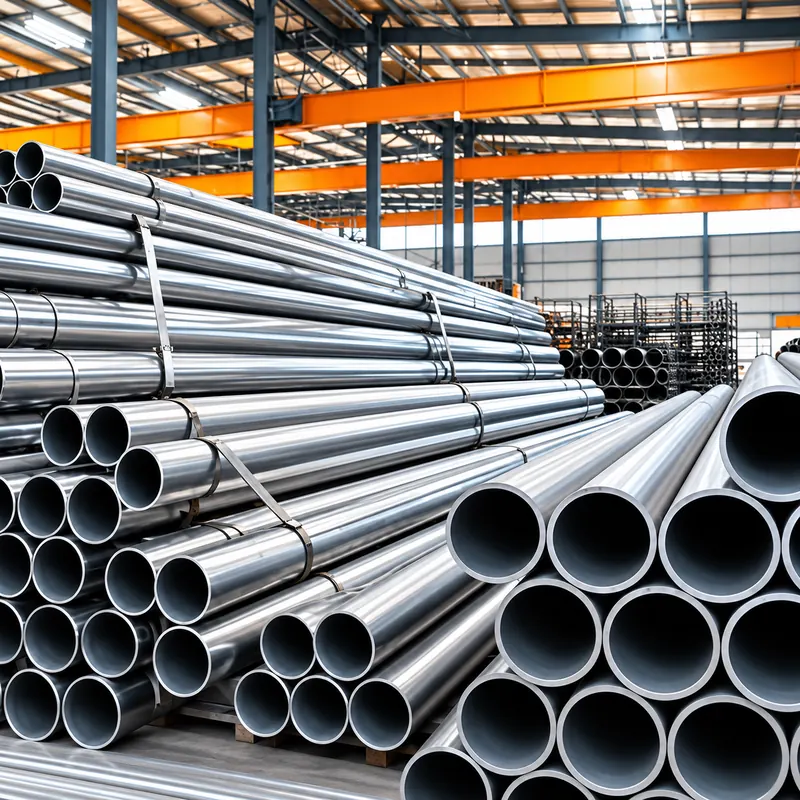
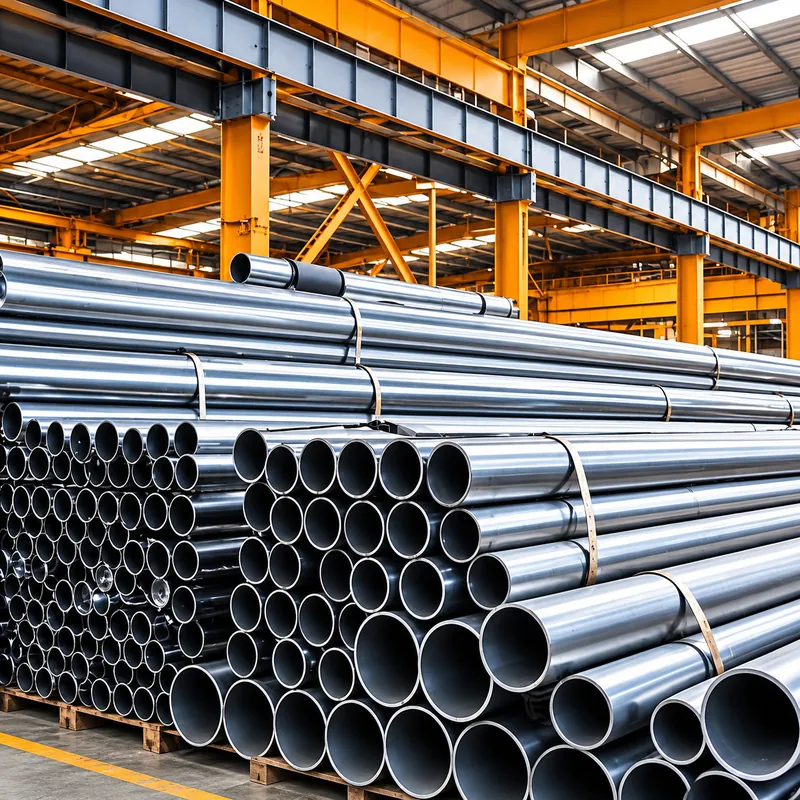
Schedule 40 Stainless Steel Seamless Pipe
ASTM A312 Stainless Steel Seamless Pipe is available in TP304, TP304L, TP316, and TP316L grades, with nominal pipe sizes (NPS) and wall thickness schedules to match project specifications. Common applications include chemical processing lines, refinery piping, and industrial utility systems, with material selection based on operating temperature, pressure, and fluid composition.
- Mill Test Certificate Provided
- Strict Quality Inspection
- Custom Sizes Available
- On-Time Global Delivery
Schedule 40 Stainless Steel Seamless Pipe is specified by nominal pipe size (NPS), outside diameter, and corresponding wall thickness. The wall thickness varies with pipe size rather than remaining constant across all diameters. Schedule 40 and Schedule 40S are commonly referenced under ASME B36.10M and ASME B36.19M, respectively, with dimensional differences at certain nominal sizes.
ASTM A312/A312M covers seamless austenitic stainless steel pipe grades such as TP304, TP304L, TP316, and TP316L. The specification establishes requirements for chemical composition, mechanical properties, heat treatment, and applicable testing. Hydrostatic or nondestructive electric testing is performed as required by the specification, while material certificates and additional inspection documents should be confirmed against purchase requirements.
Schedule 40 pipe is used in chemical processing, refinery piping, and industrial utility systems. Its suitability depends on operating pressure, temperature, fluid compatibility, and applicable piping codes. Schedule 40 identifies a wall thickness designation rather than a universal pressure rating. For quotations, buyers should specify the material grade, NPS, Schedule 40 or 40S, pipe length, end preparation, and required quantity.
Key Features of Schedule 40 Stainless Steel Seamless Pipe
- Schedule 40 Wall Thickness: Wall thickness varies by nominal pipe size according to the applicable dimensional standard.
- Multiple Stainless Steel Grades: Available in ASTM A312 TP304, TP304L, TP316, and TP316L grades.
- Seamless Pipe Construction: Manufactured without longitudinal weld seams for industrial piping applications.
- Applicable Industry Standards: ASTM A312/A312M material requirements with ASME B36.10M or B36.19M dimensions, as specified.
- Inspection & Material Traceability: Applicable testing and material certificates according to the specified purchase requirements.
- Project-Specific Specifications: Pipe lengths, end preparation, and inspection requirements based on project needs.
Schedule 40 Stainless Steel Seamless Pipe — Technical Specifications
| Parameter | Specification |
|---|---|
| Product Name | Schedule 40 Stainless Steel Seamless Pipe |
| Manufacturing Process | Seamless |
| Material Grades | ASTM A312 TP304, TP304L, TP316, TP316L |
| Product Standard | ASTM A312/A312M |
| Wall Thickness Designation | Schedule 40 / Schedule 40S (as specified) |
| Dimensional Standards | ASME B36.10M / ASME B36.19M, as applicable |
| Nominal Pipe Size | NPS, according to ordered dimensions |
| Outside Diameter | According to nominal pipe size |
| Wall Thickness | According to NPS and applicable Schedule |
| Pipe Length | Standard or cut-to-length, subject to availability |
| Surface Finish | As-manufactured / Annealed & Pickled, as available |
| End Preparation | Plain End / Beveled End, as specified |
| Heat Treatment | According to ASTM A312/A312M |
| Testing & Inspection | According to ASTM A312/A312M and purchase requirements |
| Material Certificate | MTC / EN 10204 3.1, subject to confirmation |
| Applications | Chemical Processing, Refinery Piping, Industrial Utilities |
Applications of Schedule 40 Stainless Steel Seamless Pipe
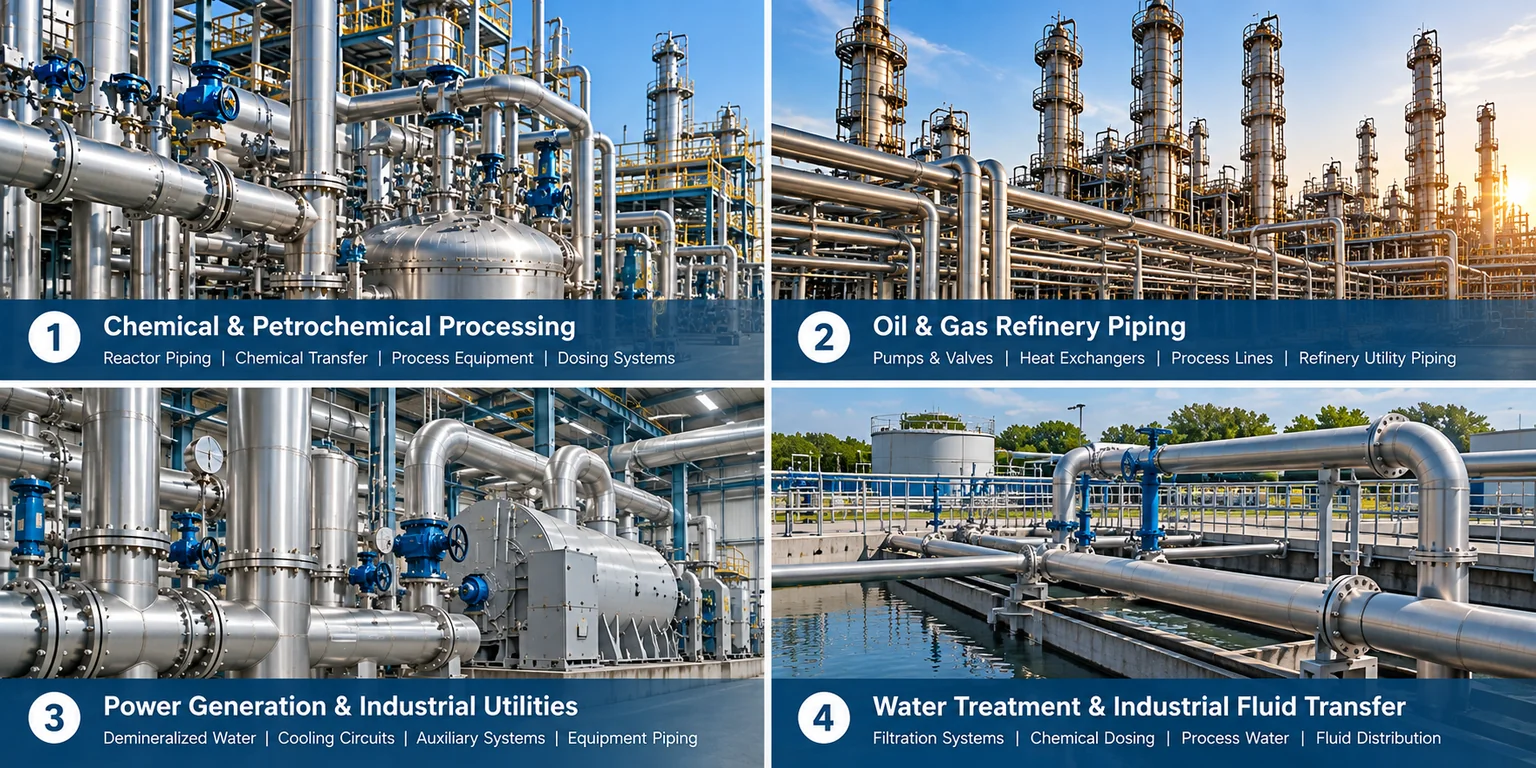
1. Chemical & Petrochemical Processing
Chemical processing systems use ASTM A312 stainless steel seamless pipes for chemical dosing lines, reactor connections, and process transfer piping. TP316L contains molybdenum, improving resistance to pitting in certain chloride-containing environments compared with TP304L. Its low carbon content also reduces susceptibility to sensitization during welding, making it useful in fabricated process piping assemblies.
2. Oil & Gas Refinery Piping
Refinery piping connects pumps, valves, heat exchangers, and process equipment exposed to varying operating conditions. Schedule 40 seamless pipe provides standardized wall thicknesses for defined nominal pipe sizes, simplifying dimensional selection and piping fabrication. ASTM A312 TP304L and TP316L are used in suitable refinery services, including selected utility and process lines, rather than as universal solutions for corrosive oil and gas streams.
3. Power Generation & Industrial Utilities
Demineralized water systems, equipment makeup-water lines, and auxiliary cooling circuits are common applications for stainless steel seamless piping in power plants. ASTM A312 grades provide an alternative to carbon steel where corrosion products and water cleanliness are concerns. For elevated-temperature systems, material allowable stress and wall thickness become critical design parameters, particularly when selecting between different pipe schedules.
4. Water Treatment & Industrial Fluid Transfer
Filtration skids, chemical dosing systems, and process-water distribution networks use stainless steel piping for fluid transfer between treatment stages. TP316L offers improved resistance to chloride-induced pitting compared with TP304L, although neither grade is immune to localized corrosion. In stagnant sections and crevices, chloride concentration and temperature can significantly affect service life.
Frequently Asked Questions
1. What is the difference between SCH 40 and SCH 40S stainless steel pipe?
SCH 40 follows ASME B36.10M, while SCH 40S follows ASME B36.19M. The outside diameters are the same, but wall thickness can differ. At NPS 12, SCH 40 is 10.31 mm thick, while SCH 40S is 9.53 mm.
2. What are the common sizes of Schedule 40 stainless steel seamless pipe?
Common dimensions include 1/2″ (21.3 × 2.77 mm), 1″ (33.4 × 3.38 mm), 2″ (60.3 × 3.91 mm), 4″ (114.3 × 6.02 mm), and 6″ (168.3 × 7.11 mm). Dimensions are expressed as outside diameter × nominal wall thickness, based on the SCH 40 series.
3. Should I choose TP304L or TP316L for industrial piping?
TP304L suits many general-purpose process and utility lines. TP316L contains approximately 2–3% molybdenum, improving resistance to chloride pitting compared with TP304L. Both low-carbon grades help limit sensitization during welding. TP316L is generally preferred when greater localized corrosion resistance is required, subject to the actual service environment.
4. How much pressure can Schedule 40 stainless steel seamless pipe handle?
There is no single pressure rating for SCH 40. For example, a 2″ SCH 40 pipe has a 3.91 mm nominal wall, while a 6″ pipe has a 7.11 mm wall. Design pressure is calculated from pipe diameter, effective wall thickness, material allowable stress, and operating temperature, typically under ASME B31.3 for process piping.
5. Is ASTM A312 Schedule 40 seamless pipe suitable for chemical and refinery service?
ASTM A312 TP304L and TP316L pipes are used in process lines, pump connections, heat exchanger piping, and refinery utilities. TP316L provides improved resistance to certain chloride-containing media, while TP304L is common in less aggressive environments. Sour service, concentrated acids, and elevated-temperature duties may require different material specifications.
6. What specifications should be included in a purchase order?
Specify ASTM A312 grade, NPS, SCH 40 or 40S, dimensional standard, pipe length, quantity, and end preparation. For project orders, state whether EN 10204 3.1 certification, supplementary intergranular corrosion testing under ASTM A262, or additional NDE is required. These requirements affect inspection arrangements, lead time, and quotation.